
North Carolina – A widening fracture inside the Republican Party is becoming harder to ignore, as two prominent conservative voices take increasingly public aim at President Donald Trump and the direction of his administration.
Former Georgia Congresswoman Marjorie Taylor Greene, once among Trump’s fiercest defenders, has emerged as one of his sharpest critics.
She has been denouncing his foreign policy posture recently and accusing him of abandoning the “America First” message that helped define his political rise.
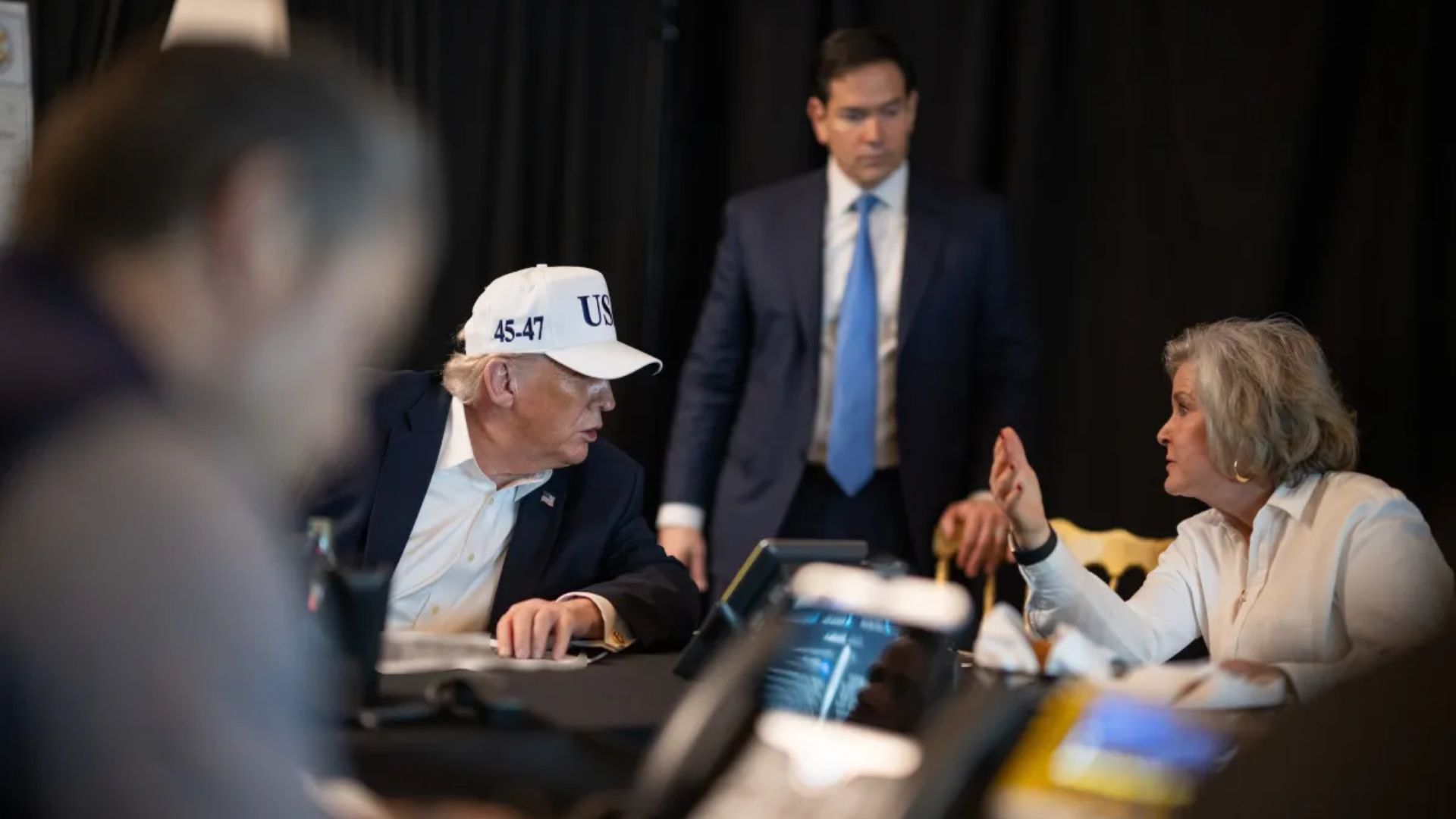
At the same time, North Carolina Sen. Thom Tillis is using the closing chapter of his Senate career to challenge the White House on matters ranging from Federal Reserve leadership to the administration’s handling of war powers, adding to signs of growing unease within Republican ranks.
What makes the moment striking is not only the criticism itself, but the prominence of the figures delivering it.
Greene’s break with Trump carries the drama of a former loyalist turned antagonist, while Tillis’ resistance reflects a more institutional warning from within the Senate GOP.
Their remarks suggest that Trump is facing pressure not just from Democrats or outside critics, but from corners of his own political coalition that are increasingly willing to speak in blunt and public terms.
The Republican divide is starting to look less like a passing disagreement and more like a serious test of Trump’s hold over his own movement.

And the Iran war is just an addition to the Republicans’ fallout.
What began with promises of strength and strategic mastery has, at least for now, come full circle in a way that is difficult for even Donald Trump’s allies to ignore.
After months of upheaval, mounting casualties, and shockwaves through global markets, the administration appears to be negotiating toward the same basic destination it once condemned: a return to the core structure of the 2015 nuclear agreement crafted under President Barack Obama.

That reality is now fueling a blunt question from critics across the political spectrum: what, exactly, was gained by tearing up the original deal only to fight, spend, and scramble back toward something remarkably similar?
The human and economic costs have been impossible to miss.
Thousands have died in the conflict tied to Iran, while economies across Asia, Europe, and Africa have been forced to absorb the fallout of rising instability and volatile energy prices.
In the United States, Trump has insisted that gas prices are “not very high,” yet the strain has been visible on the ground, with some drivers reportedly traveling long distances to reach reservations where fuel is cheaper.
The broader picture is one of disruption without resolution, a familiar warning sign in a conflict that continues to shift by the hour.
Adding to the uncertainty, Iran has signaled once again that it will close the Strait of Hormuz, a move with immediate implications for global shipping and oil supply.
The announcement came only hours after Trump declared that Iran would never be able to shut the vital waterway down. That contradiction has sharpened concerns that events on the ground are now moving more decisively in response to Tehran than to Washington.
Even financial markets appear to be reacting less to presidential messaging than to the calculations of Iran’s leadership, with Wall Street’s mocking “TACO” label reflecting a growing view that Trump’s threats often dissolve into retreat.
Critics argue that the outcome so far has not weakened Iran so much as increased its leverage.
The war has killed civilians, damaged the infrastructure of Gulf allies, and, according to reports, strained U.S. military stockpiles.
At the same time, liberal commentator Brian Krassenstein claimed on X that the administration is now weighing a plan to give Iran $20 billion in unfrozen assets as part of a broader settlement. He framed the idea as a stunning reversal, asking what a war said to have cost $55 billion had really accomplished if the United States was ending up back at a version of the same agreement it once walked away from.
Trump is reportedly negotiating a deal which would stop Iran from producing a nuclear weapon in exchange for $20 Billion in Iranian assets being unfrozen.
Note that The Iranian Nuclear agreement (JCPOA) that Obama signed, that Trump tore up, did the same thing. It halted their…
— Brian Krassenstein (@krassenstein) April 17, 2026
Trump’s own comments have done little to settle the matter.
In recent interviews, he shifted between celebrating peace and warning of further military action if Iran refuses to comply with U.S. demands. Yet those demands themselves have moved repeatedly. His latest position, that Iran hand over its enriched uranium to the United States or a partner nation, closely resembles concerns that were already addressed within the framework of the original JCPOA. That has only intensified the perception that the administration is attempting to repackage an old formula as a new victory.
At the same time, Washington is not behaving like a government fully convinced that peace is at hand. Reports that the administration has been reaching out to companies such as Ford Motor Company about potentially converting factory capacity for munitions production suggest that officials are still preparing for the possibility of a wider confrontation.
Negotiations may be underway, but the machinery of escalation is still humming in the background.
Now the calendar is adding fresh urgency. April 22 stands as the deadline for the current ceasefire, and no formal agreement has yet been signed.
There is cautious optimism in Washington, but also an unmistakable sense that the White House has little room left for failure. Trump appears to be searching for an outcome that preserves both stability and pride. Whether he can secure both remains uncertain.
What is already clear is that the global economy, battered by war and uncertainty, has become the real force pressing this deal forward, far more than political rhetoric, and perhaps more than any single leader’s ego.

