
Florida – Secretary of State Marco Rubio of Florida walked into the White House briefing room on Tuesday with a serious message, a temporary role, and, within minutes, a reminder that the room has its own rules.
Rubio was standing in for Press Secretary Karoline Leavitt, who is away on maternity leave, when he opened the briefing with an update on President Donald Trump’s efforts to reopen the Strait of Hormuz.
The waterway has become a major flashpoint amid continuing tensions with Iran, and Rubio framed the blockade as both a security threat and an act of desperation.
“It’s criminal for sure, but it’s desperate and destructive, this blockade of the Straits of Hormuz,” Rubio said, making clear that the administration views the matter as a priority with consequences far beyond the region.
That was the formal start. What came next was far less controlled.
Rubio, a former senator and one of the administration’s most recognizable foreign policy voices, is no stranger to tough questions. He has spent years in political hearings, campaign exchanges and diplomatic settings.
But the White House briefing room is a different arena. It moves fast, gets loud quickly and rewards whoever can seize a moment before someone else does.
At first, Rubio seemed relaxed. He scanned the room, tried to follow the seating arrangement and even joked with reporters as he adjusted to the temporary assignment.
Looking toward the front row, he asked, “Are you guys all the TV people?” After a reporter confirmed, Rubio explained that he had been given a small guide to the room.
“They gave me a little map… of the people here,” he said, before adding, “Some of you had, like, red X’s. I’m kidding.”
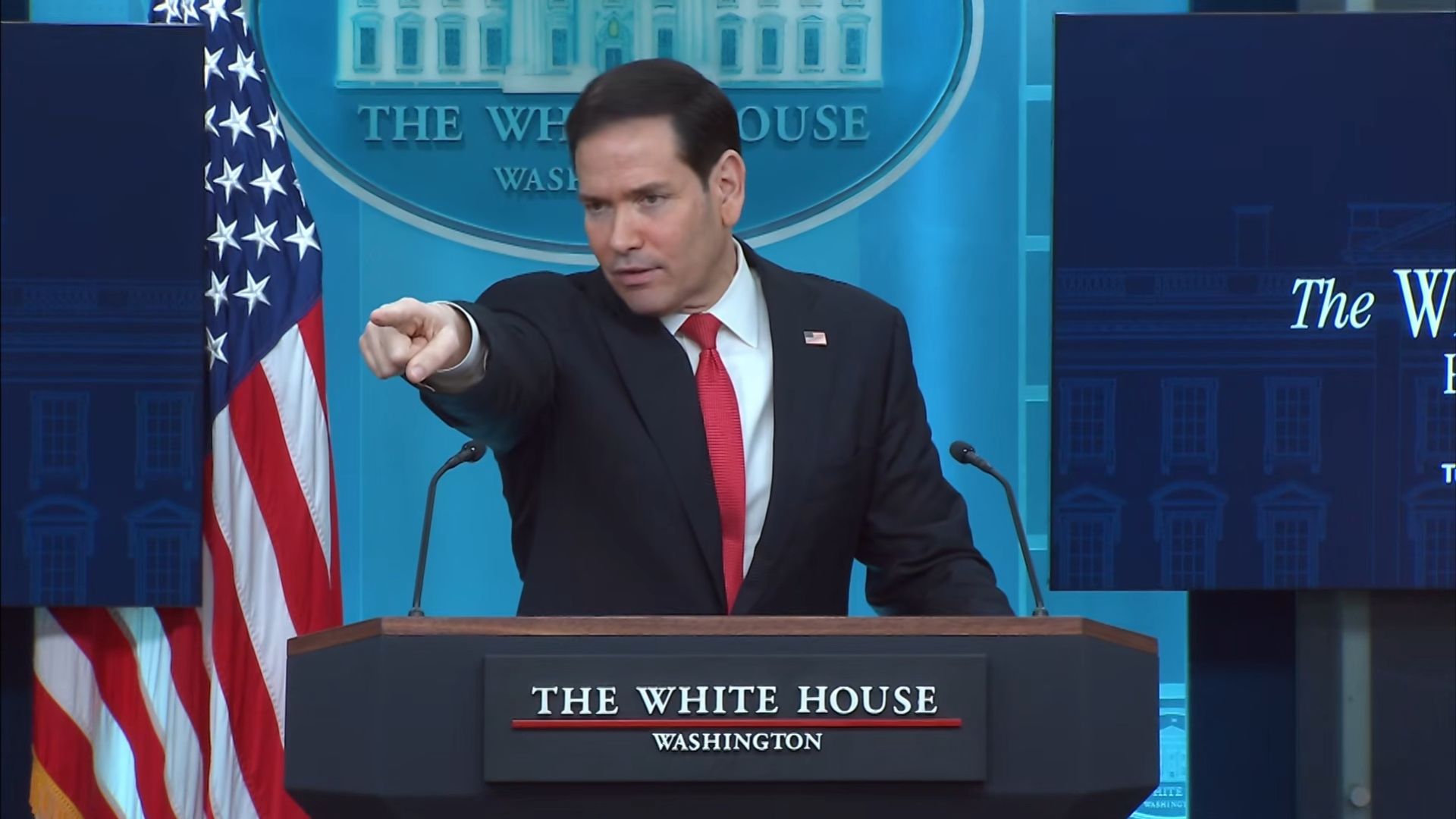
The joke landed, but the mood soon shifted into the familiar rhythm of a crowded White House briefing. Reporters began calling out from different parts of the room. Questions overlapped. Hands went up. Rubio tried to point to individual journalists, but the process became harder as the noise rose.
At one point, he tried to call on a reporter by identifying the color of their clothing, only to correct himself midstream.
“You in the black!” Rubio said, before realizing he had singled out the wrong person.
“Not, not you! You don’t have black on — you have blue on! I’m colorblind, but I know blue and black!”
The room laughed, and Rubio leaned into the moment. He joked that he might need a laser pointer or even dice to decide who would get the next question.
Still, the playful tone could not fully hide the difficulty of keeping order. Without Leavitt’s usual command of the room, the briefing began to feel less like a controlled press conference and more like a political scramble.
Then came the line that defined the day.
“This is chaos, guys!” Rubio said as the shouting continued.
The response came immediately from the press corps.
“Welcome to the White House!”
The blunt retort drew laughter and quickly became the moment people remembered most from the briefing. It captured, in a few words, what Rubio had just discovered in real time: the White House podium can humble even veteran officials who are used to pressure.
Rubio still pushed through the briefing. He took questions about the Iran conflict, U.S. gas prices, Latin America and his upcoming trip to meet with Vatican leadership under Pope Leo XIV. At times, he answered in multiple languages. At other moments, he used humor to keep the room from slipping completely out of his hands.
That mix of policy command and awkward improvisation gave the briefing an unusual feel. Some observers saw it as a kind of informal “presidential tryout,” with Rubio displaying knowledge, confidence and a more personable side than the public often sees in the Trump White House setting.
But the viral “chaos” exchange told a simpler story.
The briefing room is not a diplomatic chamber. It is loud, impatient and built for confrontation. Rubio arrived prepared to discuss global tensions and national security. He left with a new reminder that, inside the White House, even the person at the podium can become part of the story.
Leavitt is expected to return after her maternity leave.
Until then, Rubio’s turn behind the lectern has already given Washington something to talk about: a serious briefing, a messy room and one reporter’s sharp reply that summed it all up.

