
South Carolina – Renee Collins did not lose the house because of the price. That is the part she keeps repeating. The small three-bedroom outside Conway was not cheap, not anymore, but it was close enough to the number she had been preparing for.
She had checked her credit, cut back on eating out, saved part of every tax refund and asked her father to look at the roof before she made an offer. The mortgage estimate was tight. The taxes were manageable. The commute to her job in Myrtle Beach would have been better than the one she had now. Then the insurance quote came back.
“That was the moment I realized the house price was only the first door,” Renee said. “Insurance was the second one. And that one did not open.”
Across South Carolina, the housing affordability crisis is no longer only about what a buyer offers or what a renter pays each month. It is about the full cost of staying housed: mortgage rates, rent, insurance, flood coverage, wind risk, repairs, HOA fees, property taxes and the rising cost to rebuild after storms.
The pressure is sharpest in the places South Carolina is growing fastest or where climate risk is hardest to ignore, Myrtle Beach and Horry County, Charleston and the Lowcountry, Greenville and parts of the Upstate.
Statewide, South Carolina’s median household income was $69,324 from 2020 to 2024, according to the U.S. Census Bureau. The median value of owner-occupied homes was $259,000, and median gross rent was $1,180. Zillow estimated the average South Carolina home value at $308,062 as of May 31, 2026. Freddie Mac reported the average 30-year fixed mortgage at 6.52% as of June 11, 2026. Those numbers already make buying difficult for many working families. Insurance can make the answer final.
Read also: Horry County residents feel the cost of rapid growth and development on roads, schools and drainage
In Horry County, growth has made the math more fragile
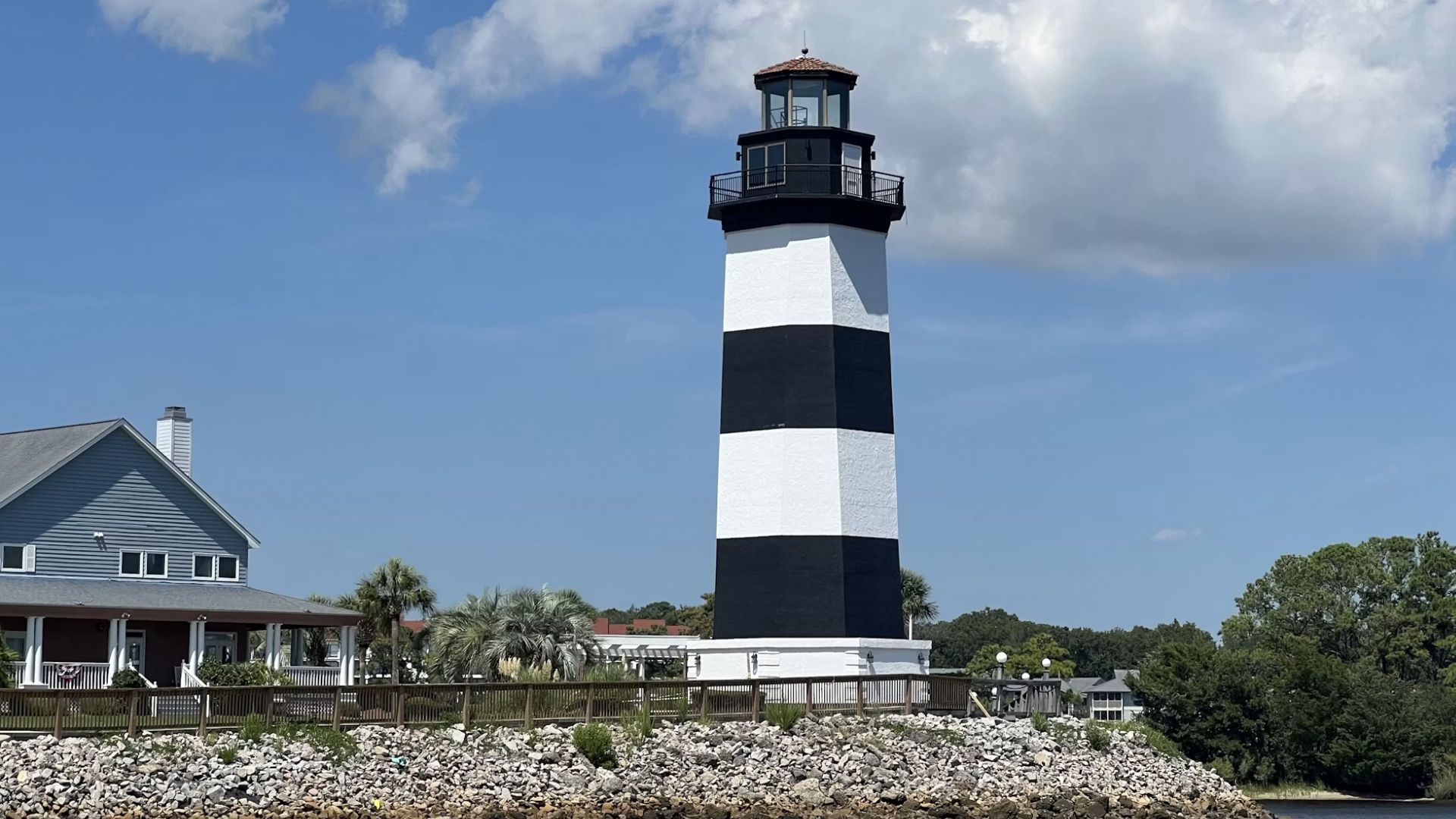
Renee lives in Horry County, where growth has become part of daily life. New subdivisions. New traffic. New grocery stores. New families arriving with cash from somewhere else. The county had 427,551 residents in 2025 and issued 6,511 building permits that year. Its median household income was $66,880, while the median value of owner-occupied homes was $287,700 and median gross rent was $1,255.
But current market prices tell a harder story. Zillow put Horry County’s average home value at $319,197. Myrtle Beach’s average home value was $323,271. The average Myrtle Beach rent at $1,700, including $1,412 for a one-bedroom, $1,600 for a two-bedroom and $2,000 for a three-bedroom.
For families earning local wages, those numbers leave little room for surprise. Insurance is the surprise.
Bankrate estimated South Carolina homeowners pay an average of $2,611 a year for $300,000 in dwelling coverage. But averages flatten local risk. NerdWallet’s 2026 city-level analysis put average annual homeowners insurance costs at $4,275 in Conway, $4,045 in Bluffton, $5,720 in Charleston and $2,610 in Columbia. That is before flood insurance, which is separate from a standard homeowners policy.
Renee learned that one bill at a time. The lender explained escrow. The insurance agent explained replacement cost. Someone mentioned wind. Someone else mentioned flood. Her father told her to ask about the roof age.
“I started with one payment in my head,” Renee said. “By the end, it felt like four payments wearing the same name.”
Read also: In the Pee Dee, bad roads and daily traffic are turning short drives into long frustrations
The coast has a different risk map
The South Carolina Department of Insurance says the state’s coastal property insurance market faces challenges but remains competitive for many risks. Its 2025 Coastal Property Report said the South Carolina Wind and Hail Underwriting Association saw its policy count decrease in 2025 and that most dwelling owners in coastal counties were finding coverage in the admitted market.
That is good news compared with Florida-style insurance turmoil. South Carolina has not seen the same mass withdrawal of insurers from its coast. But the same report also said coastal consumers have been negatively affected by rising premiums, driven largely by higher repair costs, rising reinsurance costs after global catastrophe losses and increased property values that require higher coverage limits.
It also noted that condominium associations with older wooden buildings near the ocean and some homeowners with larger coastal homes have had difficulty finding affordable coverage. That means the problem is not always availability. Often, coverage exists. It just costs more than families can absorb.
The Wind and Hail Underwriting Association filed for a 7.5% increase for dwelling policies and 25% for mobile home policies, effective Feb. 1, 2026, according to the same report.
For mobile home owners, that matters deeply. Mobile homes are often treated as affordable housing, especially in coastal and rural areas. A 25% increase in wind coverage can hit households that had the least cushion to begin with. Renee thinks about her aunt, who lives in a manufactured home outside the busiest beach corridors.
“She owns her place,” Renee said. “But owning doesn’t mean free. Every year something goes up.”
Charleston shows the top end of the squeeze
In Charleston, the numbers are larger and the margin is thinner. Lillian Grant works in North Charleston and helps care for her grandson after school. She has rented for years, moving farther from downtown each time the rent rose. She once imagined buying a small place in the Lowcountry. Now she laughs at the idea, but not because it is funny.
“Charleston makes you feel close to beauty and far from ownership,” Lillian said. “You can drive past the water, but you can’t afford to live near your own life.”
Charleston County’s median household income was $88,494 from 2020 to 2024. Its median owner-occupied home value was $489,100, and median gross rent was $1,620. Those numbers are already above the statewide level.
The current market is even higher. Zillow estimated the average Charleston home value at $596,033. Average rent in Charleston was $2,948 as of June 2026. In North Charleston, where many working families look for relatively more attainable housing, Zillow listed the average home value at $313,548 and average rent at $1,800. The Lowcountry has always carried coastal risk. But now that risk is being priced into a housing market already stretched by demand, tourism, limited land, flood exposure and wealthier buyers.
For Lillian, the issue is not one rent increase or one insurance premium. It is the feeling that every option comes with a penalty.
“If I stay close to work, I pay too much,” she said. “If I move farther out, I pay in gas and time. Either way, the bill finds me.”
Read also: In South Carolina, child care is becoming the job before the job
Greenville proves it is not only a beach problem
The insurance squeeze is most obvious near the coast, but housing pressure has moved inland, too. Marcus Boyd, a Greenville County father, does not worry about storm surge. He worries about rent, traffic, car insurance, child care and whether buying a house has slipped out of reach while he was saving.
“People act like Greenville is the affordable answer,” Marcus said. “Maybe it was. But everybody found the answer at the same time.”
Greenville County’s median household income was $76,932 from 2020 to 2024. Zillow estimated the average Greenville County home value at $339,562 as of May 2026. Average rent in Greenville was $1,800 in June 2026, including $1,386 for a two-bedroom and $1,895 for a three-bedroom.
Greenville does not carry the same coastal wind and flood burden as Myrtle Beach or Charleston. But rising statewide premiums still matter because insurance is tied to replacement costs, storm losses, roof age, inflation, credit, claims history and market conditions. Inland buyers may not need a separate coastal wind policy, but they are still buying into a housing market where the total monthly payment has grown faster than many paychecks.
Marcus and his wife looked at a house last year. The list price was not impossible. But the monthly estimate changed after taxes, insurance and interest were added.
“That’s when I stopped looking at the price and started looking at the payment,” he said. “The payment tells the truth.”
Renters are part of the insurance story, too
Insurance is often discussed as a homeowner problem, but renters are not protected from it.
When landlords pay more for property insurance, flood coverage, maintenance, financing and taxes, those costs can move into rent. Some owners raise renewal prices. Some delay repairs. Some sell older properties. Some convert long-term rentals to other uses if they believe the math works better.
That means a family can be priced out by insurance even without owning a policy. This is especially important in growing areas where new residents bring stronger buying power. Horry County, Charleston and Greenville are all absorbing people who may arrive with higher incomes, remote jobs, retirement savings or proceeds from selling homes in more expensive states.
New demand pushes up prices. Insurance adds another layer. Together, they turn “affordable South Carolina” into a more complicated claim.
Renee sees that in Myrtle Beach. Lillian sees it in Charleston. Marcus sees it in Greenville. Different regions. Same question. How much can a working household absorb before the place stops being affordable?
The bill is not just financial
Housing instability changes how people live. Renee delayed buying and renewed her lease, even though rent took more of her paycheck than she wanted. Lillian stopped looking inside Charleston and started looking farther inland. Marcus kept saving, but the target kept moving.
None of them describe themselves as poor. That is part of the problem. The squeeze is reaching households that expected to be stable. They work. They budget. They pay bills. They do not expect a beach house, a downtown Charleston single house or a new Greenville build with a perfect yard. They want a safe home with a payment that does not turn every month into a risk calculation.
The policy debate often separates housing and insurance. Families do not. A home is not affordable if the mortgage works but insurance breaks the budget. A rental is not affordable if rising ownership costs keep showing up in the lease. A coastal community is not stable if workers can serve it but not live in it. A growing city is not affordable if families are pushed farther away every year.
What’s up for grabs
South Carolina cannot stop hurricanes, inflation or migration. But it can decide how seriously to treat the connection between housing affordability and insurance affordability.
That means building more housing in the places people actually need to live. It means protecting affordable rental stock before it disappears. It means helping homeowners strengthen roofs, reduce wind risk and understand flood exposure before disaster strikes. It means making mitigation grants easier to reach for ordinary households, not only those with savings up front. It means planning growth around workers, not only buyers.
It also means telling the truth about risk. Cheap housing in a risky place is not truly cheap if the insurance bill makes it unaffordable. A fast-growing region is not healthy if the people who staff schools, hospitals, restaurants, hotels, warehouses and public services cannot find stable housing.
Renee still keeps the folder from the house outside Conway. She has not thrown it away. Inside are the inspection notes, lender estimate, insurance quote and a sticky note where she wrote the monthly payment she thought she could manage.
“That number was my plan,” she said. “The real number was something else.”
For now, she rents. Lillian rents. Marcus waits.
Their regions are different, but the pressure is moving through all of them: the coast, the Lowcountry, the Upstate, the boomtowns and the places just outside them.
South Carolina is still growing. The question is whether the people already here can still afford to stay.

