
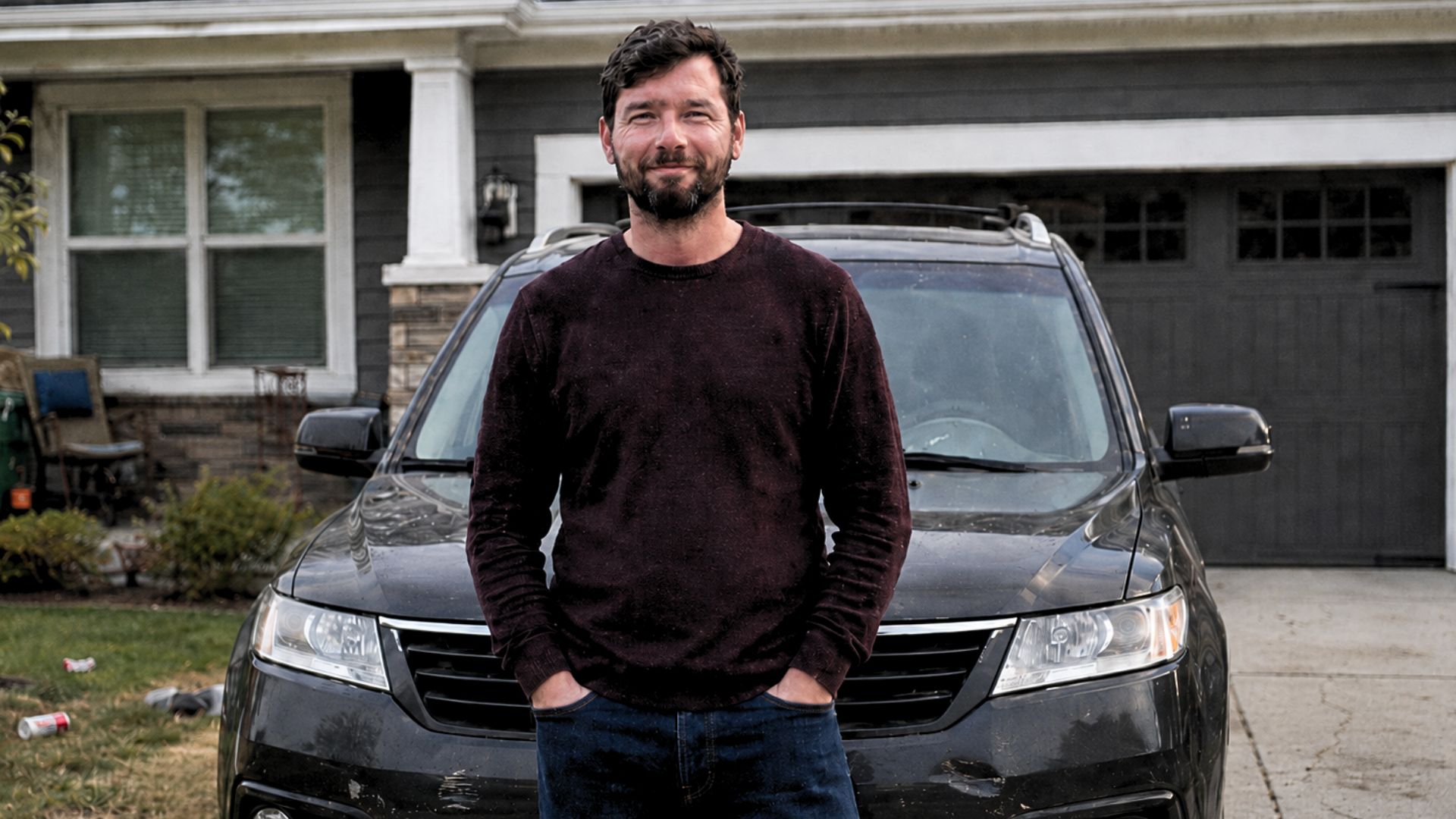
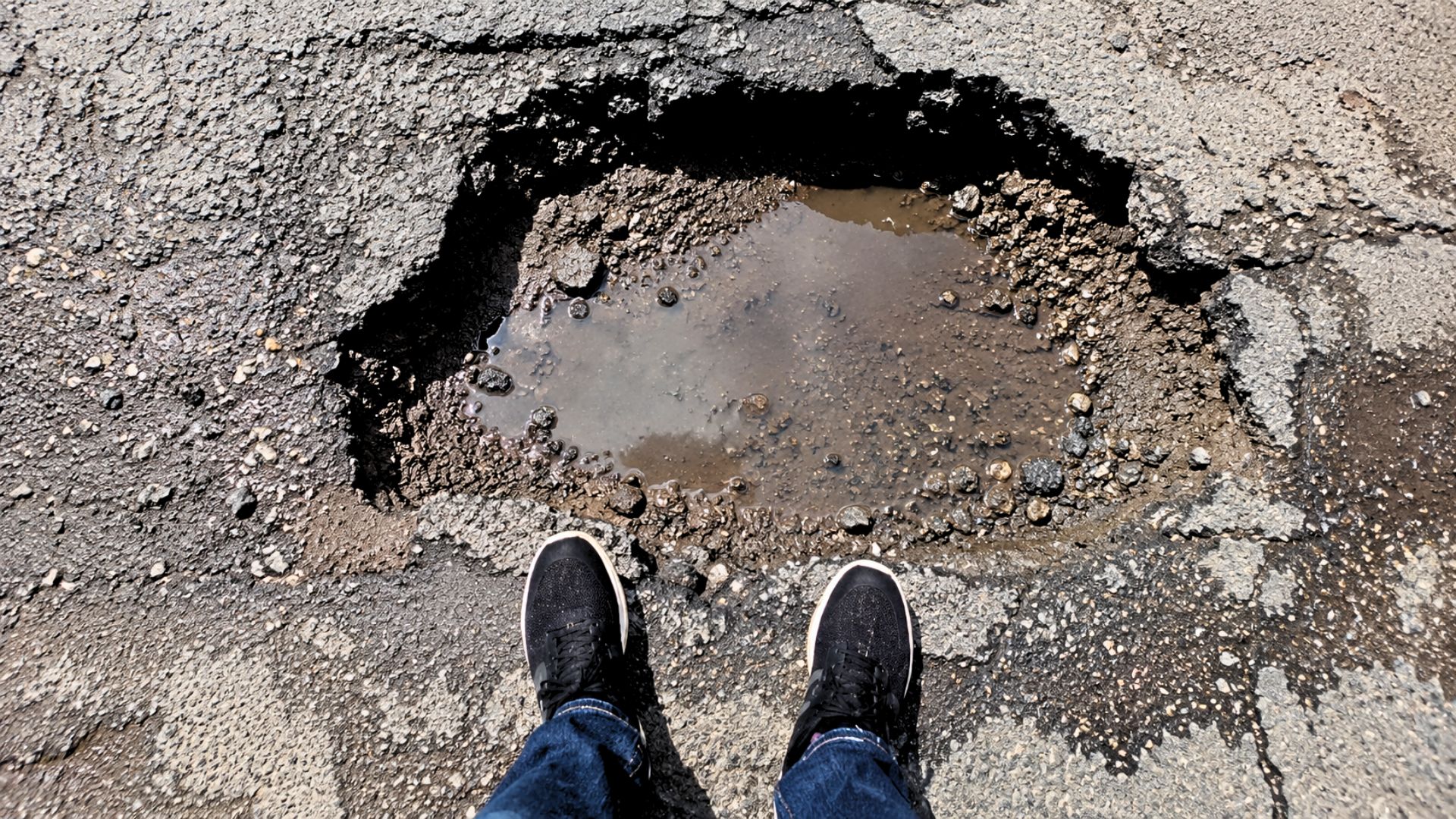
Florence, South Carolina – Calvin McBride knows which pothole to miss before he sees it. It sits near the edge of the right lane, not far from where the morning traffic begins to thicken outside Florence. On dry days, it looks like a dark scar in the asphalt. On rainy days, it disappears under brown water and waits for somebody who forgot.
Calvin has not forgotten. He drives the same route most mornings from Darlington County toward Florence, where he works maintenance at a medical building. He leaves early, not because the trip is far, but because one stalled truck, one school drop-off backup, one lane closure or one bad patch of road can turn a normal commute into a guessing game.
“It’s not Atlanta traffic,” Calvin said. “Nobody here is saying that. But when the road is rough, the light is backed up and everybody is trying to get to work on the same two lanes, it feels like the whole region is running behind.”
That is the transportation problem facing much of the Pee Dee. The frustration is not only congestion. It is congestion layered on top of aging pavement, rural roads, freight traffic, limited transit, dangerous intersections and long repair timelines.
The Pee Dee Regional Transportation Authority says it serves the six counties that make up the region: Chesterfield, Darlington, Dillon, Florence, Marion and Marlboro. The Pee Dee Regional Council of Governments describes its transportation role as helping communities plan for highway infrastructure, public transit, planning studies and other regional needs in cooperation with SCDOT. In other words, this is not one city’s traffic problem. It is a regional mobility problem.
The average commute misses the point
On paper, the Pee Dee does not look like a major congestion hot spot. The U.S. Census Bureau lists the mean travel time to work in Florence County at 22 minutes from 2020 to 2024. In Darlington County, it was 22.5 minutes. Those numbers are lower than the statewide average and far below what drivers face in some larger metro areas.
But averages can hide where the pain is. They do not show the backup near Five Points. They do not show the slow crawl around Second Loop Road. They do not show trucks moving through commercial corridors, school traffic stacking up, or drivers trying to cross from rural roads into Florence’s job centers. They do not show the person whose 22-minute commute becomes 45 minutes when one crash blocks the wrong lane.
Calvin feels that difference almost every week.
“The map says 24 minutes,” he said. “That’s if nothing happens. Around here, something always happens.”
Florence County is the region’s employment and retail hub. Census data shows the county had 67,074 total employees in 2023, with more than $3.3 billion in retail sales in 2022. That economic pull brings people in from surrounding communities for work, health care, shopping, school, court, appointments and errands.
That means traffic is not only about people who live in Florence. It is about the region flowing toward Florence and back out again.
Read also: In South Carolina, child care is becoming the job before the job
The roads are carrying more than daily drivers
The Pee Dee sits in a transportation corridor. I-95 runs through the region. I-20 ends in Florence. U.S. highways and state routes carry workers, freight, tourists, farm traffic, emergency vehicles and school buses.
That mix creates stress on roads that were not always built for today’s volume or speed. According to SCDOT, South Carolina’s highway system is about 41,000 miles, and nearly one-quarter of it is under contract for paving. The agency says more than 1,200 miles of rural road safety projects are underway statewide, with a 20% reduction in fatalities and serious-injury crashes on completed projects.
That is progress. It is also an admission of scale. South Carolina is still recovering from years of deferred maintenance, and rural regions such as the Pee Dee feel that history in the pavement.
The state’s 2026 Pavement Improvement Plan added $576 million to earlier pavement investments and covered another 732 miles of roadway statewide. SCDOT’s 2026-27 pavement program later added another 734 miles.
For drivers, those numbers can sound large and still feel far away. A state program can be moving in the right direction while a local road remains patched, cracked or narrow. Calvin does not read pavement plans. He reads his tires.
“I know when the road changes by the sound the truck makes,” he said. “You hit a smooth stretch and it gets quiet. Then you get back on the bad part and everything starts rattling again.”
Florence’s bottlenecks are getting official attention
Local transportation planners know some of the trouble spots.
The FLATS MPO’s FY2025 Annual Obligations Report said 26 transportation projects in its study area received $9.15 million in total obligations, including $7.08 million in federal transportation dollars and $2.07 million in state or local matching funds.
The report describes the FLATS study area as an urban area of more than 120,000 residents covering about 440 square miles, including Florence, Darlington, Timmonsville, Quinby and nearby unincorporated areas. It also points to specific projects that reflect what drivers already know.
South Cashua Drive between Second Loop Road and Knollwood Road was widened from three lanes to five lanes in a rapidly developing area outside Florence. A Holly Circle intersection project added signalization at Second Loop Road to address increasing traffic volumes and improve operations. And planners identified Coles Crossroads, where South Irby Street, Second Loop Road and Pamplico Highway meet, as a heavily traveled junction needing operational and safety improvements.
Those projects matter because congestion in the Pee Dee is often intersection congestion. It is not always miles of bumper-to-bumper freeway. It is five lights in a row. It is a left turn that never clears. It is a school bus, a delivery truck and a line of commuters all trying to use the same opening. For Calvin and thousands of area drivers, one bad intersection can shape the whole morning.
“You sit through a light three times,” he said. “Then you get to work and somebody says, ‘Traffic?’ like it’s an excuse. It’s not an excuse when it happens every day.”
Read also: We analyze: The most dangerous road corridors in Florence County
Poor roads are also a safety issue
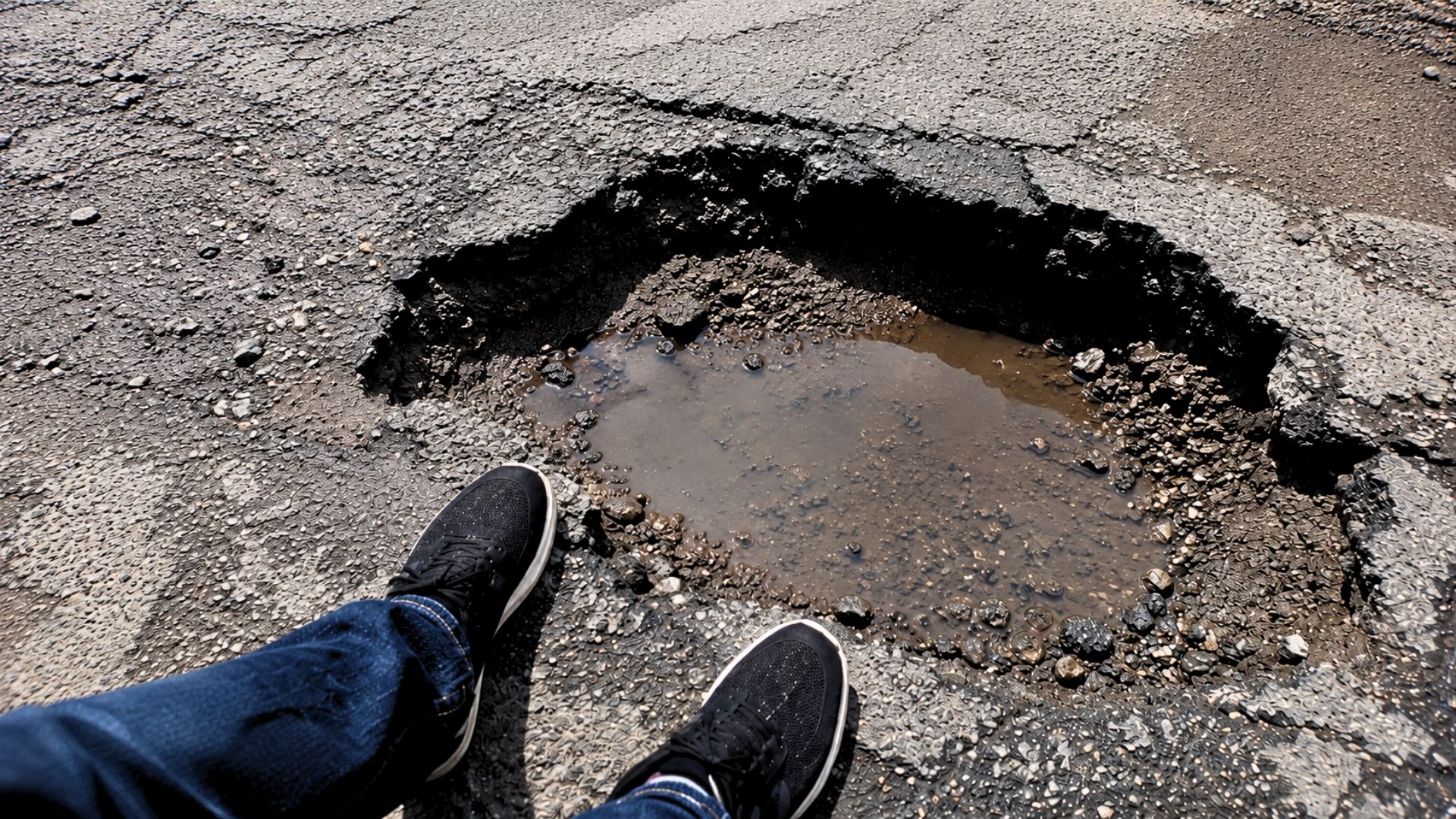
Rough roads are not just uncomfortable. They can become dangerous. A driver who swerves to avoid a pothole may drift toward another lane. A narrow shoulder leaves no room for a breakdown. Poor visibility on rural roads can turn a normal night drive into a risk. Standing water hides pavement damage. A bridge posting can force long detours for heavy vehicles or school buses.
South Carolina still carries serious roadway safety concerns, especially outside interstates. SC Daily Gazette reported that SCDOT’s rural road safety work had improved more than 400 miles of primary rural roads by March 2025, adding features such as wider shoulders, rumble strips and brighter signs, and that completed projects had reduced serious and fatal crashes by 20%. The same report noted that South Carolina had the nation’s highest fatality rate on non-interstate rural roads, based on a TRIP analysis of 2022 data.
Bridge conditions add another layer. The ARTBA Bridge Report found that 602 of South Carolina’s 9,504 bridges, or 6.3%, were classified as structurally deficient. That does not mean every bridge is unsafe to cross. It does mean key elements are in poor or worse condition and need attention.
In a rural region, one bridge or one road closure can have an outsized effect. The detour may not be around the block. It may be several miles, through roads that are already narrow, worn or unfamiliar. Calvin learned that when a road closure pushed him onto a route he barely knew.
“It was dark, no shoulder, headlights coming at you, and the road felt like it just dropped off at the edge,” he said. “That’s when you understand why people want these roads fixed.”
Read also: We analyze: The most dangerous road corridors in Florence County
Limited transit leaves most people with no choice
The Pee Dee does have public transportation, but the region is still heavily car dependent.
PDRTA data shows that it has served the region for more than 51 years and is dedicated to providing public transportation across six counties. That service matters, especially for people without cars, older residents, workers, students and people traveling to medical care.
But public transit in a spread-out rural and small-city region cannot replace the car for most households. Many jobs start before routes are convenient. Many homes are far from stops. Many workers need to make multiple trips in one day: school, job, pharmacy, grocery store, parent’s house, second job.
So even people who would rather not drive often have to.
That makes road quality a household expense. Bad pavement becomes tire damage. Long congestion becomes gas money. Detours become missed wages. A crash becomes a late pickup fee. A rough commute becomes stress carried into the home.
In lower-income counties, those costs matter more. Darlington County’s median household income was $48,581, and its poverty rate was 24.6%. Florence County’s median household income was $58,305, with 17.5% of residents in poverty. A tire replacement or front-end repair can be a serious financial hit.
“When the road tears up your car, nobody sends you a check,” Calvin said. “You just figure out which bill waits.”
What the Pee Dee needs now
The Pee Dee’s road problem does not have one answer.
Paving helps, but only if it reaches the roads people actually use every day. Intersection improvements help, but only if they are planned before growth overwhelms the corridor. Rural safety upgrades help, but only if they continue long enough to change the roads that still feel dangerous. Transit helps, but only if service is usable for real work schedules and medical trips.
The region also needs clearer public communication. Residents often know which roads are bad, but not where those roads rank on repair lists. They know which intersections back up, but not when a project will move from study to construction. They know when their commute gets worse, but not always which agency controls the road.
That confusion weakens trust.
A driver does not care whether the problem belongs to the city, county, MPO, COG or SCDOT. A driver cares whether the lane is open, the pavement is safe and the signal works.
Calvin still leaves early. He still checks the traffic app. He still slows down before the pothole. He still keeps an extra $20 in the glove box when he can, just in case something on the road turns into something at the repair shop.
On a recent morning, he made it to Florence only six minutes late. Nothing major had happened. No crash. No closed lane. No emergency. Just the usual drag: a rough stretch, a backed-up turn, a truck crawling through a light, a line of drivers with nowhere else to go.
That is what makes the problem hard to explain. The Pee Dee does not have to be gridlocked to be worn down by traffic. It only has to make ordinary trips feel uncertain every day.
“You get used to it,” Calvin said. “That’s the worst part. You start thinking bad roads and waiting in traffic are just part of living here.”
They do not have to be.

