
New York – While most prominent New York Democrats, House Minority Leader Hakeem Jeffries and Senate Democratic Leader Chuck Schumer, appear preoccupied with criticizing President Trump’s White House ballroom renovation project, many Americans are growing frustrated with the direction of congressional Democrats.
What was intended as a pointed political attack has instead come across as tone-deaf to large segments of the public, especially at a time when inflation, border security, housing costs, and rising everyday expenses continue to weigh heavily on working families.
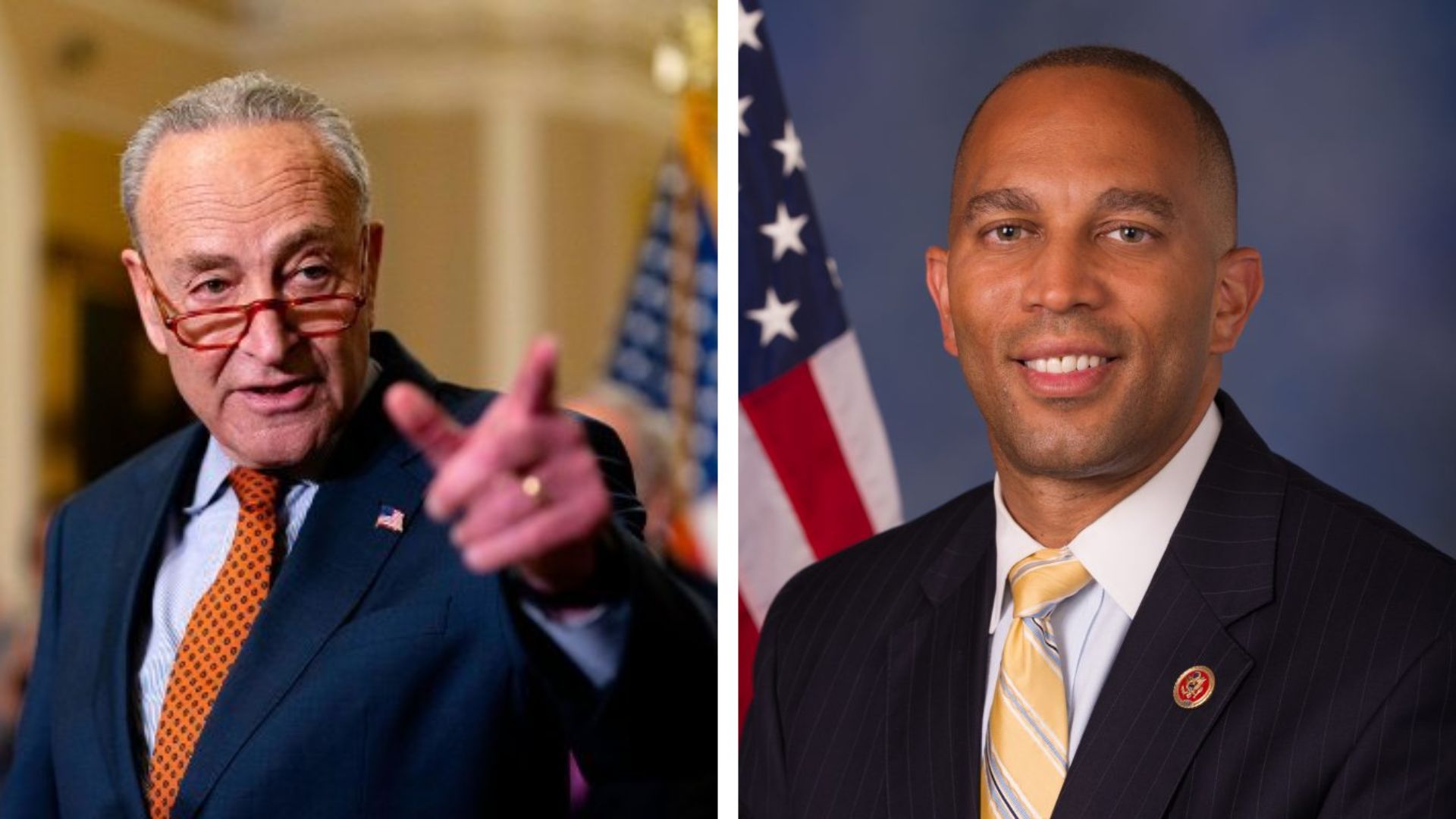
The American public expects more from its elected leaders.
Rather than focusing on symbolic battles over White House decor, voters want Jeffries and Schumer to roll up their sleeves and fight in the Capitol for the issues that directly impact people’s daily lives, stronger economic opportunity, safer communities, affordable energy, and practical solutions to the challenges facing the middle class.
In an era of deep polarization, delivering tangible results for constituents may prove far more valuable than partisan point-scoring.
And just few days ago, a remarkable figure in the Democratic Party pointed out how and where Democrats continue to make mistake and lose voters.

Barney Frank, a towering liberal figure whose career helped shape some of the Democratic Party’s most defining battles, is using what may be one of his final public messages to warn his own side that political passion without strategy can carry a heavy cost.
The former Massachusetts congressman, now 86 and in hospice care with congestive heart failure, appeared Sunday on CNN’s “State of the Union” with a blunt argument for Democrats: the party, in his view, has allowed some of its loudest progressive fights to overshadow issues that many voters see as more immediate.
Frank, who served in the House of Representatives from 1981 to 2013, said Democrats risk losing people when they appear to push far-left cultural messages faster than the public is ready to accept them.
His warning carries particular weight because it does not come from a conservative critic or a longtime opponent of the left. Frank was one of the Democratic Party’s best-known liberal voices for decades.
He fought for same-sex marriage, became one of the most visible openly gay elected officials in American politics, and played a central role in passing the Dodd-Frank financial regulations after the 2008 economic crash. That history makes his criticism sharper, because he is not rejecting progressive goals. He is questioning how and when Democrats choose to advance them.
“We didn’t get to marriage until after these other things had been resolved,” Frank said during the CNN appearance.
He then connected that lesson to today’s debates, adding, “And that’s what I’m suggesting that we do today. The analogy is males and female trans playing sports that are for women.”
Frank’s point was not that Democrats should abandon trans people or other communities at the center of modern civil rights debates. Instead, he argued that the party should approach sensitive issues with more care, more detail and less political absolutism. In his view, broad moral declarations can backfire when voters feel they are being judged before they are persuaded.
“I understand there’s a lot of anger about that,” he continued. “And I think, in the interest of the transgender community, as well as others, it would be better to go at that in a more granular way, and not simply announce that, if you don’t support it, you’re a homophobe.”
That line captured the heart of Frank’s warning. He is urging Democrats to make room for persuasion, not just pressure.
He is saying that voters who are uncertain, uncomfortable or still thinking through complex cultural questions should not automatically be pushed away as enemies. For a party trying to rebuild trust with a wider public, Frank suggested that tone matters as much as policy.
His remarks come as he prepares to release a book criticizing the far-left wing of the Democratic Party.
According to the context around the book, Frank argues that some progressive activists have focused too heavily on symbolic or divisive causes while neglecting kitchen-table concerns such as economic inequality. His criticism is aimed at the party’s political priorities, especially at a moment when Democrats are trying to win back congressional majorities from Republicans in this year’s midterm elections.
The political backdrop is difficult for Democrats.
A national CNN poll released in April found that only 28% of Americans view the Democratic Party positively, while 56% have an unfavorable view. Those numbers point to a party facing more than a temporary messaging problem. They suggest a deeper image crisis, one that could shape voter behavior when control of Congress is on the line.
For Frank, the lesson is rooted in his own career. Same-sex marriage, one of the causes he championed, did not become a national success overnight. It moved through courts, legislatures, public debate and years of changing opinion. Frank appears to be telling Democrats that durable change often comes through timing, discipline and patience, not simply through demanding instant agreement.
Near the end of his life, Frank is not offering Democrats a quiet farewell.
He is delivering a political alarm bell. The party he helped define, he argues, still has causes worth fighting for. But if it wants to win voters, hold power and deliver real change, it may need to speak less like a movement talking to itself and more like a party trying to persuade a country.

