
California – U.S. Rep. Kevin Kiley of California announced that he is leaving the Republican Party and will now serve in Congress as an independent, a move that immediately tightens the already narrow margin Republicans hold in the House of Representatives.
The decision, confirmed Monday, means the GOP’s advantage in the chamber shrinks further, underscoring just how delicate the balance of power has become in Washington.
Kiley, a two-term congressman first elected to the House in 2022, said he has asked the clerk of the House to update his party designation on the official roster to reflect his new status as an independent. The change takes effect immediately.

Despite stepping away from the Republican label, Kiley indicated he plans to continue caucusing with House Republicans for administrative purposes, which allows him to retain his current committee assignments.
His departure comes at a sensitive moment for congressional Republicans. With Kiley no longer formally counted among GOP members, the House now stands at 217 Republicans and 214 Democrats, with several seats vacant. That razor-thin margin means party leaders can afford to lose very few votes when advancing legislation, making every member’s alignment increasingly significant.
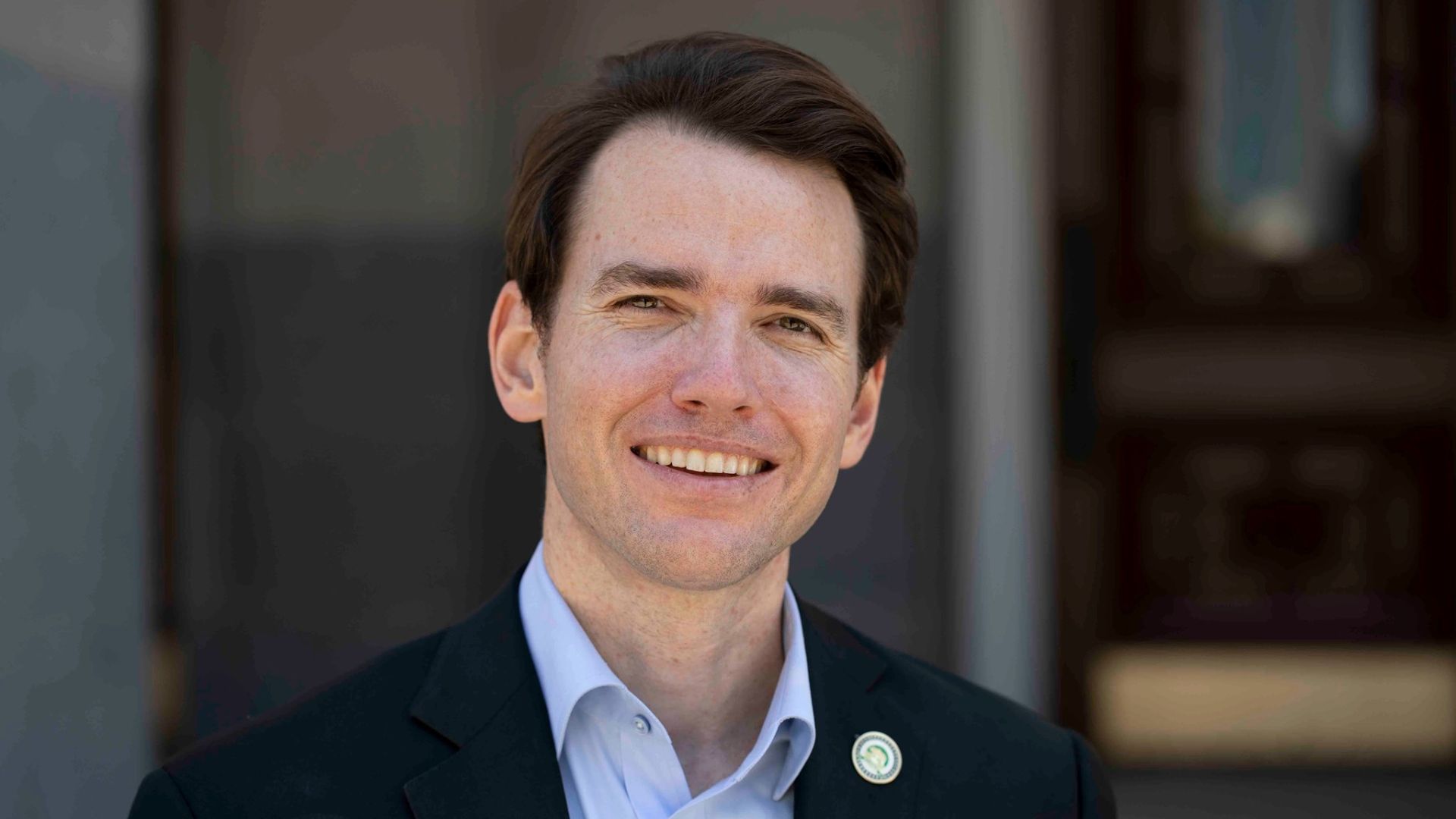
Kiley explained that his decision was shaped largely by the impact of redistricting in California, which significantly altered the political landscape of his district. The redrawing of congressional boundaries placed him in a new district centered around the Sacramento area that leans more heavily Democratic.
Kiley announced in a statement last week that he would now run in California’s newly redrawn 6th congressional district, which the nonpartisan Cook Political Report rates a “D+5.”
“It’s true that I was fully prepared to run in the new 5th, having tested the waters and with polls showing a favorable outlook in a ‘safe’ district. But doing what’s easy and what’s right are often not the same. And at the end of the day, as much as I love the communities in the 5th district that I represent now — and as excited as I was about the new ones — seeking office in a district that doesn’t include my hometown didn’t feel right,” Kiley said.
“The new 6th district is Democratic-leaning but open-minded. While this will be a more challenging race, I believe we can build a winning coalition for common sense. Thanks to all for your encouragement and patience.”
Facing the prospect of running in a competitive and politically different district, Kiley opted to pursue reelection without a party label.
Speaking to reporters, Kiley framed the move as an attempt to distance himself from what he described as the increasing dominance of partisan politics. He argued that gerrymandering and party-driven competition have intensified political divisions and distorted how representatives approach governance.
By removing the party affiliation from his candidacy, he said, he hopes to focus more directly on representing constituents rather than partisan interests.
“It is no secret I’ve been frustrated, at times disgusted, by the hyper-partisanship in Congress. In the last year it’s led to the longest government shutdown in U.S. history, a massive increase in healthcare costs, and of course, a pointless redistricting war. The epidemic of gerrymandering has spread from Texas to California to states all across the country. Both parties are complicit,” he said Friday.
“I’ve always said I would be an independent voice for our district,” Kiley told reporters while discussing his decision, emphasizing that the new designation simply reflects how he believes he has approached the job all along.
Read also: California governor’s South Carolina stop draws attention ahead of 2028 presidential run speculation
The congressman’s political path leading up to this shift has included moments of divergence from party leadership. In recent months, he was among a small group of Republicans who joined Democrats in voting to reverse tariffs imposed on Canada, a move that highlighted his willingness to break ranks on key policy issues.
Kiley’s political career began in California state politics before he entered Congress. Born in Sacramento and educated at Harvard University and Yale Law School, he served in the California State Assembly from 2016 to 2022 before winning a seat in the U.S. House the following year.
His shift to independent status also carries broader political implications. In a chamber where a handful of votes can determine whether legislation advances or stalls, even small changes in party affiliation can ripple through the legislative process. Analysts note that the move adds another layer of uncertainty for House leadership, which must already navigate internal divisions and an extremely tight majority.
At the same time, Kiley’s decision highlights the pressures facing lawmakers in districts reshaped by redistricting battles between the parties. As California and other states redraw political maps, some incumbents have found themselves representing areas with very different political identities than the ones that first sent them to Washington.
Read also: Legal fight over South Carolina election laws moves to next court decision
For Kiley, stepping away from the Republican label may be a strategic attempt to appeal to a broader range of voters as he prepares for a difficult reelection campaign in a district that now tilts toward Democrats.
For now, the congressman will remain in Washington as the House’s only independent member, a rare position in a chamber typically defined by strict party alignment. His decision marks a notable moment in the current Congress—one that both reflects and reinforces the fragile arithmetic shaping the nation’s legislative politics.

