
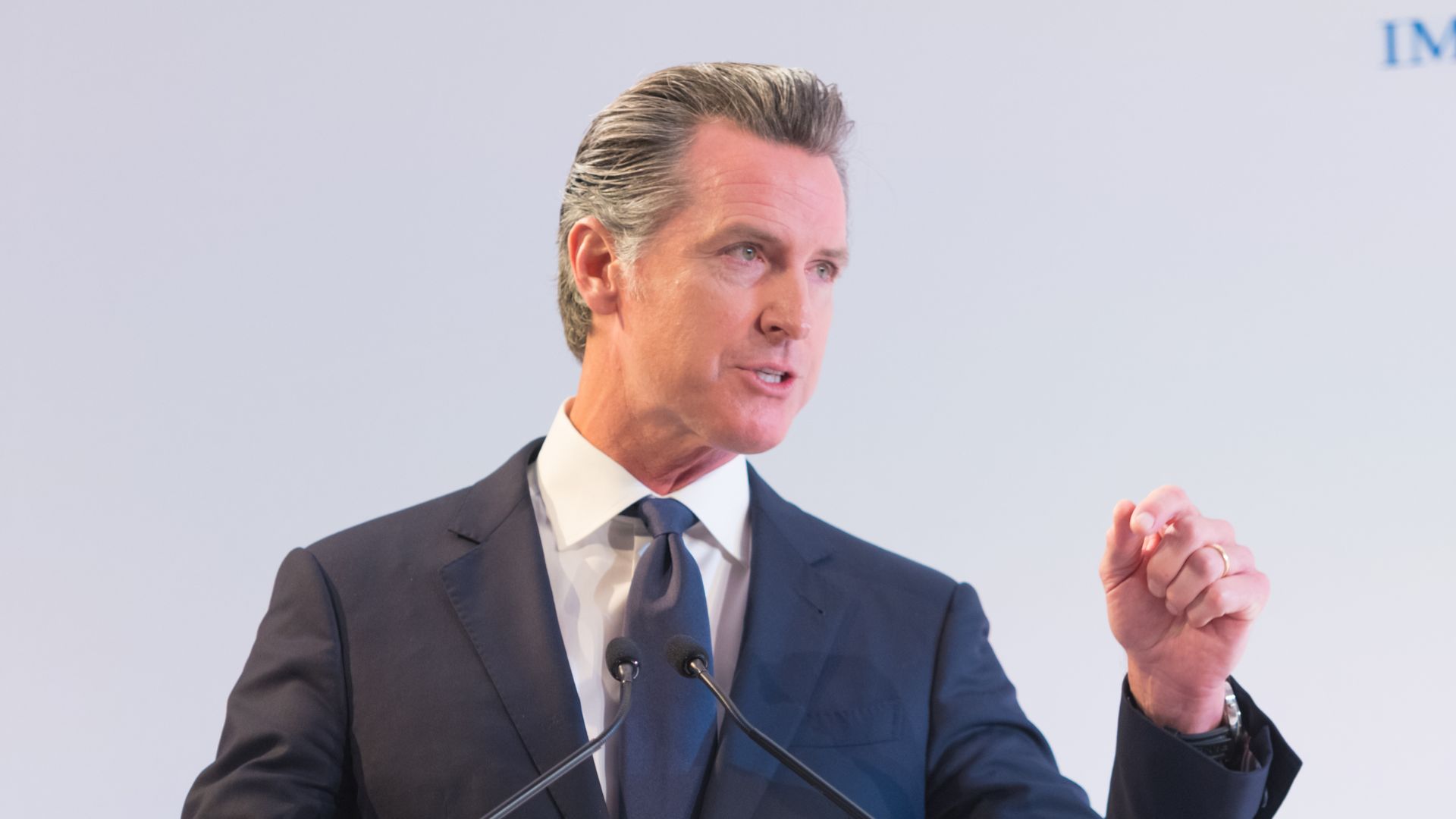
California – California Governor Gavin Newsom, the potential Democratic presidential candidate in 2028, has had a busy weekend with public appearances and activity on social media.
President Donald Trump’s latest ethics filings have opened a new political storm over money, power and access in Washington.
This comes after the U.S. Office of Government Ethics recently released documents showed a burst of personal stock and financial trading activity worth hundreds of millions of dollars during the first quarter of 2026.
The filings, made public on May 14, revealed more than 3,600 transactions tied to Trump’s investment portfolio, with the total value estimated between at least $220 million and as much as $750 million.
Because federal disclosures list transactions in broad ranges rather than exact amounts, the full value cannot be pinned down precisely.

Still, the scale alone was enough to trigger a fresh round of scrutiny over whether the president’s private financial interests are too closely positioned around companies affected by his administration’s policies.
Reporting by several major news outlet showed that the trades involved some of the biggest names in American business, including Nvidia, Microsoft, Meta, Apple, Amazon, Oracle, Boeing, Broadcom, Goldman Sachs, Blackstone and BlackRock.
The filings also showed activity in index funds, municipal bonds and companies linked to artificial intelligence, defense, immigration enforcement, exports and other areas where federal decisions can shape market fortunes.
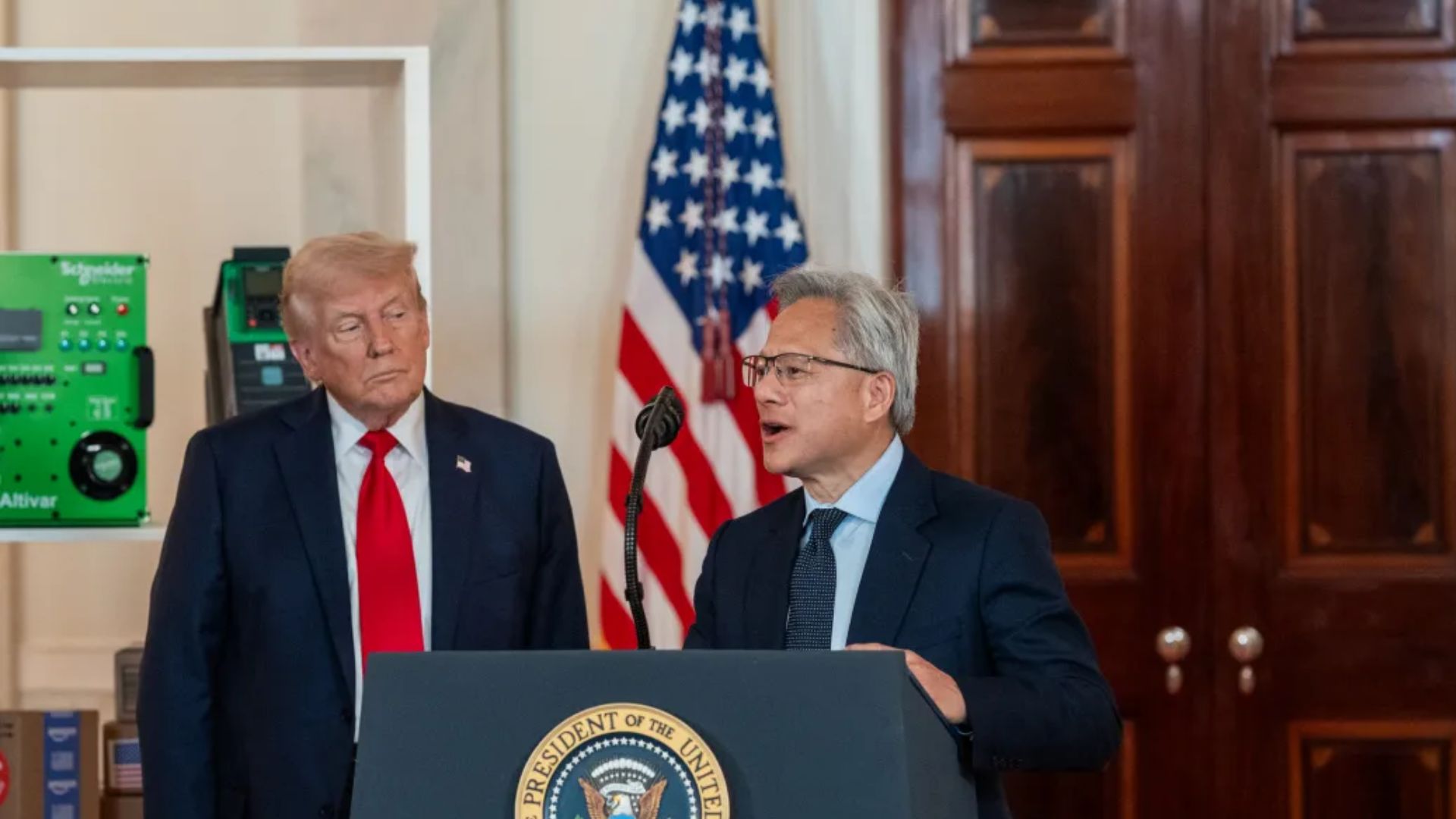
Among the trades drawing attention were purchases of Nvidia and AMD shares before favorable export-related developments involving chip sales to China.
Trump bought between $500,000 and $1 million in Nvidia stock on January 6, about a week before the Commerce Department approved expanded sales of certain Nvidia chips to Chinese customers.
He later bought another tranche valued between $1 million and $5 million in February, just days before Nvidia announced a major AI computing deal with Meta.
AMD appeared in a similar pattern.
Trump purchased between $50,000 and $100,000 in AMD stock on January 6, shortly before the Commerce Department authorized AMD to sell chips to Chinese customers. Over the quarter, the president acquired at least $740,000 in AMD shares, according to the reports.
Palantir also became part of the ethics debate.
Trump bought at least $260,000 worth of Palantir stock during the period, while also selling between $1.1 million and $5.3 million in February.
Read also: “Complete and total embarrassment” Chuck Schumer’s deranged meltdown over Trump-Xi Summit backfires
The activity overlapped with Palantir’s federal work, including a major Department of Homeland Security contract connected to software supporting immigration enforcement efforts, as well as large Pentagon deals involving artificial intelligence systems.
Another transaction attracting notice involved Axon Enterprise, the company known for Tasers and police body cameras. On February 10, Trump bought between $1 million and $5 million in Axon stock.
Weeks later, Immigration and Customs Enforcement outlined plans to spend $220 million on Tasers over five years.
The White House and Trump Organization rejected suggestions that the president was personally directing the trades or using his office for financial gain.
A Trump Organization spokesperson said the investments are handled independently.
“President Trump’s investment holdings are maintained exclusively through fully discretionary accounts independently managed by third-party financial institutions with sole and exclusive authority over all investment decisions.”
White House spokesman Davis Ingle also defended the arrangement.
“President Trump only acts in the best interests of the American public — which is why they overwhelmingly re-elected him… President Trump’s assets are in a trust managed by his children. There are no conflicts of interest.”
Read also: “Dems must confront their own problem”: Sen. Fetterman rages on Dems as top PA judge dumps Democrats
But the defense did little to quiet critics, especially because Trump has publicly backed tougher stock-trading rules for other officials.
During his recent State of the Union address, he called for a ban on members of Congress trading individual stocks, arguing that such limits would help fight insider trading. Rep. Mark Takano, a California Democrat, reportedly responded from the chamber: “How about you first?”
California Gov. Gavin Newsom’s office seized on the disclosures with a blunt message posted on X, formerly Twitter, while sharing coverage of the filings.
“Corruption at the highest level. The same kind of corruption Trump said he’d fight against. Total betrayal,” the governor’s press office wrote.
Corruption at the highest level.
The same kind of corruption Trump said he’d fight against.
Total betrayal. https://t.co/yX4dwgCDau
— Governor Newsom Press Office (@GovPressOffice) May 17, 2026
The post quickly drew heavy attention, with users arguing over whether the trades showed a serious ethical breach or simply reflected investments managed by outside professionals.
Supporters pointed to the blind trust and third-party management claims.
Critics said the issue is not only who clicked the button to buy or sell, but whether a president should hold large positions in companies whose fortunes may rise or fall based on federal decisions.
For now, the filings have done more than expose a long list of transactions.
They have revived an old question with new urgency: how separate can a president’s private wealth really be from the power of the office? As additional financial disclosures and reporting are expected, the political fight over Trump’s portfolio is unlikely to fade quickly.

