
Florida – Trump this week fired Florida’s Pam Bondi from her Attorney General position.
Then, a sudden reshuffling inside the White House has once again placed Vice President JD Vance in an unusually prominent position. Donald Trump handed him sweeping authority to oversee a nationwide effort targeting alleged fraud, particularly in Democratic-led states like California, New York and Illinois.
The move, announced in a sharply worded Truth Social post, framed the issue as “massive and pervasive,” with Trump signaling that the initiative would focus heavily on so-called “Blue States.”
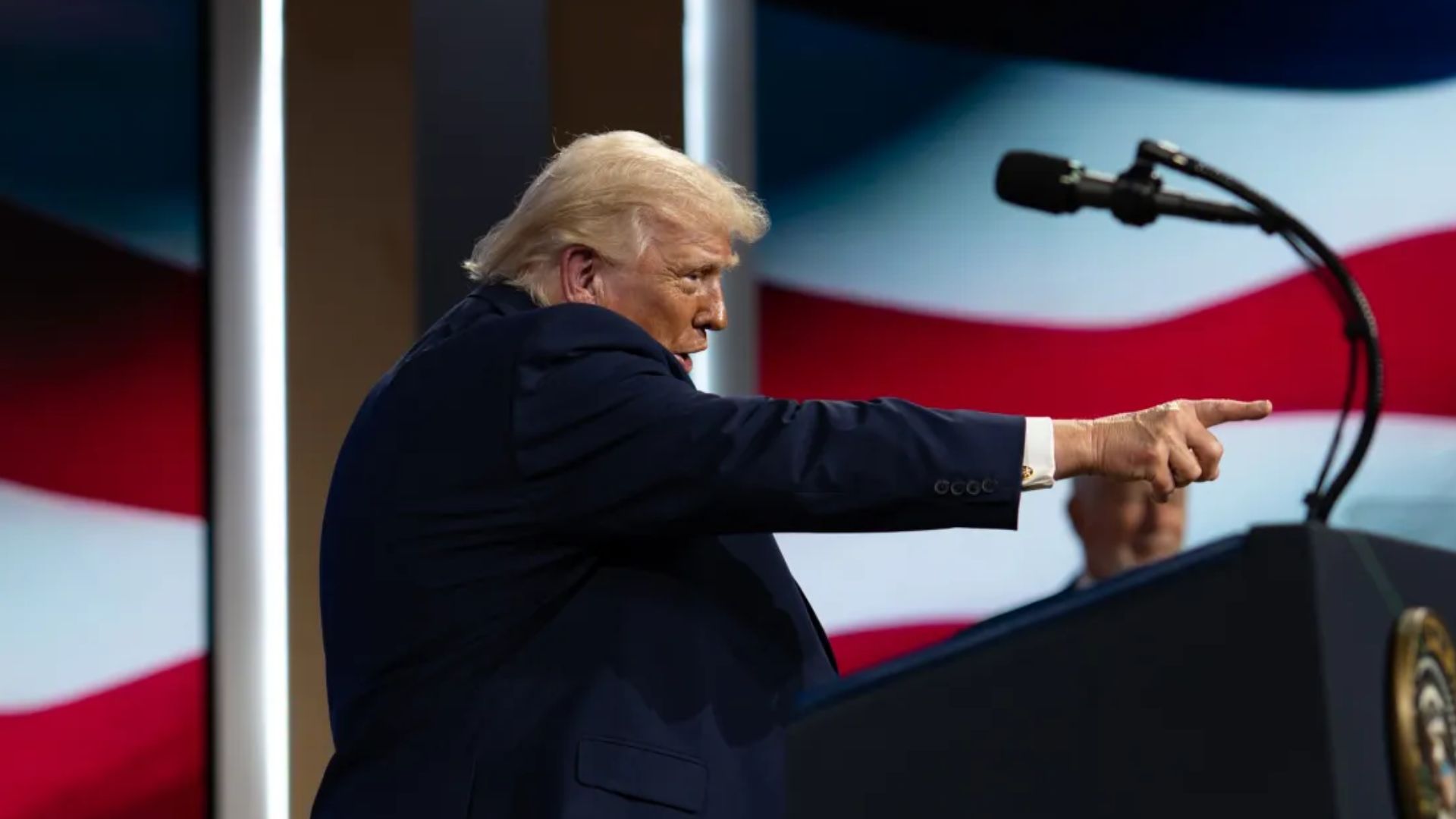
The directive followed closely on the heels of internal changes, including the removal of Pam Bondi, underscoring a broader shift in how responsibilities are being distributed at the highest levels of the administration.
While the assignment gives Vance a powerful and highly visible role, it also arrives at a moment when political tensions are intensifying across multiple fronts.
The framing of the initiative, along with its clear political undertones, has added to an already charged atmosphere in Washington.
Yet even as the administration projects authority and urgency, a very different narrative has begun to take shape outside the White House, one that questions not just the direction of policy, but the durability of the presidency itself.
That narrative has been driven in part by veteran Democratic strategist James Carville, who has publicly predicted that Donald Trump may not complete his current term.
In a video published by Politicon on March 16, Carville offered a blunt assessment of the pressures facing the president, arguing that a combination of political setbacks and mounting crises could ultimately push Trump to step aside.
“Everything that he tries blows up in his face,” Carville said.
“I’m telling you, I think he’s just going to quit next year by this time. I think he’s just going to f—ing walk away because the Democrats control the House and the Senate.”
Carville’s prediction hinges largely on the expected outcome of upcoming midterm elections. Polling aggregates, including those compiled by The New York Times, currently show Democrats holding a modest advantage. If that edge translates into control of Congress, Carville believes Trump could find himself sidelined, unable to advance his agenda and increasingly isolated in Washington.
“No one’s going to pay attention to him,” he added, suggesting that political irrelevance, not just opposition, could become the defining challenge.
Beyond the political arena, Carville also pointed to escalating international tensions as a critical factor. The conflict involving Iran, which began on February 28 with joint U.S. and Israeli airstrikes, has already led to significant casualties.
According to U.S. Central Command, 13 American service members have been killed and more than 200 wounded. Incidents include a drone strike on a mobile operations center in Kuwait and a refueling aircraft crash in Iraq.
The economic consequences have followed quickly. After Iran shut down the Strait of Hormuz on March 2, global oil markets reacted sharply, sending U.S. gas prices climbing to an average of $3.80 per gallon, up from $2.94 just weeks earlier. The spike has added financial strain for American households while intensifying concerns about broader economic stability.
“The fiscal condition of the country is beyond the ditch. The Iran thing has turned into just a catastrophe of the first order,” Carville said.
The White House has firmly rejected that characterization, pushing back against claims that the administration is overwhelmed or losing control.
Officials have defended both the handling of international developments and the broader economic outlook, signaling no indication that the president is considering stepping down.
Still, Carville’s remarks have amplified an already growing conversation about the sustainability of the current political trajectory. His prediction, while speculative, reflects a wider unease among critics who see overlapping pressures, political, economic, and geopolitical, converging at once.
At the same time, Trump’s recent moves, including the expansion of Vance’s role, suggest an administration intent on maintaining momentum and asserting control. The contrast between those actions and the predictions of an early exit has created a striking divide in how the presidency is being interpreted.
For now, the situation remains fluid. On one side stands a White House continuing to act with urgency and confidence; on the other, a chorus of voices questioning whether that posture can be sustained. Between those competing visions lies an uncertain path forward, one that could ultimately determine not just the direction of policy, but the duration of the presidency itself.

