
California – Donald Trump’s endorsement dropped into California’s governor’s race like a thunderclap.
It is instantly changing the tone of a contest that was already crowded, uneasy and full of competing ambitions.
What had been shaping up as a fight among Republicans over strategy, identity and electability suddenly became something bigger: a test of how much Trump’s influence can still reorder a major race in a state where his party has struggled for years to find a winning path.
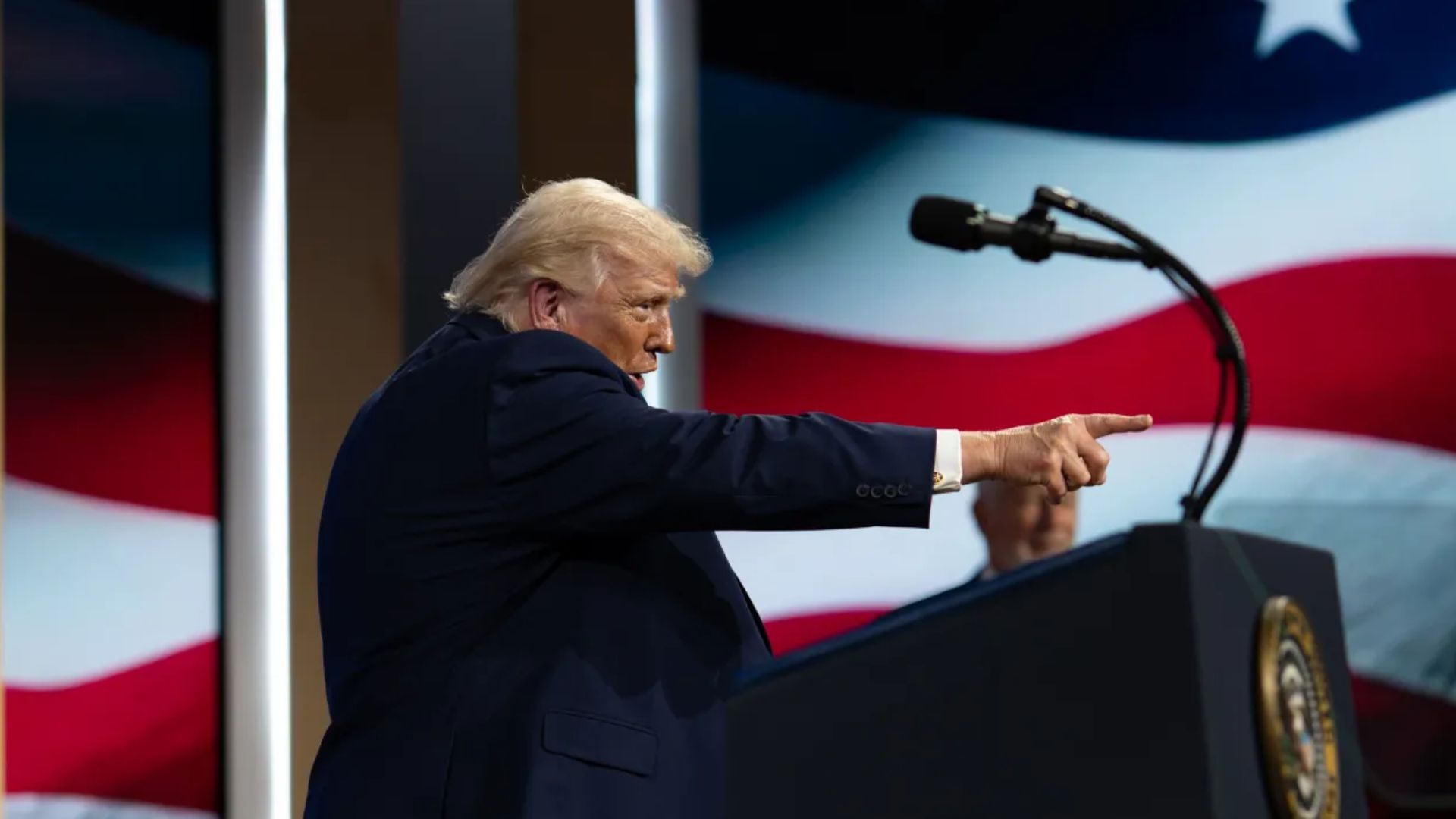
His backing of conservative commentator Steve Hilton arrived just before California Republicans gathered for their annual convention, giving the moment added force.
It was not merely a nod to a preferred candidate.
It was a message to donors, activists and party loyalists about who Trump believes should carry the Republican standard in a state long dominated by Democrats.
PRESIDENT DONALD J. TRUMP JUST GAVE STEVE HILTON HIS COMPLETE & TOTAL ENDORSEMENT FOR GOVERNOR OF CALIFORNIA! 🇺🇸
In his powerful statement, President Trump said:
“I have known and respected Steve Hilton… for many years. He is a truly fine man… Steve can turn it around, before… pic.twitter.com/gZnuOeH80y
— Steve Hilton For Governor (@TeamSteveHilton) April 6, 2026
In remarks highlighted by Fox News, Trump painted California in dark terms and cast Hilton as the candidate who could help reverse its direction, saying he would work with him from the White House.
That endorsement immediately elevated Hilton, but it also made the race more complicated.
Hilton is not a traditional California Republican who rose through local office, county politics or years of party organizing. His path has been far less conventional.
Before becoming a U.S. citizen in 2021, he was best known in Britain as a senior adviser to former Prime Minister David Cameron. Since then, he has built a public identity as a media figure and conservative commentator. Now he finds himself transformed into Trump’s preferred choice in one of the nation’s most closely watched state contests.
That unusual biography has become part of the story.
For supporters, it reinforces Hilton’s image as an outsider who is not bound by the habits of Sacramento politics.
For critics and skeptics, it raises questions about whether star power and national attention can substitute for a deeper homegrown Republican base in California.
Trump’s endorsement gave Hilton undeniable momentum, but it also intensified doubts about whether a race this difficult can be won through visibility alone.
Sheriff Chad Bianco, one of Hilton’s chief Republican rivals, moved quickly to push back.
In a video posted on social media, Bianco argued that voters, not party elites or powerful national figures, should decide who leads.
He criticized what he described as attempts from Sacramento and Washington to choreograph outcomes before rank-and-file Republicans have their say. His response turned the moment into more than a clash between two candidates. It became a broader argument over whether the future of the party will be driven from the grassroots or handed down from above.
That tension was visible at the California Republican Party convention in San Diego last weekend.
Despite the surge of attention surrounding Trump’s endorsement, the party left without formally backing a candidate for governor. Neither Hilton nor Bianco reached the 60 percent threshold needed for an official endorsement. The result said as much as any speech from the stage. Trump’s intervention may have reshaped the conversation, but it did not settle the contest.
The convention outcome also highlighted how divided Republicans remain.
Polling from Emerson College suggested the GOP electorate was split almost evenly between Hilton and Bianco, while Hilton also held a plurality of support among independent voters.
“The Republican electorate in California is split between Steve Hilton (38%) and Chad Bianco (37%), while Hilton also picks up a plurality of independent voter support at 22%,” Executive Director of Emerson College Polling Spencer Kimball shared in a statement.
That independent appeal could matter greatly in California, where Republicans cannot rely on their base alone if they hope to stay competitive.
The state’s top-two primary system only increases that pressure.
Because the two highest vote-getters advance to November regardless of party, a fractured Republican field could leave the party shut out of the general election altogether.
Analysts have suggested Trump’s endorsement may strengthen Hilton while weakening Bianco, but in doing so it could also create a scenario where both Republicans are exposed in a crowded field.
Hilton has brushed aside talk of an all-Republican runoff as unrealistic, arguing instead that the immediate goal is making sure at least one Republican reaches the top two.
That will not be easy. Several prominent Democrats are also in the race, including Xavier Becerra, Antonio Villaraigosa and Katie Porter. Even so, Democrats are not entirely unified either. Earlier this year, the California Democratic Party also failed to endorse a gubernatorial candidate, a reminder that uncertainty hangs over both sides.
Still, Republicans carry the heavier burden.
No GOP candidate has won statewide in California since Arnold Schwarzenegger secured re-election in 2006. Trump has now ensured that Hilton will remain at the center of the race, but the convention made one point unmistakably clear: the party is still split, the field is still unsettled, and the struggle over who can lead Republicans into California’s next political battle is nowhere near finished.

