
South Carolina – As pressure builds in Washington, a widening group of lawmakers from California, Arizona, Georgia, and other states has begun openly calling for President Donald Trump to be impeached.
The push gained fresh visibility last week when Rep. John Larson of Connecticut said he had filed articles of impeachment, adding another layer of tension to an already volatile political season.
The debate is unfolding at a moment when concerns about Trump’s second term are colliding with mounting anxiety over the coming midterm elections.
With control of both the House and Senate looming over the political landscape, Republicans are facing sharper questions about whether foreign policy risks and economic frustration at home could weaken their standing with voters later this year.
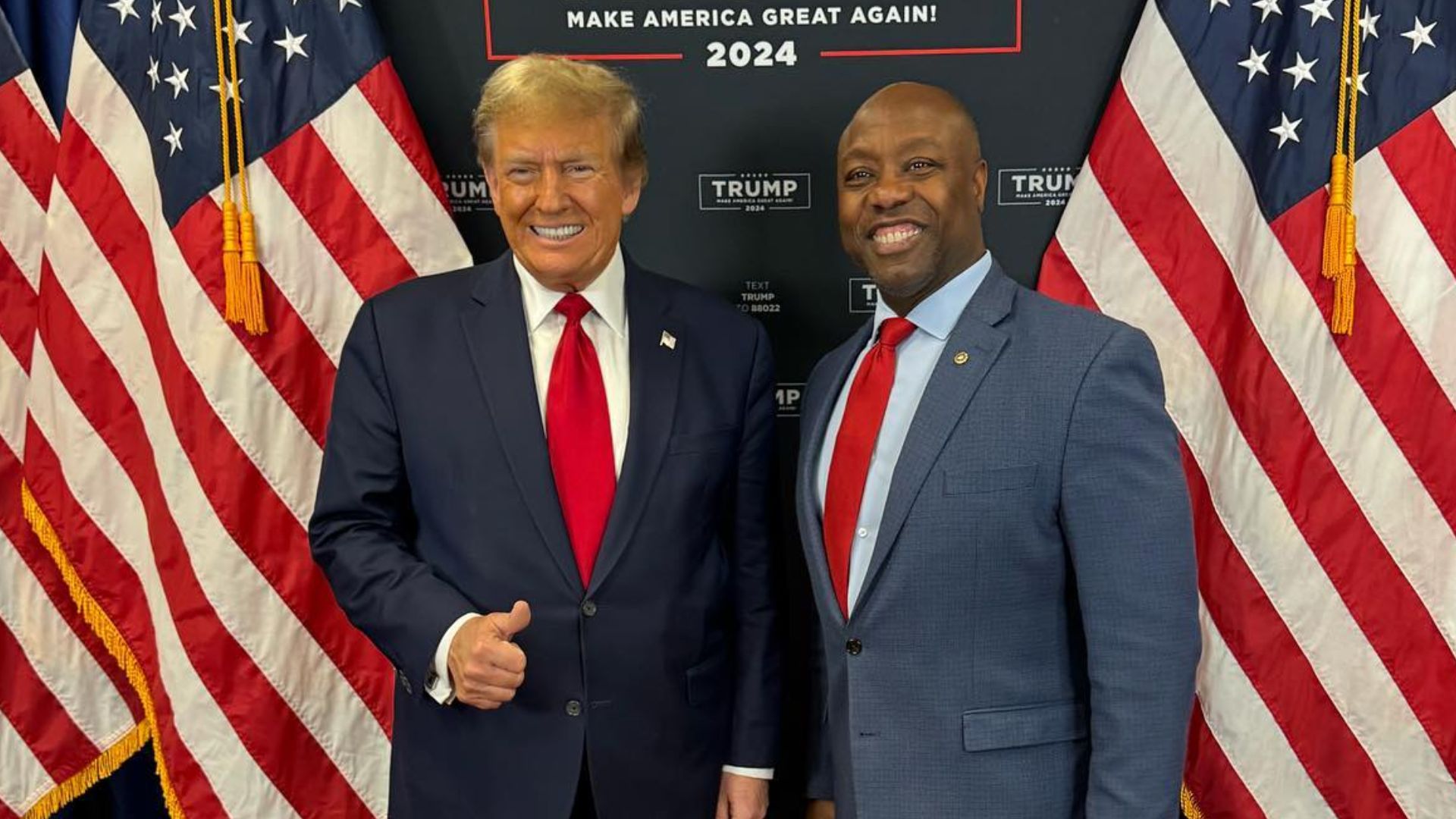
Into that uneasy climate stepped Sen. Tim Scott of South Carolina, who offered a clear argument this week that the bigger issue for Americans is not just the short-term pain tied to global instability, but the long-term danger of letting Iran gain nuclear strength.
Speaking Tuesday on Newsmax’s “Wake Up America” after returning to Washington from South Carolina, Scott said the message he has been hearing from constituents remains strikingly consistent.
“The most important thing I’ve heard at home is people trust President Trump,” Scott said.
“Really important. He is doing what no other president has done in nearly 50 years.”
Scott framed the growing tensions with Iran as a defining test of leadership, especially as U.S. forces maintain a blockade near the Strait of Hormuz and fears over regional escalation continue to ripple through energy markets.
According to the senator, voters back home are asking a blunt and consequential question about the direction of American policy.
“The real question I keep hearing back at home is, Do we want to negotiate with a nuclear Iran or one that does not have nukes? The answer is simple,” he said.
For Scott, the answer begins with leverage.
He argued that any negotiations with Tehran should happen only after the regime is stripped of nuclear capability, not while it still holds the power to dictate terms from a position of threat. In his view, the United States must make sure diplomacy is backed by strength, not hope.
“Let’s make sure our negotiations are always with Iran without teeth, without nukes. We kind of have a toothless tiger on the other side of this negotiation,” Scott said.
He went further, warning that trusting Iran would repeat mistakes the United States cannot afford to make again.
“The price is too high to negotiate with a nuclear Iran,” Scott said. “They cannot be trusted in any way, shape, or form. Bottom line is simply this: Trust President Trump to get it done; trust him to get it done quickly.”
Still, Scott did not ignore the political sensitivity of rising fuel costs, an issue that could quickly shape voter sentiment if tensions abroad continue to push prices higher.
He acknowledged that Americans are feeling pressure at the pump, but insisted the broader economic picture remains better than it was under the previous administration.
Scott also tried to project reassurance into the months ahead, predicting that the current spike would not last through the fall campaign season.
“What I can tell you is they are coming back down, I believe, sooner than the November election,” he said. “I frankly believe that by the time we’re in mid-summer, the prices will have come back down.”
Looking beyond fuel costs, Scott pointed to what he described as another possible advantage for Republicans heading into the midterms: bigger tax refunds tied to Trump’s “big, beautiful bill.” In his telling, that financial bump could matter deeply to households trying to stretch every paycheck.
Scott said that with an 11% increase in your tax returns, which equates to about $300 a month and more spendable income, the entire world becomes more affordable. He further argued that even relatively modest gains can have a meaningful effect on working families.
As the midterms draw closer, Scott’s message appears to rest on a simple political wager: that voters will tolerate temporary strain if they believe it is tied to stronger national security, lower costs ahead, and more money in their pockets.
Whether that calculation holds may help determine not only the future of Republicans in Congress, but the shape of the broader fight surrounding Trump’s second term.

