
In Arizona and Oregon, where mail-in voting is not just common but central to how elections are run, officials reacted almost instantly to a sweeping new federal move, one they say crosses a constitutional line.
A recent executive order signed by Donald Trump seeks to reshape how voter eligibility is tracked nationwide, but state leaders are already preparing for a courtroom battle that could define the boundaries of election authority in the United States.
The order, as first reported by the Associated Press, outlines a plan to create a national database of verified voters.
It directs the Department of Homeland Security, working alongside the Social Security Administration, to assemble lists of eligible voters for each state.
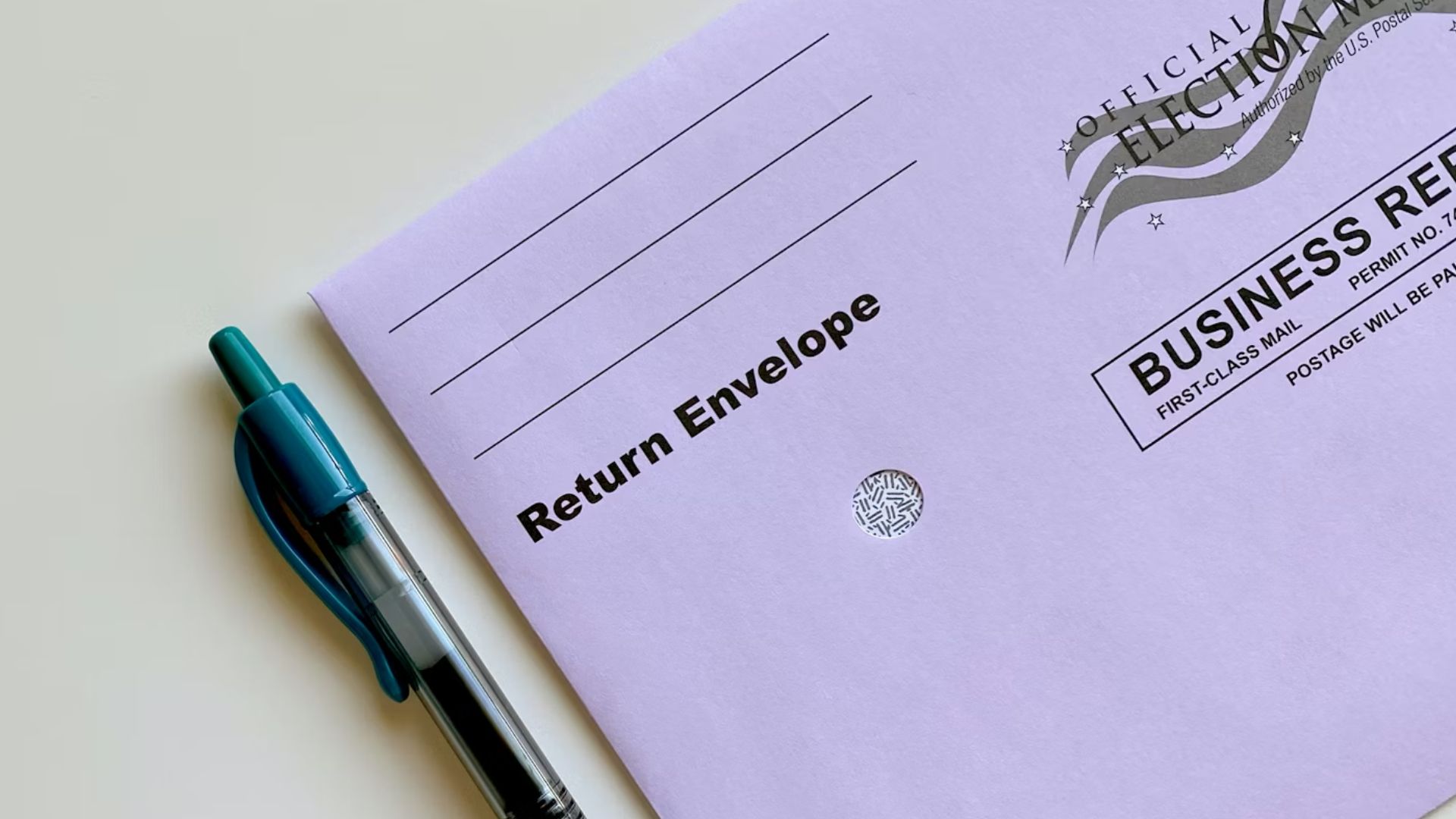
At the same time, it attempts to impose new limits on mail-in voting, including preventing the U.S. Postal Service from delivering absentee ballots to individuals not appearing on state-approved lists. It also calls for ballots to be issued in secure, trackable envelopes marked with unique barcodes.
Supporters of the move argue it could tighten election security.
But critics, including legal scholars and state officials, say the proposal ventures into territory the Constitution reserves for the states. Election administration in the U.S. has long been decentralized, with thousands of local jurisdictions handling everything from voter registration to ballot counting. The president, they argue, has no direct authority to take control of that process.
Within minutes of the order being signed, officials in Oregon and Arizona made their stance clear.
Tobias Read, whose state conducts all elections by mail, rejected the federal directive outright. He signaled that Oregon would challenge the order in court, emphasizing that election systems built and managed at the state level cannot be overridden by executive action from Washington.
“The President’s latest Executive Order is another desperate, illegal power grab. The Constitution is clear: states run elections. We don’t need decrees from Washington D.C. My message to the President: we’ll see you in court,” Oregon Secretary of State Tobias Read said in a post on the social platform X.

In Arizona, Adrian Fontes echoed that resistance. He pointed to the state’s long-standing vote-by-mail system, developed with bipartisan support, as evidence that existing processes already function securely.
“Donald Trump is attempting to pick his desired list of voters in each state with the Social Security Administration’s help. We will not let this stand,” Arizona Secretary of State Adrian Fontes added in his post on X.
The legal pushback is not limited to state officials. Marc Elias, a prominent election law litigator and founder of Democracy Docket, indicated that a court challenge would follow swiftly if the order is enforced. His position reflects a broader expectation among voting rights advocates that the measure will face immediate judicial scrutiny.
Experts in election law also questioned the order’s foundation.
David Becker, who leads the Center for Election Innovation and Research, noted that the Constitution grants authority over elections primarily to states and, in certain cases, to Congress, not the executive branch. He also highlighted practical concerns, including whether the president has any power to direct the operations of the U.S. Postal Service, which is governed independently.
The controversy does not emerge in isolation. Earlier efforts by Trump to alter election procedures, including proposals tied to proof-of-citizenship requirements and strict ballot deadlines, have already been stalled in court. Those legal battles set a precedent that many observers believe will shape the outcome of this latest dispute.
At its core, the clash reflects a deeper tension over who controls the mechanics of democracy. While the executive order presents itself as an effort to standardize and secure elections, opponents argue it risks centralizing power in a system deliberately designed to remain distributed.
As legal teams mobilize and filings begin to take shape, the next phase of this conflict will likely unfold in federal courtrooms. For now, the message from states like Arizona and Oregon is unmistakable: the fight over election control is far from settled, and it is heading straight to the judiciary.

