
Waterfalls in Montana with plenty to discover
Waterfalls in Montana can fill a major river gorge, emerge through rock, or hide above a mountain lake. These eleven destinations offer established public approaches, from developed overlooks and short paths to longer forest walks.
The easy-hike label needs a little judgment: Virginia, Holland, and Morrell Falls ask for more time or climbing than the shortest stops. Choose the route that fits your abilities, then enjoy the river, forest, and geology around each cascade.
1. Kootenai Falls, Libby

Photo: Jeff Hitchcock / CC BY 2.0, via Wikimedia Commons
Kootenai Falls sends a large river through a broken rock gorge between Libby and Troy. The scale comes from the breadth and force of the water, with several ledges and channels creating more than one main drop. The falls are sacred to Kootenai people, giving the place a cultural importance beyond its dramatic appearance.
The public trail from the highway area reaches viewpoints and the separate swinging-bridge route. You can enjoy the falls without making the bridge the center of the visit, though the crossing adds a different look at the gorge. Spring and early summer bring powerful flow, while fall adds a quieter forest frame around the river.
Insider tip: Choose the falls viewpoint first, then add the swinging bridge only if heights and the moving span suit your comfort level.
Where: Libby, Montana
2. Running Eagle Falls, Glacier National Park
Running Eagle Falls reveals water emerging through an opening in rock within Glacier’s Two Medicine area. Higher flow can add an upper cascade, changing the appearance of the same formation across the season. The short nature-route approach gives you forest and stream detail before the waterfall comes into view.
An accessible viewing area sits before the creek crossing, allowing a useful visit without exploring every section. Road construction has caused seasonal access closures in Two Medicine, so plan for the verified open summer window. Read the official interpretation of Running Eagle’s story, giving the Blackfeet cultural connection attention alongside the unusual geology.
Insider tip: Spend time at the first developed viewpoint, where the rock opening and different water paths are easiest to compare.
Where: Glacier National Park, Montana
3. St. Mary Falls, Glacier National Park

Photo: GlacierNPS / Public domain, via Wikimedia Commons
St. Mary Falls pours clear blue water through a compact rock channel above St. Mary Lake. A bridge supplies a memorable view of the double drop, with white water framed by dark stone. The color makes the waterfall feel almost luminous, especially against the recovering forest around it.
The approach descends through an area burned in 2015, leaving less shade than many visitors expect. Several trailheads and shuttle options reach the falls, so choose the route deliberately and save energy for the uphill return. Early summer offers strong flow, while a shorter stop here can be a complete hike without continuing to Virginia Falls.
Insider tip: Choose your starting point from the official map and treat St. Mary Falls as a satisfying destination even if you skip the longer extension.
Where: Glacier National Park, Montana
4. Virginia Falls, Glacier National Park
Virginia Falls adds a taller, more open curtain of water beyond the St. Mary Falls area. The trail follows a lively creek corridor, with smaller cascades building anticipation before the main drop. The combination gives the hike a sequence of water scenes instead of one isolated reward at the end.
This is a longer walk with more climbing than the shortest entries on the list. Plan enough time and energy for the full return, especially after the lower section’s descent. Summer provides the practical hiking season, with lingering snow and park access shaping the early dates; the spray near the main viewpoint can feel wonderfully cool on a warm afternoon.
Insider tip: Decide at St. Mary Falls whether you still have the time and energy for Virginia Falls, keeping the return climb part of the decision.
Where: Glacier National Park, Montana
5. Ousel Falls, Big Sky
Ousel Falls places a broad cascade inside a forested ravine near Big Sky’s town center. The trail follows and crosses the South Fork of the West Fork of the Gallatin River, making bridges and stream views part of the approach. Early summer snowmelt gives the waterfall its strongest display.
The name refers to the American dipper, a small bird associated with fast, clean water. Interpretive information explains the local watershed, giving you another reason to pause along the route. The path is short but descends into the ravine, so the return includes a climb; winter changes the same route into an ungroomed and often icy walk.
Insider tip: Watch the stream between bridges for dippers, keeping a little attention on the river’s small residents as well as the large cascade.
Where: Big Sky, Montana
6. Palisade Falls, Bozeman
Palisade Falls drops from a dark volcanic cliff in Hyalite Canyon, with the tall rock wall making a striking frame behind the water. The paved approach climbs through forest to a developed viewing area. Its focused route makes this a useful choice when you want a waterfall hike without committing to the canyon’s longer mountain trails.
Hyalite Reservoir lies along the wider approach, giving the day another landscape before you reach the falls trailhead. Vehicle access is seasonal and weather-dependent, with snow lingering long after lower Bozeman streets feel like spring. Choose the open hiking season and enjoy the cliff’s texture, where rock and water remain equally important parts of the view.
Insider tip: Use Palisade Falls as the main short hike, then stop at a legal reservoir viewpoint on the return for a broader Hyalite Canyon perspective.
Where: Bozeman, Montana
7. Rainbow Falls, Great Falls
Rainbow Falls spreads the Missouri River over a broad ledge within Great Falls’ historic waterfall corridor. The overlook reveals both the natural rock drop and the hydroelectric infrastructure that now shapes the river. Its flow varies with water management, so the scene is best understood as a working river landscape.
The River’s Edge Trail provides public walking routes near the falls and additional Missouri River views. Choose a short section suited to your time, with Giant Springs State Park offering another nearby natural landmark. Spring and early summer can bring stronger water, while fall and winter show the exposed prairie setting around the river.
Insider tip: View the falls and dam together, then walk a short trail section to see how the river changes above and below the developed overlook.
Where: Great Falls, Montana
8. Natural Bridge Falls, McLeod
Natural Bridge Falls funnels the Boulder River through a deeply cut limestone chasm south of Big Timber. High water pours over the precipice, while lower flow can reveal more of the rock and underground drainage. The natural bridge that gave the site its name collapsed in 1988, leaving the gorge and river as the lasting landmarks.
Paved public paths, overlooks, and interpretive panels make the geology approachable without a long wilderness hike. The site also connects with longer trails, but the main viewpoints can form a complete visit. Spring runoff provides the strongest waterfall, while summer’s lower water helps you study the channels that make this place unusual.
Insider tip: Read the geology panels before moving between overlooks, comparing the river’s surface route with the passages it uses at lower flow.
Where: McLeod, Montana
9. Holland Falls, Condon

Photo: Forest Service Northern Region from Missoula, MT, USA / Public domain, via Wikimedia Commons
Holland Falls combines a mountain cascade with views across Holland Lake toward the Swan Range. The trail begins near the lake and gradually climbs through forest, giving you water at two very different scales. The final waterfall scene feels more rewarding because the lake remains part of the wider landscape.
The route gains real elevation and includes uneven footing, making it a moderate commitment despite its popularity as a day hike. Summer and early fall offer the most practical access, with mountain weather still capable of changing quickly. Bring enough water and time for the return, then enjoy a separate lakefront pause after the descent.
Insider tip: Save a little daylight for Holland Lake after the hike, letting the still water provide a calm finish to the moving-water destination.
Where: Condon, Montana
10. Morrell Falls, Seeley Lake
Morrell Falls sends Morrell Creek over a tall double drop below the Swan Mountains. The national recreation trail reaches the falls through a forest landscape that includes lodgepole pine and mixed conifers. Morrell Lake appears before the final cascade, creating a welcome pause and another reason to take the walk slowly.
The grade is generally approachable, but the round-trip walk is substantially longer than a quick waterfall stroll. Treat it as the main hike of the day, with water and a clear return margin. Early summer is especially appealing for stronger flow, while later dates can bring a quieter forest and changing color in the wider Seeley-Swan region.
Insider tip: Use Morrell Lake as a rest point before the final section, then return on the established route with enough energy for the full walk out.
Where: Seeley Lake, Montana
11. Baring Falls, Glacier National Park
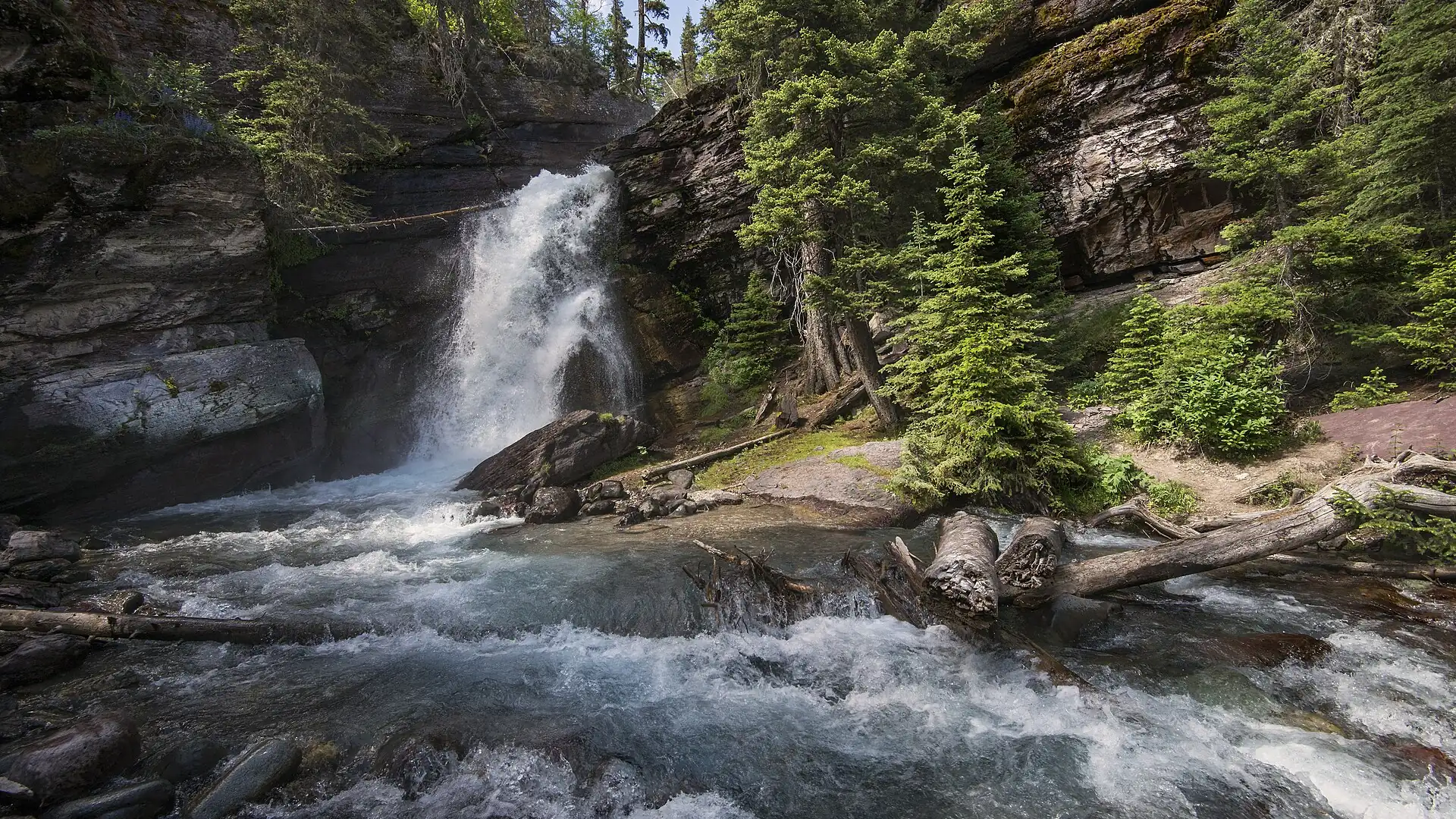
Photo: GlacierNPS / Public domain, via Wikimedia Commons
Baring Falls offers a compact cascade near St. Mary Lake, where Baring Creek drops through layered rock before reaching the lakeshore. The approach from Sunrift Gorge adds another distinctive feature: a narrow, sharply cut channel visible close to the road. Together they make a short stop with more geological variety than the waterfall alone suggests.
The route descends toward the lake, so the return asks for a climb even though the hike is brief. Summer provides the practical road-access season, with trail and wildlife notices shaping individual visits. Give the lake view time after the falls, connecting the creek’s smaller world with the much broader mountain basin.
Insider tip: Pair Sunrift Gorge with Baring Falls in one deliberate stop, leaving time for the uphill return before resuming the scenic drive.
Where: Glacier National Park, Montana
Map of the places
Tap a place to open it in Google Maps:
- Kootenai Falls, Libby
- Running Eagle Falls, Glacier National Park
- St. Mary Falls, Glacier National Park
- Virginia Falls, Glacier National Park
- Ousel Falls, Big Sky
- Palisade Falls, Bozeman
- Rainbow Falls, Great Falls
- Natural Bridge Falls, McLeod
- Holland Falls, Condon
- Morrell Falls, Seeley Lake
- Baring Falls, Glacier National Park
Tips for planning your Montana trip
- Choose early summer for stronger snowmelt flow, with later summer and early fall often providing easier mountain access.
- Group Glacier waterfalls by park area, keep Hyalite and Big Sky together on another trip, and give the Seeley-Swan routes their own days.
- Use official trail maps and select a turnaround before starting, allowing extra time for uphill returns.
- Pack sturdy shoes, layers, water, sun protection, and bear spray with the knowledge to use it in active bear country.
- Check current conditions, construction closures, seasonal roads, trail notices, wildlife restrictions, and park transportation rules before departure.
FAQ
Which Montana waterfall visits require the least walking?
Rainbow Falls and Natural Bridge Falls have developed viewpoints, while Running Eagle and Palisade Falls offer focused short approaches. Terrain and seasonal access still vary.
Can you combine St. Mary and Virginia Falls?
They share a trail corridor and can be combined when time and fitness allow. Virginia Falls adds distance and climbing, so St. Mary Falls can also be the complete destination.
Why might Rainbow Falls look different from photos?
Water management and river flow affect how much water crosses the ledge. Enjoy the wider Missouri River and hydroelectric landscape without expecting an identical view every day.
Final thoughts
Save the Montana waterfall that fits your next trip, then share the guide with someone who enjoys a mountain lake or forest trail as much as the final cascade.

