
Waterfalls in Colorado with walks for different abilities
The sound often arrives before the view: a deeper rush through the trees, then a flash of white water between rocks. Waterfalls in Colorado can turn a walking day into the part of your trip everyone remembers. Snowmelt, canyon walls, and forest shade give each destination a different character.
The routes below vary considerably, so the headline needs a practical qualification: Hanging Lake, Booth Falls, Bridal Veil Falls, and Ouzel Falls are not easy strolls. Others offer short approaches or overlooks, while Zapata adds slippery stream travel despite its shorter trail. Use the descriptions to choose honestly for your group, especially during spring runoff and at mountain elevations.
1. Hanging Lake, Glenwood Springs
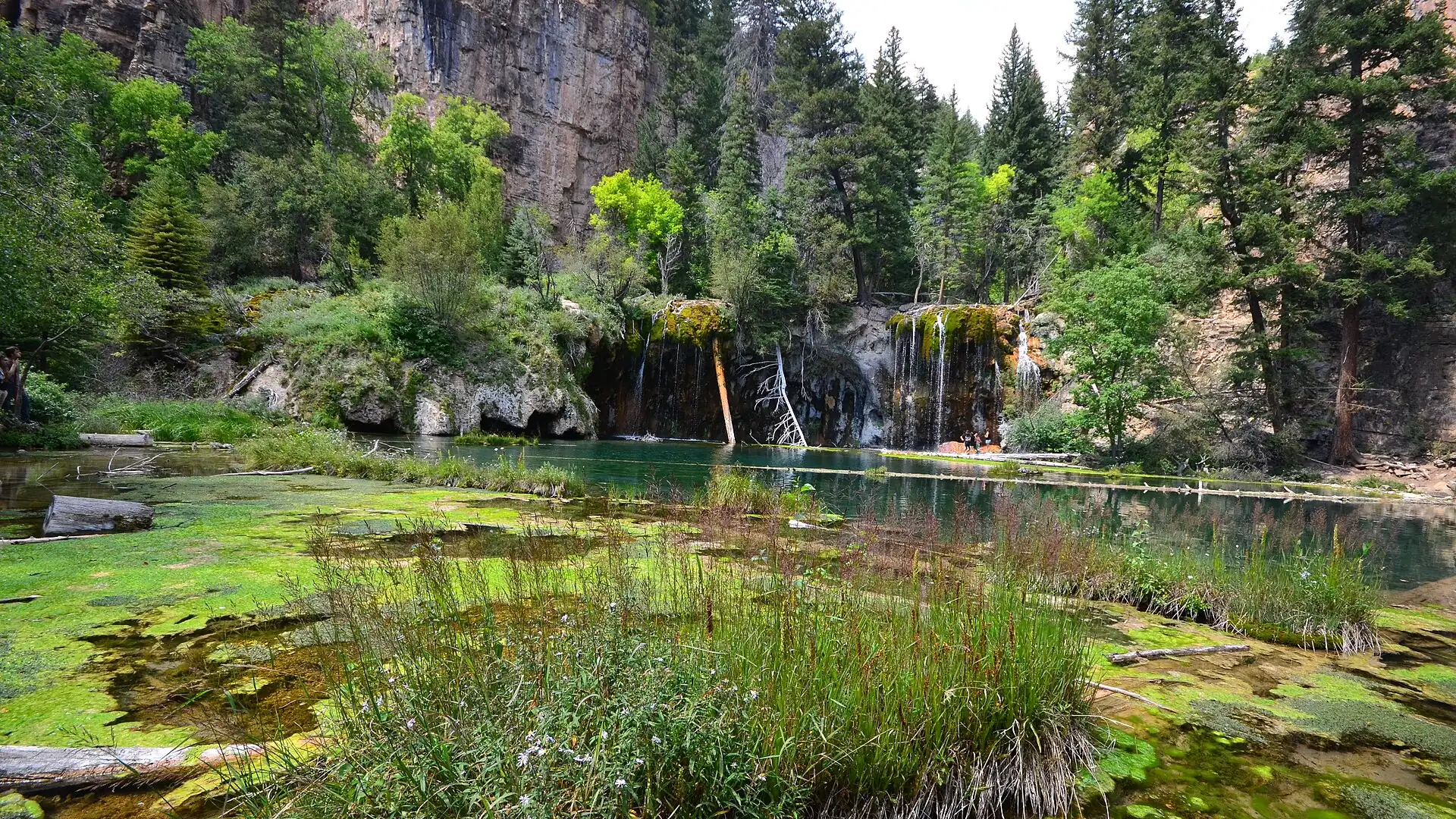
Photo: Sayamindu Dasgupta from Cambridge, MA, United States / CC BY-SA 2.0, via Wikimedia Commons
Hanging Lake holds clear, blue-green water on a fragile travertine shelf above Glenwood Canyon. Bridal Veil Falls spills into the lake, giving the basin its distinctive combination of delicate mineral formations and moving water. The setting deserves a lingering look from the designated viewing area, with the lake and its edges left undisturbed.
The trail climbs steeply through Dead Horse Creek Canyon, so allow for a sustained uphill effort and a careful descent. This is a mountain hike for prepared walkers, not a casual stop in ordinary sightseeing shoes. Summer generally makes the route more approachable than icy seasons, although the elevation and rocky surface remain part of the experience. Every visitor needs a timed-entry permit booked in advance through Visit Glenwood’s Hanging Lake reservation page, so secure that first and plan the rest of the day around it.
Insider tip: Keep food and gear away from the water’s edge, and enjoy the lake without entering it or stepping on its fragile features.
Where: Glenwood Springs, Colorado
2. Zapata Falls, Mosca
Zapata Falls hides inside a narrow rock cleft at the base of the Sangre de Cristo Mountains. The approach gives you broad San Luis Valley scenery before the experience becomes close, shaded, and dominated by the sound of falling water. It is a striking change in scale within a relatively compact outing.
Seeing the waterfall itself requires moving upstream through cold water and across slippery rocks, which makes this more adventurous than the trail’s length suggests. Strong runoff can make that final approach unsuitable, and you should be comfortable turning around without a close-up view. Summer is the practical season for most visitors, with secure footwear essential for the wet section.
Insider tip: Pack dry socks and a change of footwear for afterward, while keeping grippy shoes on during any safe stream approach.
Where: Mosca, Colorado
3. Fish Creek Falls, Steamboat Springs
Fish Creek Falls drops through a rocky canyon outside Steamboat Springs, producing a dramatic view without requiring the longer hike into the upper drainage. The paved overlook route is a useful choice when your group wants the waterfall experience with a gentler approach. Forested slopes frame the water and give the scene a distinctly mountain feel.
A separate path descends toward the lower falls, so remember that the return involves climbing back uphill. Keep this outing focused on the lower viewing area if an easy walk is the goal; the trail continuing farther into the mountains is a different undertaking. Late spring and early summer often bring a strong snowmelt display, while summer forest shade adds appeal.
Insider tip: Choose the overlook route first if anyone in your group needs to assess how much walking feels comfortable.
Where: Steamboat Springs, Colorado
4. Bridal Veil Falls, Telluride
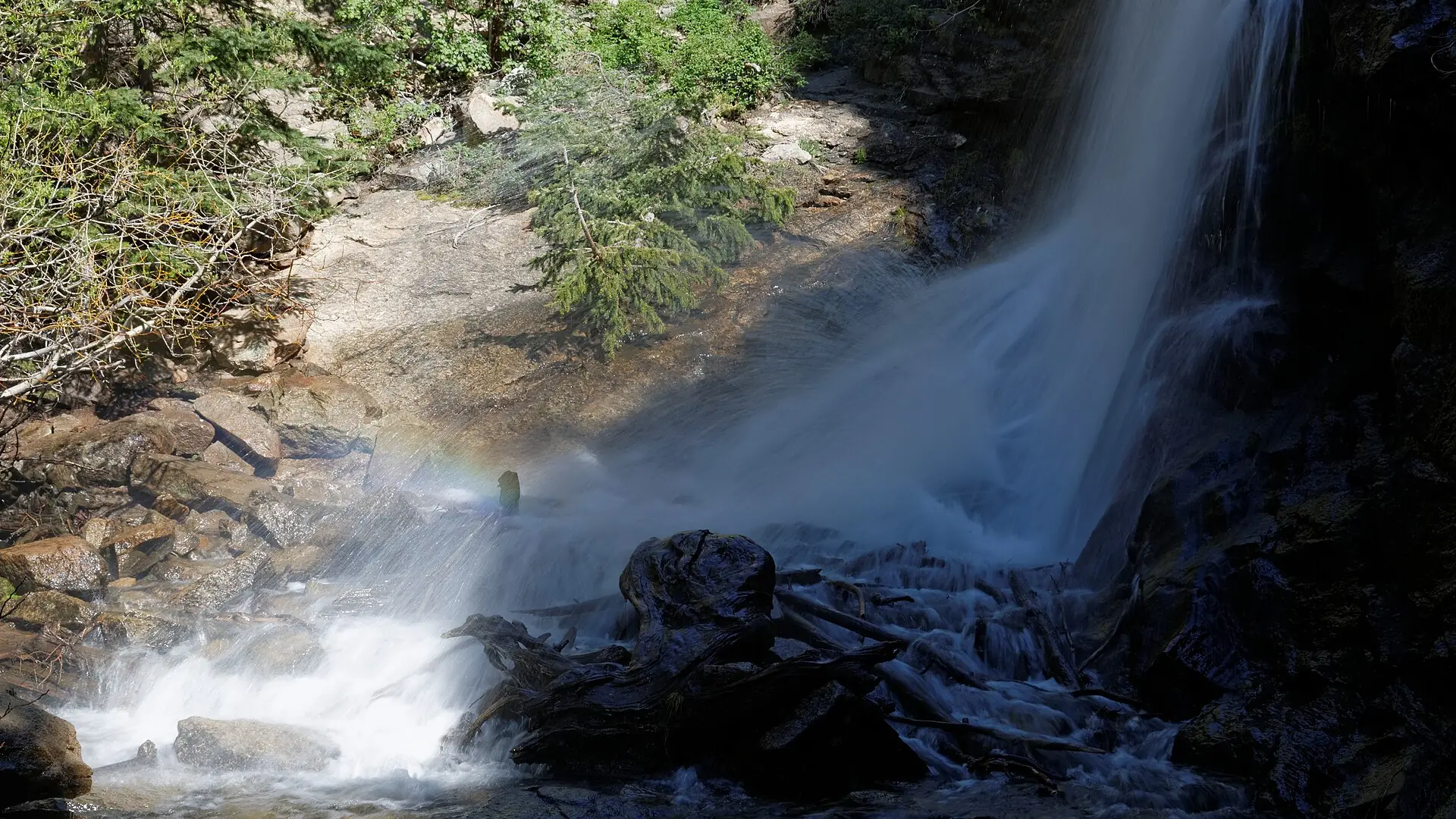
Photo: KimonBerlin / CC BY-SA 2.0, via Wikimedia Commons
Bridal Veil Falls pours over the wall at the upper end of Telluride’s box canyon. A historic powerhouse sits above the drop, making the setting recognizable even from a wider view. The waterfall’s position helps you understand the canyon’s shape and why Telluride’s downtown feels so enclosed by mountains.
The closer walking approaches involve climbing and uneven ground, so treat them as a proper hike with enough energy for the descent. A broad view from the canyon floor may suit your group better than pursuing the closest vantage point. Plan the hiking version for the warmer season, once snow and avalanche hazards no longer define the upper canyon.
Insider tip: Keep a camera lens cloth handy for spray, and respect the private powerhouse and surrounding property boundaries.
Where: Telluride, Colorado
5. Box Canyon Falls, Ouray
Box Canyon Falls concentrates Canyon Creek inside a narrow gorge at the edge of Ouray. The surrounding rock makes the sound feel as important as the view, with water rushing into a space that is difficult to take in all at once. This is a close-up canyon encounter, quite different from seeing a waterfall across an open valley.
The lower viewing route uses built walkways and stairs, giving you a more contained outing than a long backcountry hike. Higher walking options add elevation and exposure, so choose them separately from the basic falls visit. Summer offers lush surroundings and the possibility of noticing black swifts, which use the canyon’s waterfall habitat for nesting. The park is open seasonally and typically closes from November through March, so plan this stop for the warmer months.
Insider tip: Give yourself a moment to listen inside the gorge before concentrating on photographs; the acoustics are a major part of the experience.
Where: Ouray, Colorado
6. Rifle Falls, Rifle
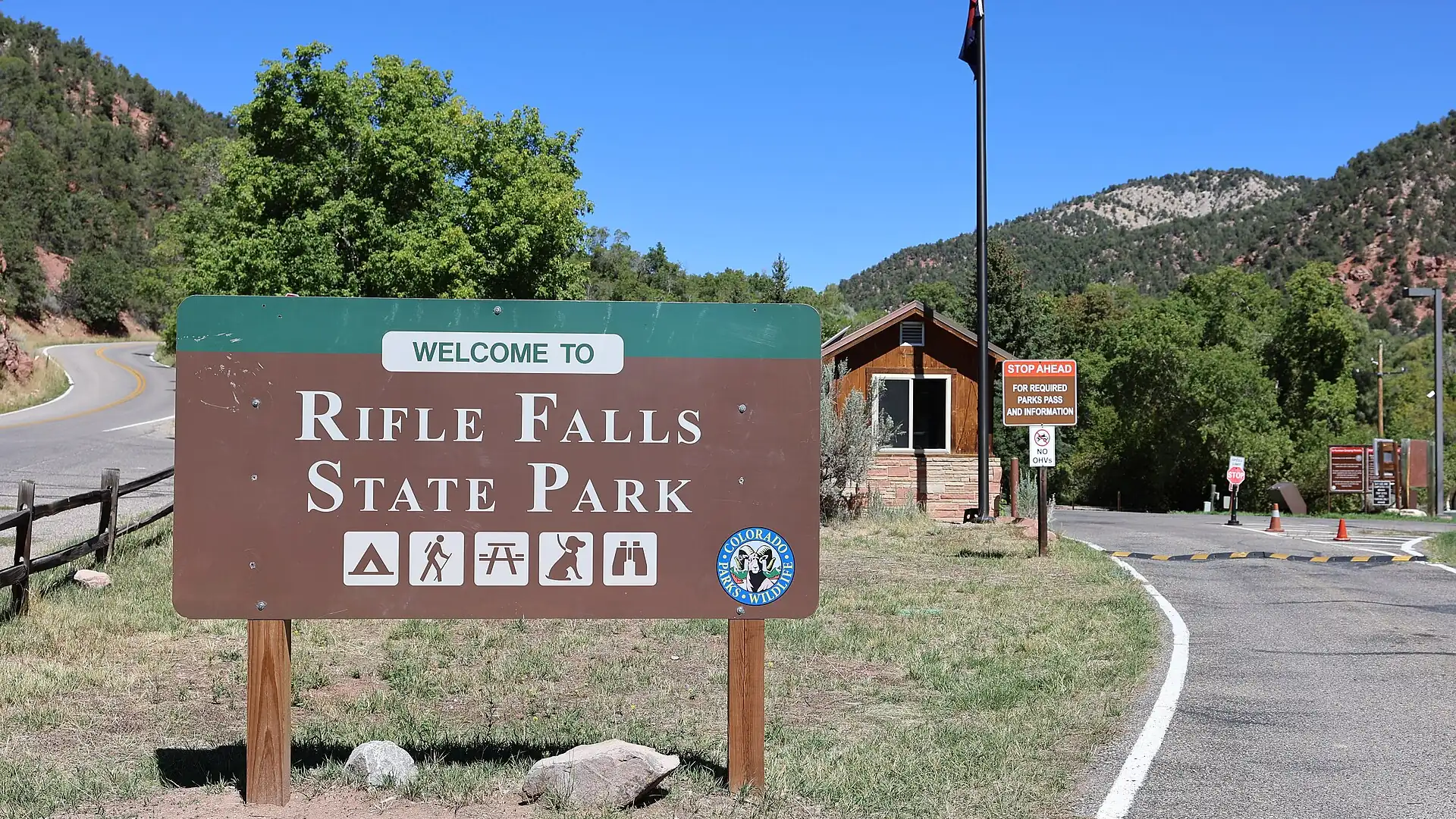
Photo: Jeffrey Beall / CC BY 4.0, via Wikimedia Commons
Rifle Falls divides into three adjacent drops, creating a broad curtain of water above a lush pocket of vegetation. The spray supports a greener setting than you might expect in this part of western Colorado. You can appreciate the main scene from the lower area without committing to a demanding mountain trail.
The state park also contains small limestone caves and walking paths that add interest beyond the obvious waterfall photograph. Keep children close around wet ground and cave openings, and only explore where access is permitted. Spring and summer suit the combination of water, leafy shade, and a picnic, with time left to notice the smaller details around the falls.
Insider tip: Carry a small flashlight if permitted cave exploration is part of your plan, keeping your hands free for balance.
Where: Rifle, Colorado
7. Treasure Falls, Pagosa Springs
Treasure Falls makes an appealing stop near the western approach to Wolf Creek Pass. The waterfall drops down a wooded slope, and the walking route leads through forest toward closer views of the falling water. Its name connects with the local Treasure Mountain landscape and the area’s longstanding treasure stories.
The main trail is short but climbs, so take your time if you have been sitting in the car or are adjusting to elevation. A footbridge and viewing areas give you different ways to frame the water without scrambling off the maintained route. Spring snowmelt and early summer are natural choices for a visit, while the mist can make the immediate falls area feel cooler.
Insider tip: Keep a light outer layer accessible even on a warm day; the shaded, misty viewpoint can feel noticeably different from the parking area.
Where: Pagosa Springs, Colorado
8. Seven Falls, Colorado Springs
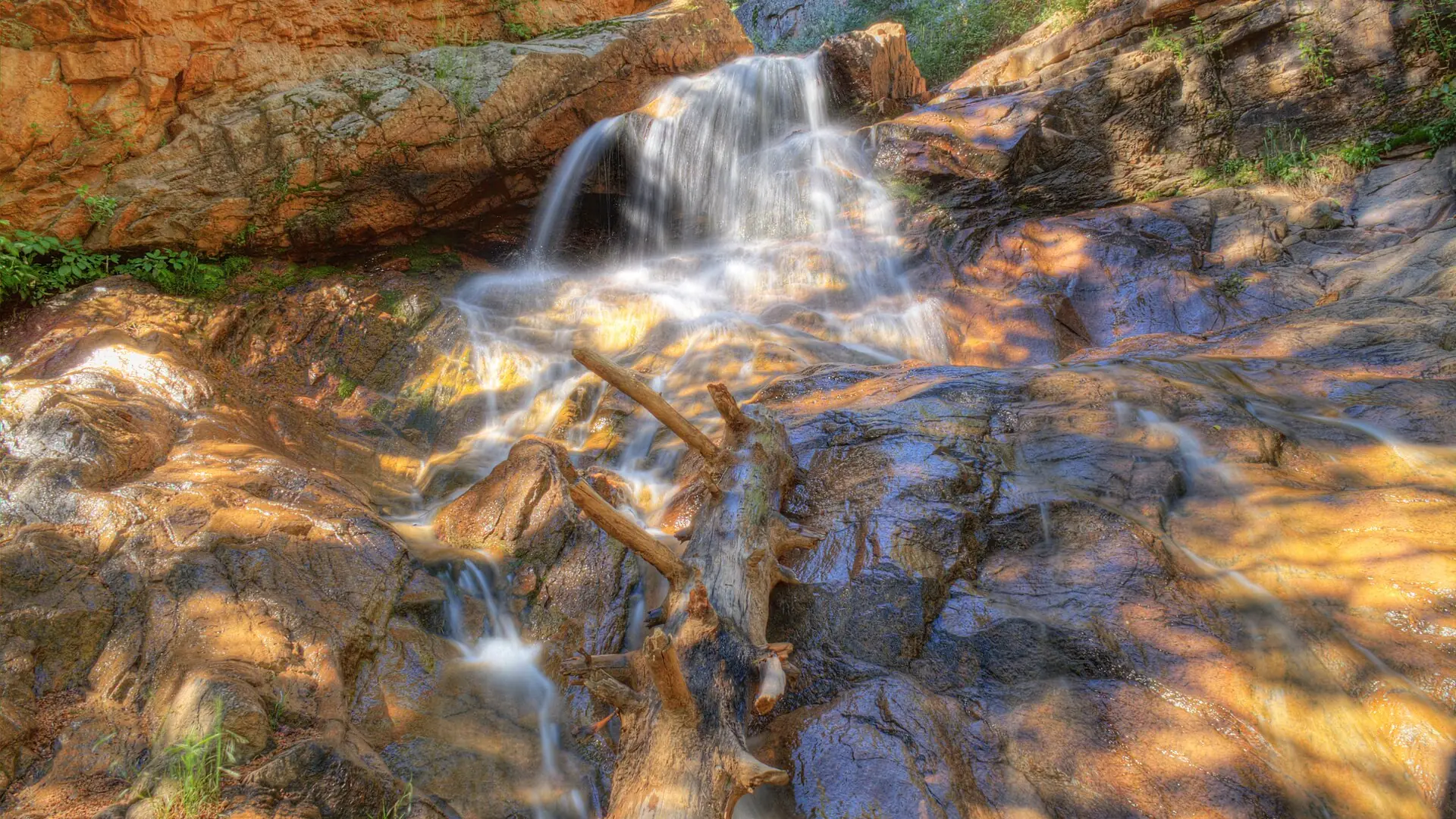
Photo: John Fowler from Placitas, NM, USA / CC BY 2.0, via Wikimedia Commons
Seven Falls sends water through a sequence of drops inside South Cheyenne Canyon. Steep rock walls create a dramatic approach before you reach the main waterfall view, so the walk through the canyon deserves attention too. This is a managed attraction with visitor infrastructure, giving it a different feel from a remote forest hike.
The famous staircase beside the falls adds a substantial climb and should be treated as an optional physical challenge. You can plan around the lower canyon experience if stairs do not suit your group. Spring and summer bring the appeal of water and vegetation, with the shaded canyon offering a welcome change from the more open landscape around Colorado Springs.
Insider tip: Agree on the stair plan as a group before climbing so anyone staying below has a clear, comfortable meeting arrangement.
Where: Colorado Springs, Colorado
9. Alberta Falls, Rocky Mountain National Park
Alberta Falls carries Glacier Creek over a rocky drop in one of Rocky Mountain National Park’s best-known walking areas. The approach from Glacier Gorge passes through forest with aspens, giving you scenery before the creek becomes the focus. It is a more manageable mountain outing than many of the park’s longer lake hikes.
Even here, elevation, roots, and uneven ground call for a steady pace and proper shoes. Stay back from wet rock edges while taking in the water, since a popular trail does not make the creekside terrain forgiving. Late spring and summer suit a waterfall-focused visit, with early-season snow sometimes lingering in shaded sections of the approach.
Insider tip: Make the waterfall your destination if you want a contained outing; nearby trail junctions lead into substantially longer hikes.
Where: Rocky Mountain National Park, Colorado
10. Booth Falls, Vail
Booth Falls rewards a sustained climb up the Booth Creek valley with a waterfall cutting through rugged mountain terrain. Aspen groves and openings toward the surrounding slopes make the approach worthwhile, but they do not remove the effort involved. The route is steep enough that it belongs in the more demanding group on this list.
Use the falls as your turnaround destination unless you have planned and prepared for the much longer outing toward Booth Lake. Around the waterfall, stay on secure ground and avoid edging closer for an unobstructed photograph. Summer is the sensible planning season for most hikers, after snow has retreated and before cold weather complicates the upper valley.
Insider tip: Pace the opening climb conservatively; arriving with energy in reserve makes the downhill return safer and more enjoyable.
Where: Vail, Colorado
11. Ouzel Falls, Wild Basin
Ouzel Falls gives you a waterfall destination within Rocky Mountain National Park’s Wild Basin, reached by a longer forest hike. Water is part of the approach well before the final drop, making this appealing if you enjoy following creeks through the mountains. The route builds into a half-day-style outing for many visitors, not a brief roadside walk.
The main approach passes Copeland Falls and Calypso Cascades, with those water features marking your progress toward Ouzel. Forest, climbing, and sections of rougher footing make sturdy shoes and a realistic turnaround plan useful. Choose summer for the most straightforward version of the hike, and keep the destination flexible if your group tires earlier than expected.
Insider tip: Take your breaks on durable ground beside the trail so your group can rest without trampling creekside vegetation or blocking other hikers.
Where: Wild Basin, Colorado
Map of the places
Tap a place to open it in Google Maps:
- Hanging Lake, Glenwood Springs
- Zapata Falls, Mosca
- Fish Creek Falls, Steamboat Springs
- Bridal Veil Falls, Telluride
- Box Canyon Falls, Ouray
- Rifle Falls, Rifle
- Treasure Falls, Pagosa Springs
- Seven Falls, Colorado Springs
- Alberta Falls, Rocky Mountain National Park
- Booth Falls, Vail
- Ouzel Falls, Wild Basin
Tips for planning your Colorado trip
- Use spring for lower-elevation waterfall plans and summer for higher trails, recognizing that snowmelt timing varies.
- Group nearby destinations into regional stays, with realistic rest days between the steeper hikes.
- Pack grippy footwear, water, sun protection, layers, and a small bag for keeping electronics dry around spray.
- Reserve any required entry permits, attraction admission, lodging, or transport before fixing your itinerary around a specific hike.
- Check current conditions, trail closures, bridge restrictions, seasonal roads, and official transport arrangements before each outing.
FAQ
Which options are best for a gentler outing?
The Fish Creek Falls overlook and the main lower viewing area at Rifle Falls are useful starting points. Box Canyon Falls and Treasure Falls are shorter outings too, although stairs, climbing, and wet surfaces still matter.
Does spring guarantee the best waterfall visit?
Spring runoff can create a powerful display, but it can also bring hazardous creek crossings and lingering trail snow. Summer often gives you a better balance of flowing water and more straightforward mountain walking.
Should you plan to swim at these waterfalls?
Treat these destinations as places for viewing and walking, with cold water and slippery terrain around them. Hanging Lake has particularly fragile features that must remain undisturbed, and entering the water is prohibited.
Final thoughts
The most memorable waterfall day is one that fits the people walking with you. Save a few destinations that match your group’s abilities, leave time to enjoy the approach, and let the sound of the water be the reward for an outing you planned well.

