
Waterfalls in Arizona from blue-green canyons to desert rock
The surprise is not simply finding water in Arizona. It is the variety: blue-green pools beneath pale mineral ledges, runoff spilling over dark volcanic cliffs, and a small cascade at the end of a cactus-lined trail. These waterfalls in Arizona give you ten different reasons to look more closely at the landscape.
Four stops belong to Havasu Creek and form part of a permitted Havasupai trip; the others offer separate outings in forest and desert country. Spring is a useful starting season, while summer requires more selective planning around heat and storms. Choose for the whole walk and its return, not only the final photograph.
1. Havasu Falls, Supai
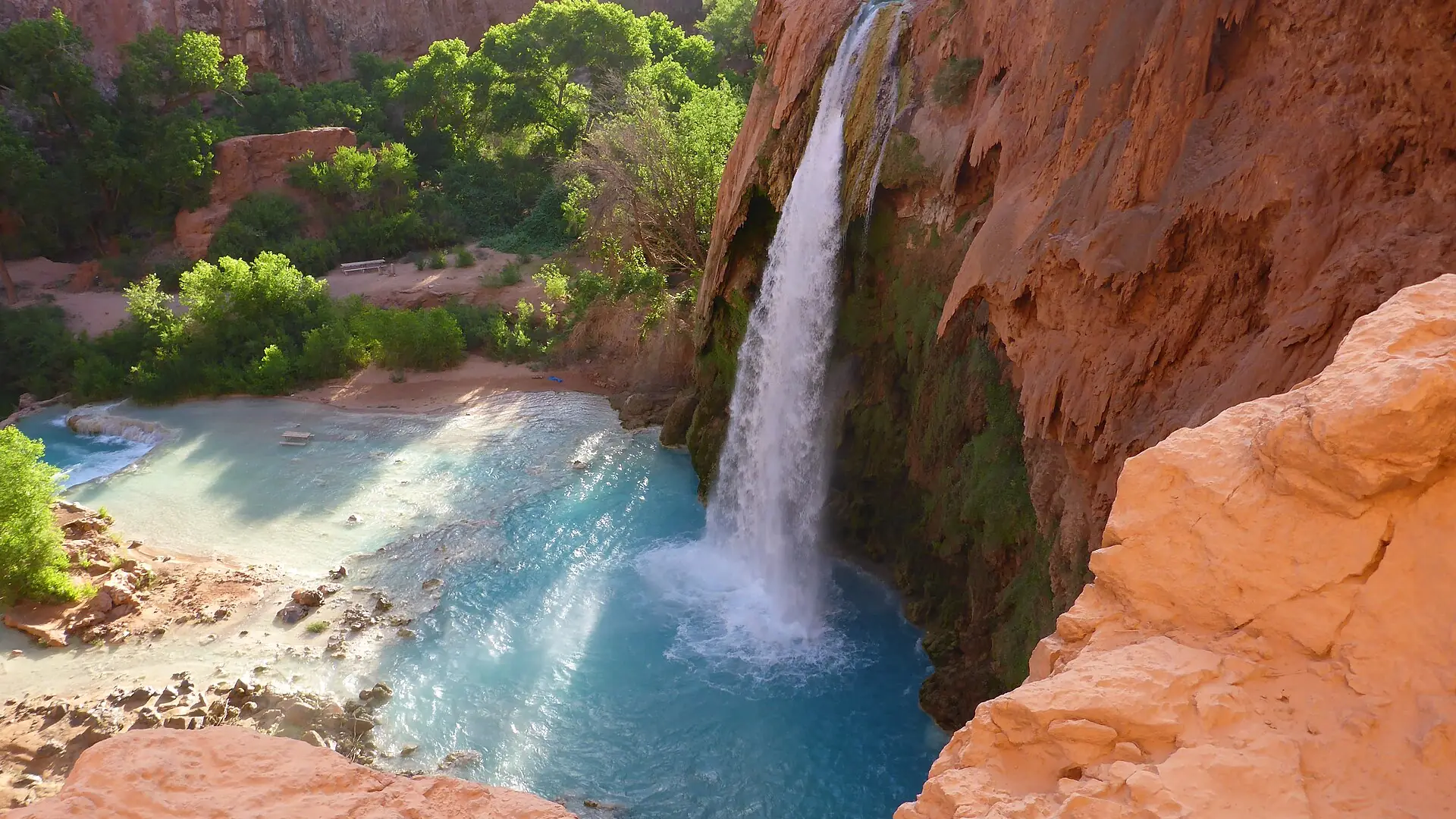
Photo: Traveling Man / CC BY-SA 3.0, via Wikimedia Commons
Havasu Falls drops from a pale travertine ledge into the blue-green water of Havasu Creek. The stream is fed by a limestone aquifer, giving this canyon an unusually vivid combination of water, mineral deposits, and red rock. It lies on the Havasupai Reservation, outside the jurisdiction of Grand Canyon National Park.
Give yourself time to look at the whole setting before concentrating on the waterfall. The creek, trees, canyon walls, and pale edges of the pools explain why this is worth more than a quick photograph. Spring can make the demanding approach more comfortable than the hottest summer period. This is the centerpiece of an arranged canyon stay, with the journey and the waterfall sharing the experience.
Insider tip: Keep a small day bag ready for exploring near your camp so the essentials stay with you without carrying all your overnight gear.
Where: Supai, Arizona
2. Mooney Falls, Supai
Mooney Falls is downstream of the Havasupai campground, where Havasu Creek drops through another steep travertine setting. Reaching the lower area involves an exposed route with chains and ladders, making it a very different outing from admiring the upper canyon waterfalls. The enclosed rock walls intensify the sense of scale around the falling water.
Choose your viewpoint honestly according to your comfort with exposure and the climb back. The view does not become more worthwhile simply because you descend farther. Spring offers a useful balance for a wider canyon trip, while wet surfaces remain part of the setting. You can appreciate the waterfall’s position within Havasu Creek without treating the lower route as an obligation for everyone in the group.
Insider tip: Secure loose items inside your pack before any ladder section so your hands remain free for the route.
Where: Supai, Arizona
3. Sycamore Falls, Williams
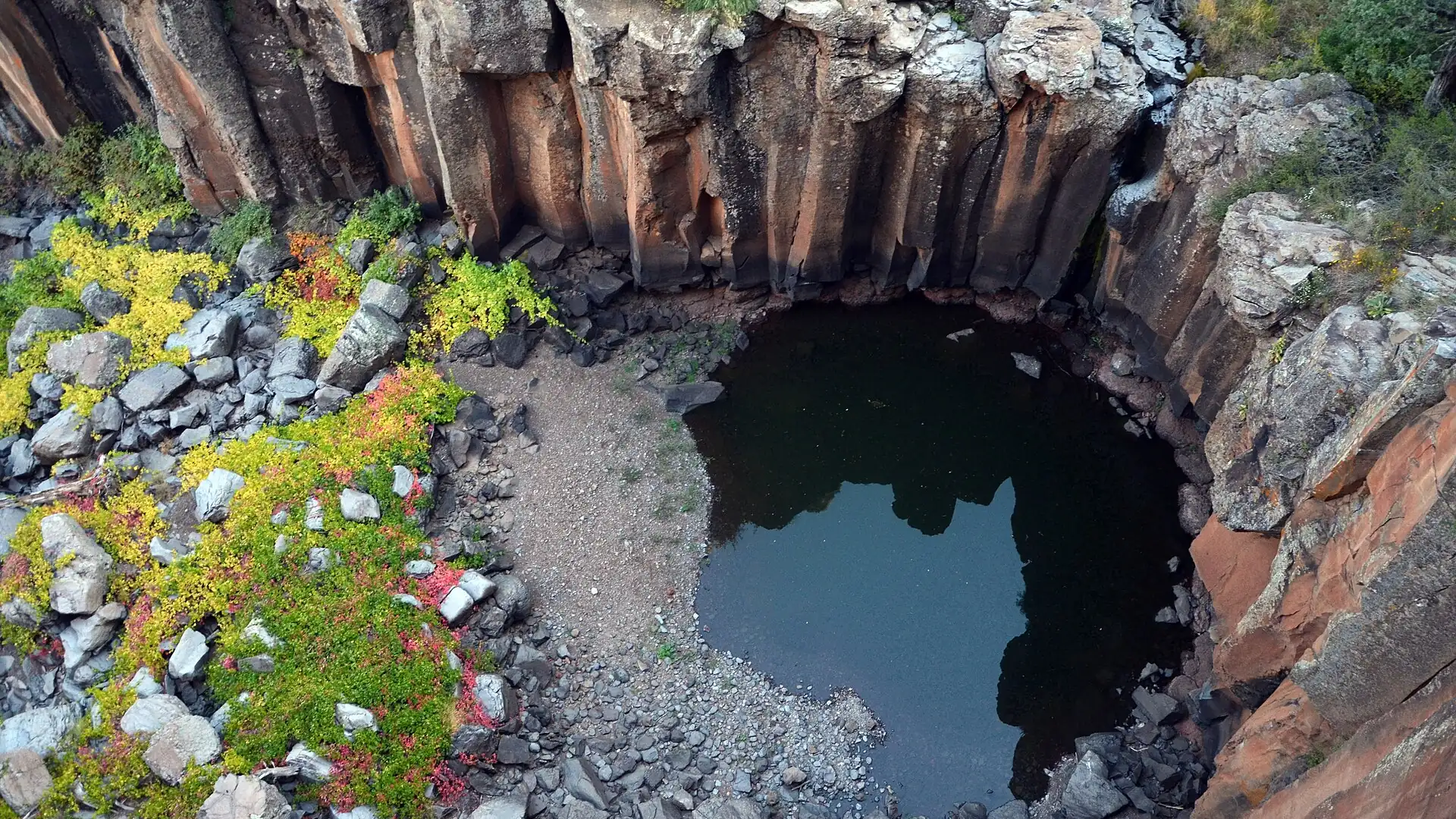
Photo: Kaibab National Forest / CC BY-SA 2.0, via Wikimedia Commons
Sycamore Falls introduces dark volcanic cliffs and ponderosa pine country near the head of Sycamore Canyon. The falls are seasonal, with water spilling into rock-walled basins when snowmelt or rainfall supplies the drainage. Two neighboring forks give the setting a distinctive shape even when the water is quiet.
Come for the canyon rim and the rock landscape as well as the possibility of a flowing cascade. Spring runoff is the strongest general reason to include it in a waterfall-focused trip. By summer, the same cliffs may frame a largely dry scene, revealing more of the rock’s form. Enjoy the view from secure ground and leave a generous margin between yourself and the exposed rim.
Insider tip: Include the surrounding pine forest and canyon walls in a wider photograph to show the setting when flow is modest.
Where: Williams, Arizona
4. Fossil Creek Falls, Strawberry
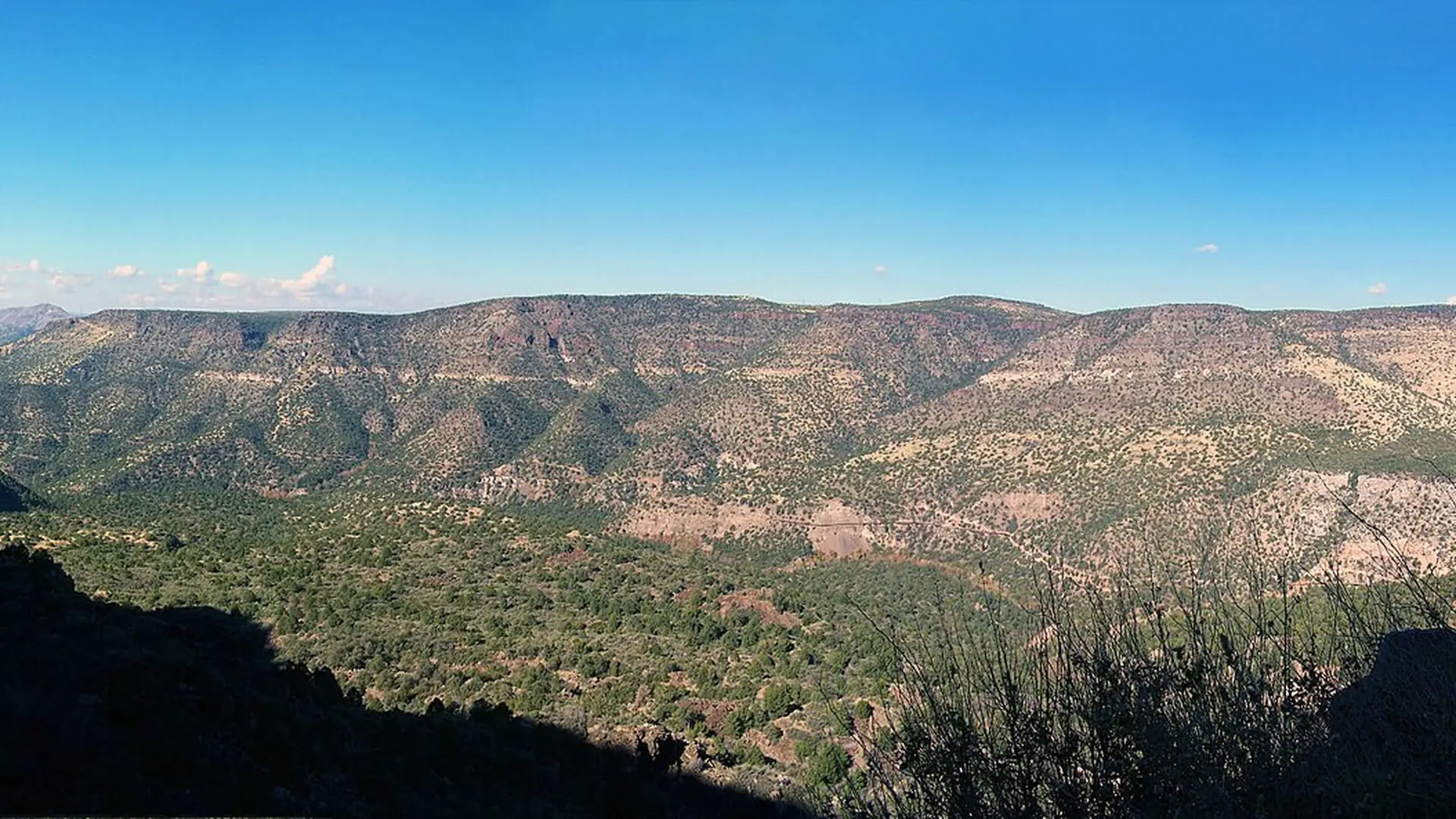
Photo: Coconino National Forest / CC0, via Wikimedia Commons
Fossil Creek Falls sits within a spring-fed waterway protected as a Wild and Scenic River. Mineral-rich water deposits travertine, helping create the creek’s distinctive pale formations and pools. The contrast between flowing water, green banks, and the surrounding drier country makes the approach part of the attraction.
The waterfall route belongs to a wider area with several different access points, so it should be planned as a specific outing. Enjoy the smaller channels and creekside vegetation without hurrying directly to the main drop. Spring can provide comfortable walking conditions before the strongest heat. A quieter view of the stream is worth your attention alongside the better-known waterfall scene.
Insider tip: Use grippy footwear that can handle natural ground, and keep a dry pair available for the journey home.
Where: Strawberry, Arizona
5. Seven Falls, Tucson
Seven Falls gives Bear Canyon a sequence of cascades and rock pools within the Santa Catalina Mountains. The approach follows a desert canyon landscape and involves repeated creek crossings. This is a substantial hiking outing, with the scenery along the way contributing much of the reward.
Notice how the vegetation gathers around the drainage while the surrounding slopes remain more exposed. The series of falls is most compelling when water is moving, but flow varies with the season and recent weather. Spring is a sensible starting point for balancing water interest with walking temperatures. Leave enough energy for the return through the canyon, especially where the route offers little relief from the sun.
Insider tip: Carry food that is easy to eat during brief breaks so the return receives the same attention as the outward walk.
Where: Tucson, Arizona
6. Navajo Falls, Supai
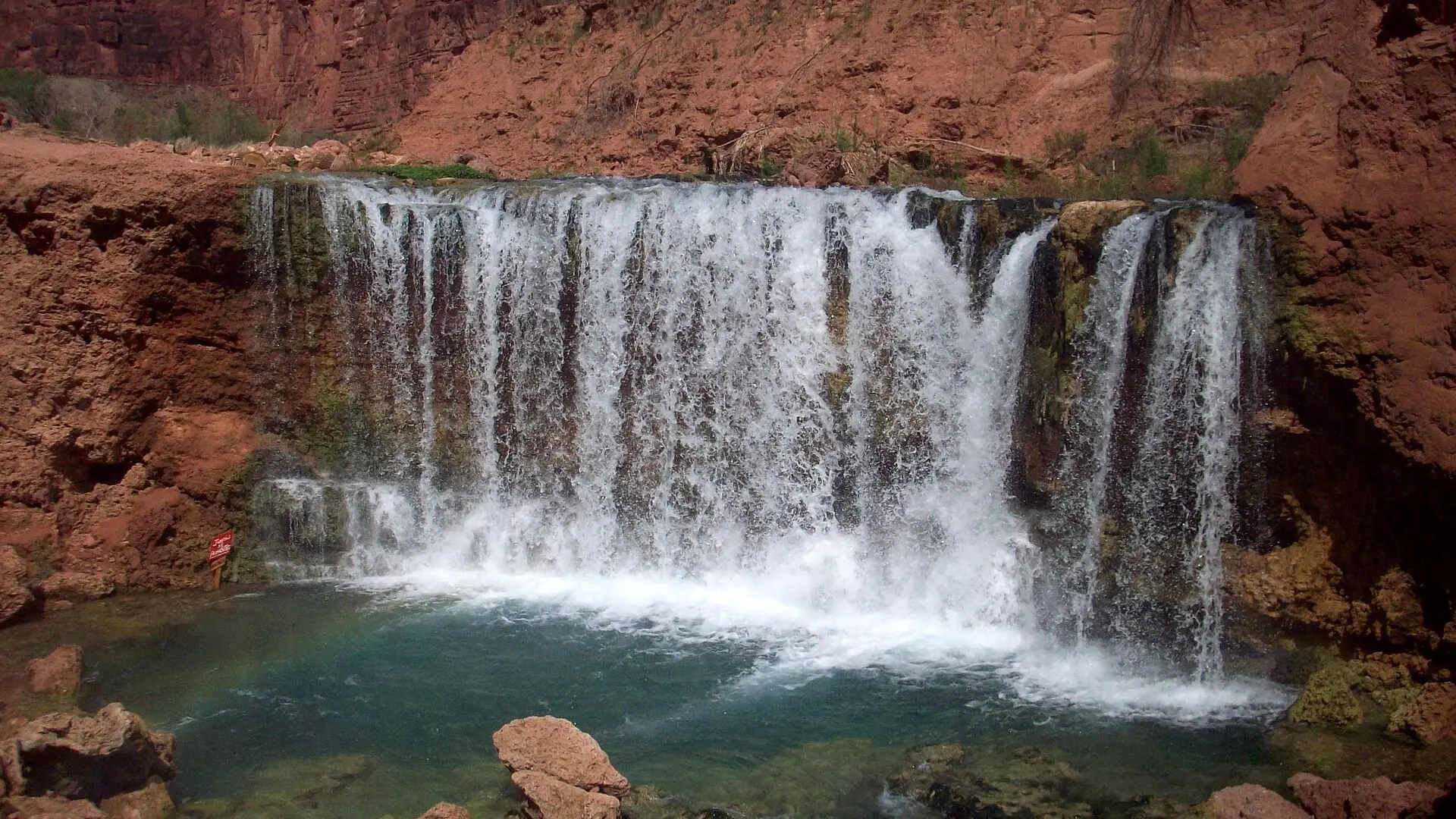
Photo: Gonzo fan2007 / CC BY-SA 3.0, via Wikimedia Commons
The Navajo Falls stop centers on the Lower Navajo cascade along Havasu Creek, upstream of Havasu Falls. It is one of the waterfalls encountered between Supai and the campground, with water spreading over lighter-colored ledges. That position gives you a different perspective on the creek before its more famous plunges downstream.
The state’s Havasupai guide identifies Lower Navajo among the falls on the authorized approach. Pause to appreciate the relationship between the lower drops, vegetation, and mineral-built edges. Spring is appealing for a canyon visit that leaves time for these smaller scenes. You do not have to measure every waterfall against Havasu’s scale to find a reason to linger.
Insider tip: Keep your camera accessible on the approach so this stop receives attention before you become focused on reaching camp.
Where: Supai, Arizona
7. Beaver Falls, Supai
Beaver Falls is a series of stepped cascades farther down Havasu Creek beyond Mooney Falls. Water moves across several pale terraces, giving the scene a broader, more layered character than a single vertical drop. The approach extends the canyon outing and includes creek crossings, so it deserves its own assessment of effort.
Give yourself time to enjoy the pattern of terraces and the creek’s movement between them. This is a destination for travelers prepared for a longer excursion within their permitted Havasupai stay. Spring can offer more comfortable conditions for that effort, while summer heat adds to the demands. Turn the day into a complete return plan, with room for rest before the climb back past Mooney.
Insider tip: Choose a firm turnaround time before setting out so the appeal of another cascade does not consume your return margin.
Where: Supai, Arizona
8. Waterfall Trail, White Tank Mountain Regional Park
Waterfall Trail leads through the Sonoran Desert toward a rock-walled basin in the White Tank Mountains. Petroglyphs along the route add a cultural dimension, while the initial paved portion makes the first part different from the rockier ground farther in. The namesake waterfall is seasonal and can be absent for long periods.
Enjoy the desert plants, rock shapes, and petroglyph setting even when the basin is dry. The county park’s trail information shows why this is more than a water-only outing. Spring is generally a more comfortable time to walk than the hottest summer months. Leave rock art untouched and appreciate it from the established route, preserving the surfaces that make the walk distinctive.
Insider tip: Photograph petroglyphs without touching, tracing, or wetting the rock, keeping the cultural features exactly as you found them.
Where: White Tank Mountain Regional Park, Arizona
9. Horton Creek Falls, Payson
Horton Creek flows from springs beneath the Mogollon Rim, gathering into small cascades as it passes through forest. This is a creek-led landscape, with repeated changes in rock, water, and shade providing the interest. The series of smaller falls makes the walk rewarding before you reach the upper spring area.
Follow the established route at a pace that lets you notice the stream’s changing character. Spring combines fresh growth with a useful season for walking, while suitable summer outings still require realistic expectations about temperature and storms. The return is part of the hike, even when the creek encourages you to continue uphill. Enjoy the differences between each cascade without needing one enormous drop to justify the day.
Insider tip: Carry a light layer for a shaded break beside the creek so you can remain comfortable after the uphill effort.
Where: Payson, Arizona
10. Tanque Verde Falls, Tucson
Tanque Verde Falls belongs to a desert canyon where seasonal water runs among large rock formations and steep walls. The Forest Service’s Rim Trail and Overlook provide a way to appreciate the canyon from above. The waterfall’s appearance depends on water in the drainage, with a dry visit revealing more of the underlying rock shapes.
The official visitor brochure distinguishes the established recreation setting from the more involved canyon terrain. Choose the viewpoint experience that suits your group’s ability, keeping the rock landscape part of the reason to go. Spring is generally preferable to intense summer heat for an exposed walk. Wet stone, abrupt edges, and moving water deserve space even when the scene looks inviting.
Insider tip: Begin with the rim perspective to understand the canyon’s shape before deciding how much walking you want to add.
Where: Tucson, Arizona
Map of the places
Tap a place to open it in Google Maps:
- Havasu Falls, Supai
- Mooney Falls, Supai
- Sycamore Falls, Williams
- Fossil Creek Falls, Strawberry
- Seven Falls, Tucson
- Navajo Falls, Supai
- Beaver Falls, Supai
- Waterfall Trail, White Tank Mountain Regional Park
- Horton Creek Falls, Payson
- Tanque Verde Falls, Tucson
Tips for planning your Arizona trip
- Favor comfortable spring weather for many outings; summer heat and flash-flood risk call for more selective plans, not an assumption that rainfall improves access.
- Group the four Havasu Creek waterfalls within one authorized Havasupai stay, with separate trips for the Tucson, Payson, Williams, and White Tank entries.
- Arrange Havasupai reservations in advance through the tribal system, and match any Fossil Creek permit to the exact access point and route you intend to use.
- Pack grippy shoes, sun protection, ample drinking water, food, and offline navigation, adding overnight equipment for the Havasupai journey.
- Check current conditions and official access notices before departure; Horton Creek’s usual trailhead has been affected by bridge work, with an alternate approach from Derrick Trailhead.
- Plan the full return and heed upstream storm warnings, especially where a route includes creek crossings or an enclosed canyon.
FAQ
Are all ten outings short waterfall walks?
No; the list ranges from a regional-park trail to demanding canyon excursions. Mooney and Beaver Falls require particularly careful assessment of exposure, crossings, and the return within a permitted Havasupai trip.
Which waterfalls can be dry?
Sycamore Falls, Seven Falls, the White Tank waterfall, and Tanque Verde are especially dependent on runoff and recent weather. Their canyon and rock settings can remain rewarding, but a flowing cascade should not be treated as guaranteed.
Can you visit Havasu Falls on an ordinary day hike?
No; visiting Havasupai requires advance tribal arrangements and compliance with the reservation’s visitor rules. Build the whole permitted stay before adding the individual waterfall outings to your plan.
Final thoughts
Choose the Arizona waterfall trip that fits your ability and the season, then give the surrounding landscape time to matter too. Save this list for a future outing, from a quiet forest cascade to a carefully arranged stay beside Havasu Creek.

