
Rainfall changes everything. Planning to see waterfalls in Alabama starts with rainfall, then the kind of outing you want: an overlook, a developed park, or a more demanding walk into the woods.
These 11 waterfalls give you all three possibilities, with most concentrated in northern and central Alabama. Several are well-known attractions, so this list promises variety rather than empty trails. Spring generally offers a better chance of strong flow, while summer brings green forest scenery and more reason to be selective about conditions.
1. DeSoto Falls, Mentone
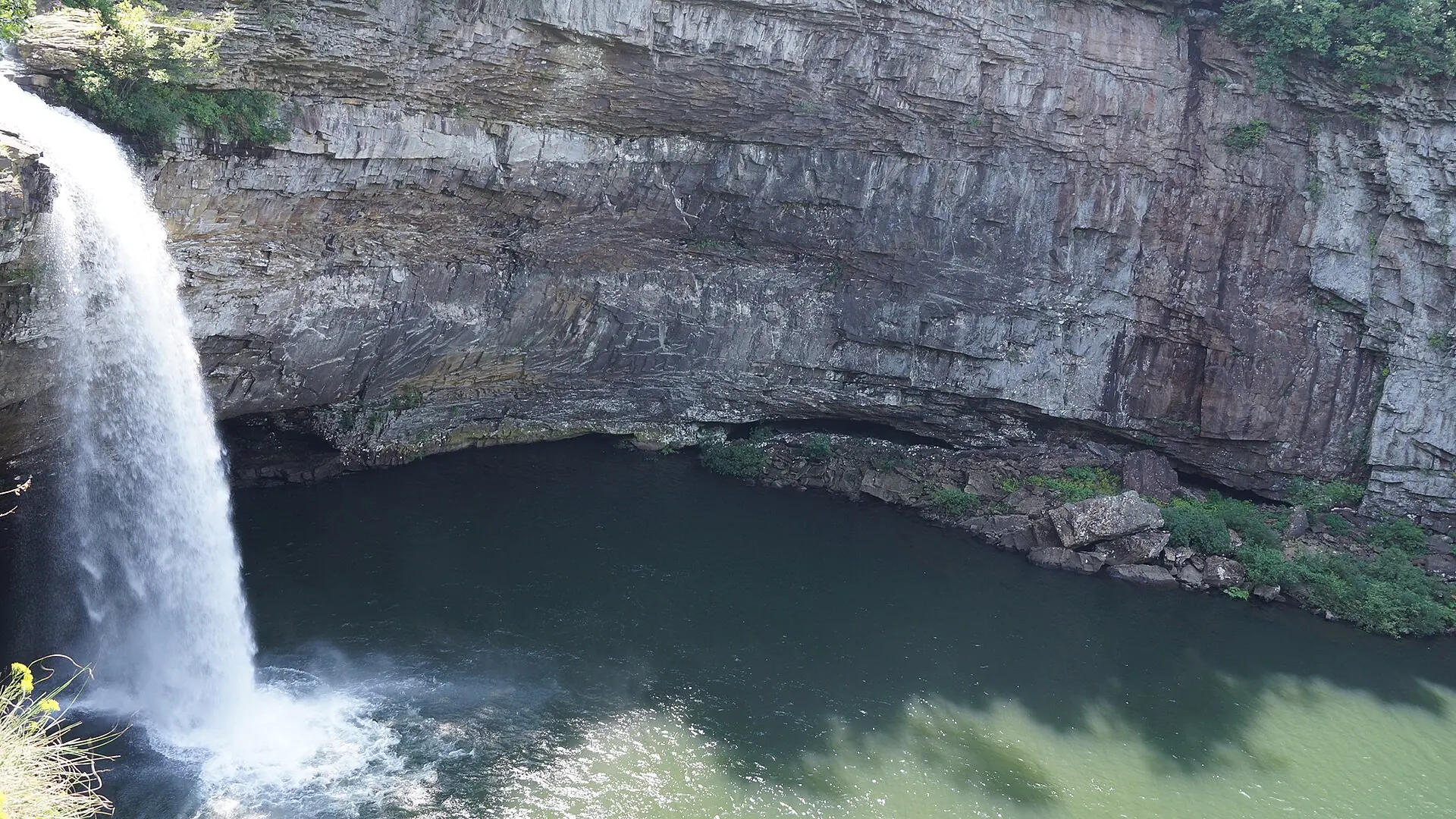
Photo: NealVickers / CC BY-SA 4.0, via Wikimedia Commons
DeSoto Falls gives you a dramatic plunge into a rocky basin near Mentone, with the upper water and historic dam adding another layer to the scene. It is an appealing choice when you want a substantial waterfall view without committing to a long forest hike. The main waterfall overlook still involves steps, so choose your viewpoint according to your group’s mobility.
The official picnic-area page distinguishes the different access routes and explains that the falls area is separate from the main state-park area. Spring is usually the stronger choice for water volume; summer can bring much lower flow. Let the designated overlook provide the drama instead of approaching exposed rock edges, and leave time to enjoy the contrast between the upper water and the drop below.
Insider tip: Navigate to the DeSoto Falls Picnic Area specifically, rather than assuming the main state-park entrance is the waterfall destination.
Where: Mentone, Alabama
2. Little River Falls, Fort Payne
Little River Falls spreads across a rocky ledge at the head of Little River Canyon. The width of the scene makes it satisfying to watch from the established viewing area, where the river’s power is easier to appreciate as a whole. A boardwalk provides access to the view, with different routes accommodating different needs.
Spring often gives you higher water, while summer reveals more of the surrounding sandstone as the river drops. The National Park Service’s guidance is essential here: stay behind barriers and follow posted setbacks from the waterfall edge. This is a sightseeing stop first, and the presence of inviting-looking rock should never determine where you walk. Build in a quiet pause to watch the water rather than treating the overlook as a quick photograph.
Insider tip: Ask about the step-free boardwalk option if anyone in your group needs an easier approach to the viewing area.
Where: Fort Payne, Alabama
3. Grace’s High Falls, Little River Canyon
Grace’s High Falls appears across the canyon as a narrow, high cascade descending the cliff face. Its setting is very different from a waterfall you approach at stream level: you see the drop as part of a much larger landscape. The official overlook gives you a view across the gap rather than a route to the base.
This is a seasonal waterfall, and the National Park Service notes that it does not usually flow in summer. Favor a spring visit after a wet period, once weather and road conditions are suitable, but keep expectations flexible. If the falls are dry, the canyon view still has value; understanding that possibility before arrival prevents you from building a whole day around a sight that rainfall controls.
Insider tip: Bring binoculars or a zoom lens because you view this waterfall from the opposite side of the canyon.
Where: Little River Canyon, Alabama
4. Noccalula Falls, Gadsden
Noccalula Falls drops into the Black Creek gorge within a developed park setting, making it a strong option for a mixed-interest group. You can prioritize the main waterfall view and decide separately how much trail walking to add. That flexibility is helpful when some travelers want a hike and others would prefer a shorter outdoor outing.
The water comes from Black Creek, so flow responds to rainfall rather than following a guaranteed seasonal display. Spring is a good starting point for planning; late-summer dry spells can reduce the cascade considerably. Consult the park’s current visitor information before selecting a gorge route, since viewing from above and walking below involve different effort. You do not need to descend to enjoy the scale of the drop.
Insider tip: Separate the waterfall viewpoint from any gorge hike in your plan, and decide on the longer walk after assessing conditions.
Where: Gadsden, Alabama
5. Peavine Falls, Oak Mountain State Park
Peavine Falls offers a woodland waterfall outing within Oak Mountain State Park, with a rocky setting that feels removed from the park’s more developed recreation areas. The approach deserves as much attention as the destination: different trails lead toward the falls, and reaching the lower view can involve steep, uneven ground.
Use the park’s Peavine Falls guidance to choose an appropriate route. Spring and periods following sustained rainfall improve your prospects for visible flow, while a hot, dry summer visit may be more about the forest walk. Wear footwear that lets you manage roots and rocks comfortably, and remember that the return climb is part of the outing. A short route on a map can still require careful footing.
Insider tip: Download the park’s trail map and identify both your approach and return route before leaving the parking area.
Where: Oak Mountain State Park, Alabama
6. High Falls, Grove Oak
High Falls is about breadth as much as height, with Town Creek spreading over a broad rock ledge. The surrounding park gives you a chance to appreciate the waterfall as a complete scene rather than hunting for a narrow opening through the trees. After wetter weather, the wider curtain of water can be especially impressive.
The High Falls Park listing describes a walking bridge and trails, useful features for organizing a relaxed visit. Spring is a sensible target for stronger flow, though recent rainfall remains the better guide to what you will actually see. Use the designated paths and bridge for viewing; the rocks around a broad waterfall can look deceptively approachable. Leave yourself time for a picnic or a quieter look at the creek setting.
Insider tip: Take one wide photograph that includes the surrounding rock, since a tightly cropped image can hide the waterfall’s distinctive breadth.
Where: Grove Oak, Alabama
7. Cane Creek Canyon Falls, Tuscumbia
Cane Creek Canyon Falls belongs to a preserve landscape of sandstone, wooded slopes, and stream corridors southwest of Tuscumbia. The attraction is the larger canyon environment as well as the waterfall itself. You can make the walk feel more rewarding by noticing the changing vegetation and rock formations instead of focusing only on the moment you reach the water.
The Land Trust of North Alabama manages the preserve and provides its current visiting arrangements and trail map. Access is limited to designated visiting days, and the terrain includes significant elevation change. Spring suits a waterfall-focused outing; summer offers dense greenery but makes the return climb warmer. Choose a route that leaves you enough energy to get back comfortably rather than extending the walk simply because another trail looks inviting.
Insider tip: Check the preserve’s visiting days before choosing your travel date, and complete the required sign-in when you arrive.
Where: Tuscumbia, Alabama
8. Kinlock Falls, Bankhead National Forest
Kinlock Falls runs over a low, broad rock formation on Hubbard Creek, giving you a different sort of waterfall scene from a sheer canyon plunge. Its appeal is the way moving water spreads across the stone and gathers below. A closer view reveals textures and small channels that can be lost in a quick photograph.
The falls are known for a relatively short approach, but short does not mean flat or free of slippery rock. Spring generally favors fuller water, while summer conditions vary with rainfall. Check Forest Service alerts and visitor guidance before traveling into Bankhead, and choose a safe, dry place from which to watch. Treat the creek as moving water with changing conditions, even when other visitors make it look like an informal recreation area.
Insider tip: Bring a small towel for muddy or damp footwear so you can change comfortably before getting back into the car.
Where: Bankhead National Forest, Alabama
9. Caney Creek Falls, Double Springs
Caney Creek Falls adds a more enclosed forest scene to the list, with water dropping into a rocky basin in Bankhead National Forest. The wooded setting makes the approach an important part of the visit. Slow down enough to notice the rock walls and vegetation rather than trying to turn the walk into a race to a single viewpoint.
Spring is a useful season to target, and summer brings lush surroundings even when flow is reduced. Confirm current trailhead access and parking arrangements with the Forest Service before making this a fixed stop; a saved map pin is not proof of legal parking or an open route. Carry a reliable map and choose an established approach that matches your ability. The waterfall’s appeal does not remove the need for ordinary forest preparation.
Insider tip: Resolve parking and trail access before setting out, and keep private drives and roadside entrances clear.
Where: Double Springs, Alabama
10. Mardis Mill Falls, Blountsville
Mardis Mill Falls is a compact cascade on Graves Creek, where the rocky bank and shaded water create an intimate setting. The small footprint makes it particularly important to be considerate of other visitors and the surrounding land.
The Freshwater Land Trust lists Mardis Mill Falls among its publicly accessible conservation properties. Check its visitor guidance before arriving, and expect rocky, potentially steep footing near the water. Spring tends to be a better choice for flow, while summer can draw people looking for a creekside outing. Enjoy the falls from a stable position rather than assuming every informal route down the bank is suitable for your group.
Insider tip: Pack a bag for all your trash, including food scraps, since small creekside sites can be quickly overwhelmed by litter.
Where: Blountsville, Alabama
11. Rainbow Falls, Dismals Canyon
Rainbow Falls is part of Dismals Canyon’s close-up landscape of boulders, ferns, and moss-covered surfaces. The scene rewards a slower eye than a towering overlook does: water, green rock, and the enclosed canyon work together. You can make this the centerpiece of a daylight canyon visit while still leaving time to appreciate the surrounding formations.
Consult the canyon’s trail and landscape information before planning your outing. Spring and early summer offer appealing greenery, with recent rainfall influencing the waterfall’s appearance. A guided night visit to look for the canyon’s dismalites is a separate activity, so arrange it independently if that interests you. For the waterfall walk itself, concentrate on secure footing and leave the delicate vegetation undisturbed.
Insider tip: Keep your camera lens cloth handy; damp canyon conditions can leave mist or moisture on the lens.
Where: Dismals Canyon, Alabama
Map of the places
Tap a place to open it in Google Maps:
- DeSoto Falls, Mentone
- Little River Falls, Fort Payne
- Grace's High Falls, Little River Canyon
- Noccalula Falls, Gadsden
- Peavine Falls, Oak Mountain State Park
- High Falls, Grove Oak
- Cane Creek Canyon Falls, Tuscumbia
- Kinlock Falls, Bankhead National Forest
- Caney Creek Falls, Double Springs
- Mardis Mill Falls, Blountsville
- Rainbow Falls, Dismals Canyon
Tips for planning your Alabama trip
- Favor spring for waterfall-focused trips, and check recent rainfall before committing to a summer itinerary.
- Group the Lookout Mountain stops together, then plan separate outings for Bankhead, the northwestern preserve sites, and the central Alabama falls.
- Carry grippy footwear, drinking water, insect repellent, a rain layer, and an offline map for woodland walks.
- Check official access information before departure, especially for privately operated canyons, conservation properties, and forest trailheads.
- Leave flexibility for storms, high water, or low flow, and choose overlooks when a descent is beyond your group’s comfort level.
FAQ
When is the best season to see waterfalls in Alabama?
Spring is generally a strong choice because rainfall often supports fuller flow and temperatures suit walking. Summer can still be enjoyable, but some falls shrink significantly and Grace’s High Falls is usually dry.
Are these all easy waterfall walks?
No; the list includes developed viewpoints as well as steep, rocky, or more involved approaches. Check the specific route, since the effort required can change dramatically between an upper overlook and a lower waterfall view.
Can you swim at every waterfall?
Do not assume that swimming is permitted or safe at any stop. Follow the managing property’s rules and assess current conditions; waterfall edges, currents, and wet rock are hazards even when the setting looks calm.
Final thoughts
Choose your waterfall outing by the conditions and the walk you will enjoy, then let the scenery set the pace. Save this list for a wet-weather season of planning, and give yourself permission to linger at fewer falls rather than rushing through them all.

