
Hidden gems in Louisiana with landscapes and stories to follow
Louisiana can put you under longleaf pines one day and beside cypress knees the next. Between them, you might find a native-plant preserve, a museum made from found objects, or earthworks built long before the state’s familiar colonial history. These hidden gems in Louisiana reward looking beyond the most expected version of the trip.
The eleven places below cover several regions and different kinds of visits. Choose a cluster, give guided attractions their own time, and leave room for the plants, buildings, and waterways that explain why each destination belongs in this particular part of Louisiana.
1. Kisatchie National Forest, Pineville
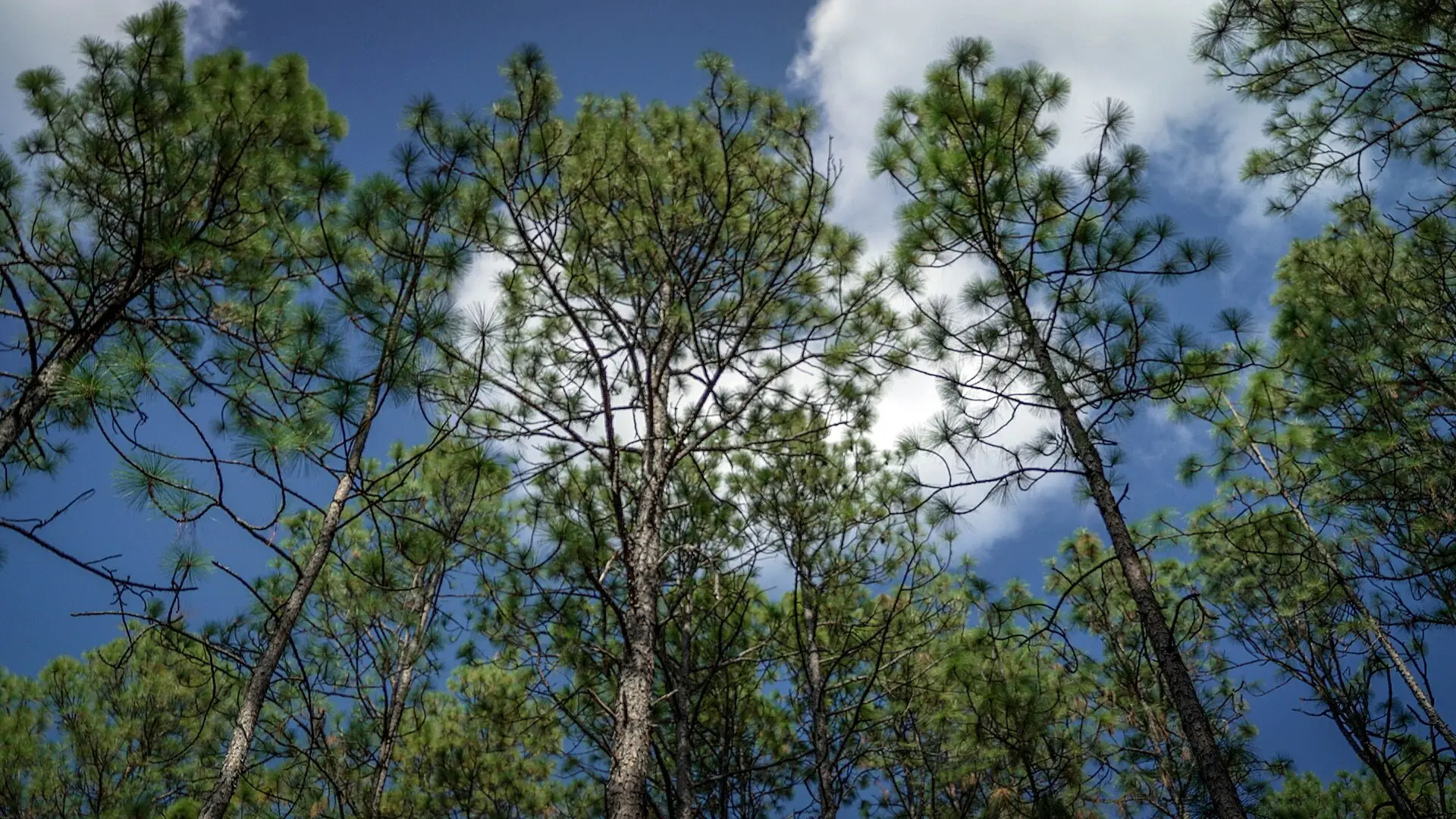
Photo: Forest Service Photography / Public domain, via Wikimedia Commons
Kisatchie’s longleaf pine country brings open woodland, sandy ground, and surprising rock features into a Louisiana trip. The national forest is spread across several districts, with its headquarters in Pineville. You need to choose a specific recreation area before planning a walk. That choice turns a very large forest into a destination you can enjoy properly.
Longleaf Vista and Kisatchie Bayou are among the forest’s well-known landscapes, with sandstone terrain and creek scenery providing different themes. The visitor areas lie beyond Pineville itself, so treat the town as an orientation point rather than a single forest entrance. Spring and fall are especially pleasant for hiking. Spend time looking at the plants beneath the pines, where the woodland’s variety becomes easier to appreciate.
Insider tip: Select one ranger district and one main walk, leaving enough time to enjoy the landscape without a day of searching for trailheads.
Where: Pineville, Louisiana
2. Avery Island, New Iberia
Avery Island connects a famous pepper sauce with an unusual salt-dome landscape. The TABASCO museum and visitor tour explain the history and production of a brand that began here. Look at the relationship between the agricultural story, barrels, and the finished sauce. The familiar bottle becomes more interesting when you see the place behind it.
Jungle Gardens adds a different reason to linger, combining planted landscapes with the bird-conservation history associated with Edward Avery McIlhenny. You can give the production tour and gardens separate blocks of attention. Spring is especially appealing for garden growth and bird activity, while cooler months favor longer outdoor visits. The island makes a varied day when you balance cultural interpretation with time looking at plants and water.
Insider tip: Pair the production story with the gardens, so Avery Island becomes more than a quick visit connected with a familiar label.
Where: New Iberia, Louisiana
3. Lake Martin, Breaux Bridge
Lake Martin gives you a close view of Louisiana’s cypress-and-tupelo wetland landscape. The Nature Conservancy’s Cypress Island Preserve protects habitat around the lake, including an important bird rookery. Trees, reflections, and bird movement can hold your attention without a complicated activity plan. Begin by looking at how the water and vegetation divide the scene into layers.
Use public viewing areas or an organized boat tour suited to your interests. The rookery has seasonal boat-entry restrictions during nesting, so wildlife viewing stays outside the protected area. Spring brings strong bird interest, while cooler seasons are comfortable for watching from land. Give one viewpoint time, since the best moment may arrive after you have stopped moving and begun noticing behavior.
Insider tip: Bring binoculars and watch how birds feed or settle among the trees, keeping behavior as interesting as identification.
Where: Breaux Bridge, Louisiana
4. Briarwood Nature Preserve, Saline
Briarwood connects Louisiana’s native plants with the life and work of Caroline Dormon. Her former home and surrounding landscape preserve a legacy of botanical knowledge, conservation, and close observation. Forests, gardens, and ponds give the visit several scales to explore. A plant that first looks ordinary can become memorable once its story is explained.
Visits are by appointment and guided by the curator. That format makes Briarwood especially rewarding when you arrive with questions about native plants or the region’s forests. Spring and fall are attractive seasons for exploring the grounds, though the particular interests change across the year. Give the guided visit room in your schedule so it can be a main event rather than a hurried extra.
Insider tip: Think of one or two plant questions before the tour, using the guided format to learn something you can notice elsewhere afterward.
Where: Saline, Louisiana
5. Driskill Mountain, Bryceland
Driskill Mountain makes Louisiana’s highest ground a woodland walk at a modest human scale. Pines and hardwoods surround the marked route, with the summit marker providing a clear destination. The pleasure comes as much from the forest as from reaching the state’s high point. Look at changes in the ground and vegetation along the way.
The trail crosses private land made available for respectful public visits. Keep to the marked approach so that generosity continues to support future walkers. Spring and fall are particularly comfortable for exploring, with cooler air making a slower pace easy to enjoy. You can pair the hike with time in the surrounding northern Louisiana region without treating the summit as a demanding mountain expedition.
Insider tip: Enjoy the route as a forest walk first, giving the summit marker its moment without making it the only purpose of the visit.
Where: Bryceland, Louisiana
6. Poverty Point, Pioneer
Poverty Point’s earthworks make the scale and organization of an ancient society visible in the Louisiana landscape. Mounds, curved ridges, and a central plaza were created by people living here thousands of years ago. The site is recognized as a UNESCO World Heritage property. Begin at the museum so the broad forms outside become easier to understand.
Walk or follow the official visitor route with that interpretation in mind. The achievement lies partly in the planning and labor represented by shapes that can look subtle from ground level. Cooler spring and fall days are especially pleasant for exploring the open areas. Give the archaeological story time, since the most important details may be the ones you could otherwise walk past without recognizing.
Insider tip: Study the site model or map before going outside, then use recognizable ridges and mounds to connect the plan with the ground.
Where: Pioneer, Louisiana
7. Shadows-on-the-Teche, New Iberia
Shadows-on-the-Teche is a brick house museum right on Bayou Teche in downtown New Iberia, built in the 1830s for the Weeks family. Massive live oaks draped in Spanish moss frame the house and gardens, and the view down to the bayou is one of the most atmospheric in Cajun Country.
Guided tours take you through rooms filled with the family’s furnishings, and the site also tells the stories of the enslaved people who lived and worked here, drawing on an unusually rich collection of family papers. It’s owned by the National Trust for Historic Preservation, so the interpretation goes deeper than a quick look at period rooms.
Pair it with a walk along Main Street, a few minutes away, for coffee and the historic storefronts of downtown New Iberia.
Insider tip: Save time after the tour to wander the gardens and sit under the oaks by the bayou, where the house earns its name in late-afternoon light.
Where: New Iberia, Louisiana
8. Abita Mystery House, Abita Springs
John Preble’s Abita Mystery House turns found objects and homemade inventions into a wonderfully unconventional museum. Miniature scenes, odd collections, and animated displays create a world where looking twice is part of the fun. The old service-station entrance adds to the roadside character. It is a place that rewards curiosity more than a need for everything to be neatly explained.
Move slowly through the displays and notice how familiar materials acquire new roles. Children may focus on motion and surprises, while adults can enjoy the visual jokes and references to Southern life. The attraction fits naturally into an Abita Springs visit with a town walk afterward. Mild weather makes it easy to combine the indoor collections with nearby outdoor time.
Insider tip: Choose a few displays to investigate closely, looking for the ordinary objects hidden inside the imaginative construction.
Where: Abita Springs, Louisiana
9. Chicot State Park, Ville Platte
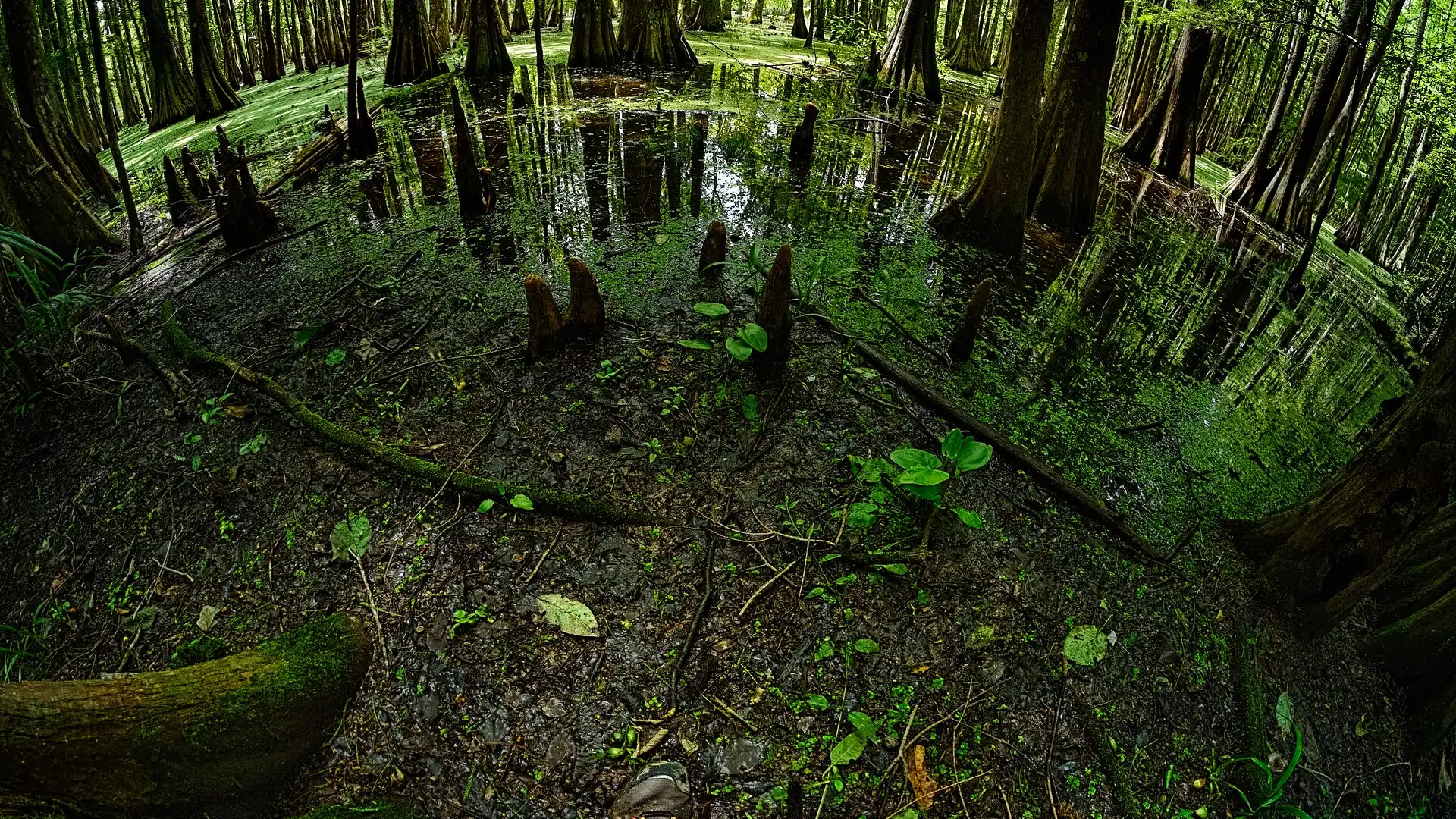
Photo: Richard May / CC BY-SA 2.0, via Wikimedia Commons
Chicot brings a broad lake and wooded landscape together with a particularly good place to learn Louisiana’s trees. The Louisiana State Arboretum lies within the park and includes mature beech-magnolia forest. Labeled plants and nature trails make a walk more informative without making it feel like a classroom assignment. Begin with a short route and see how much you start noticing.
The larger park offers lakeside recreation and longer hiking options. You can choose a modest nature-focused day or plan an overnight around more outdoor time. Spring and fall are especially comfortable for walking, with the lake providing a different perspective after the forest. Keep the itinerary manageable enough that both the water and the arboretum receive attention.
Insider tip: Visit the arboretum early in the trip, then see which trees you can recognize during another walk around the park.
Where: Ville Platte, Louisiana
10. North Toledo Bend State Park, Zwolle
North Toledo Bend places rolling pine-country scenery beside the large reservoir on Louisiana’s western edge. The lake supports boating and fishing, while the park adds hiking, picnic areas, and room for a simple shoreside day. Begin with the water view and let the scale of the reservoir become clear. The surrounding woods give you a different kind of landscape close by.
Choose a trail walk and a picnic if you want to enjoy the destination without organizing a boat trip. A longer stay can give the lake time to change with morning and evening light. Spring and fall are comfortable for combining woodland walking with open-water views. The park is especially useful when you want a western Louisiana nature stop with straightforward public visitor facilities.
Insider tip: Balance a woodland walk with a separate lakefront pause, so the day includes both the pine forest and the reservoir’s open space.
Where: Zwolle, Louisiana
11. Atchafalaya Basin, Henderson
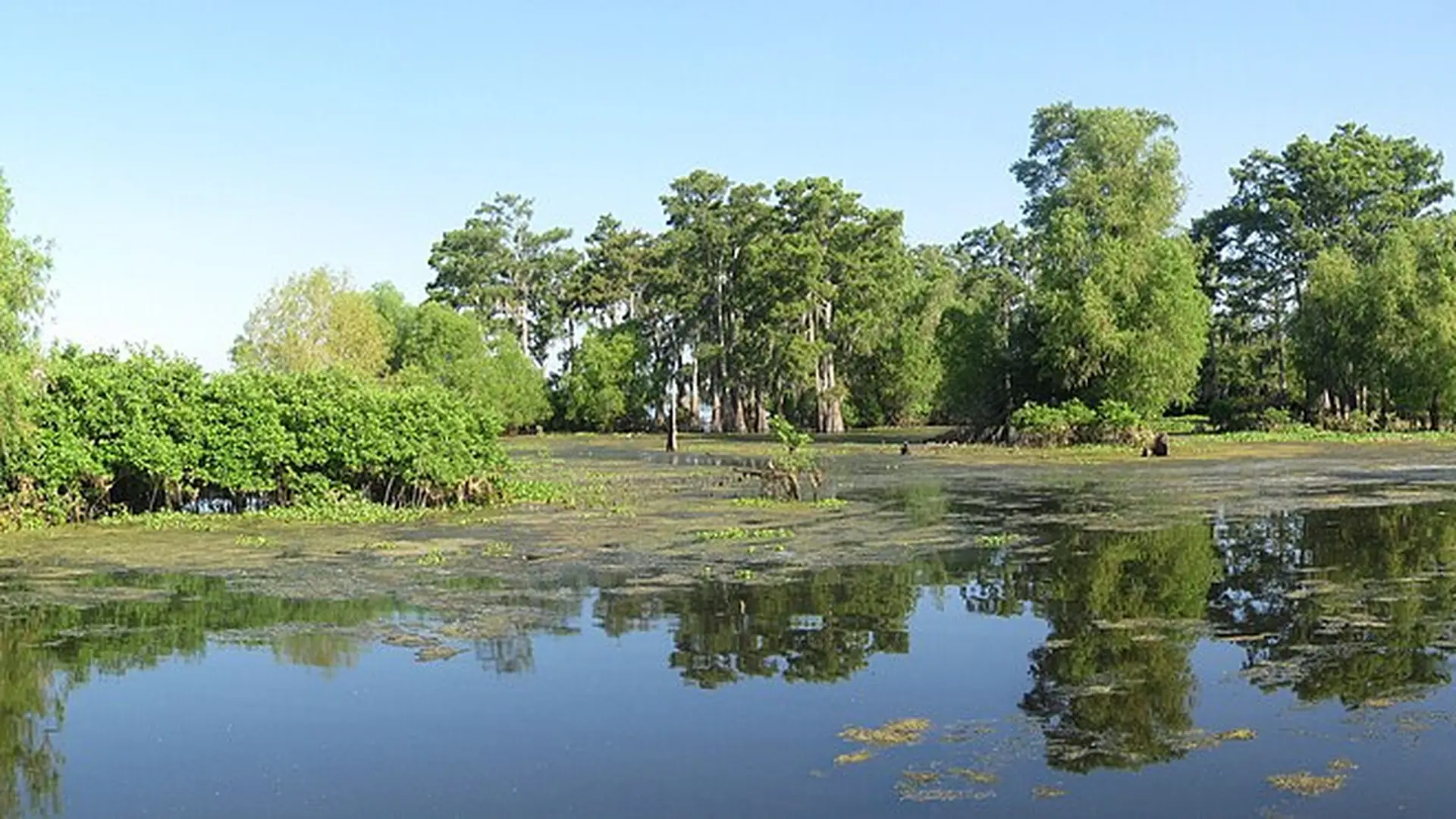
Photo: Chrismiceli / Public domain, via Wikimedia Commons
The Atchafalaya Basin gives Louisiana water country an immense, living complexity. Cypress forest, channels, and flooded woodland support a landscape whose appearance changes with water levels and season. Henderson is a useful gateway for organized swamp tours. A knowledgeable guide can help you notice how plants, wildlife, and waterways fit together.
Choose a tour for its natural-history focus if learning the landscape is your priority. You can appreciate reflections and bird activity without expecting a guaranteed wildlife encounter. Spring and fall are particularly pleasant for time outdoors, while summer requires a more heat-conscious pace. Pair the basin visit with a meal in Henderson, keeping Cajun food and culture connected with the water landscape around them.
Insider tip: Ask how seasonal water levels affect the route, giving the day’s scenery a context beyond the individual trees and channels.
Where: Henderson, Louisiana
Map of the places
Tap a place to open it in Google Maps:
- Kisatchie National Forest, Pineville
- Avery Island, New Iberia
- Lake Martin, Breaux Bridge
- Briarwood Nature Preserve, Saline
- Driskill Mountain, Bryceland
- Poverty Point, Pioneer
- Shadows-on-the-Teche, New Iberia
- Abita Mystery House, Abita Springs
- Chicot State Park, Ville Platte
- North Toledo Bend State Park, Zwolle
- Atchafalaya Basin, Henderson
Tips for planning your Louisiana trip
- Group New Iberia and Bayou Teche-area destinations separately from northern pine-country places and the western Toledo Bend region.
- Favor spring or fall for longer outdoor visits, with indoor interpretation and shaded breaks useful during warmer weather.
- Reserve appointment-based preserve visits and guided swamp tours before choosing the rest of the day’s activities.
- Pack walking shoes, water, sun protection, insect repellent, and a small bag that keeps essentials organized on a boat or trail.
- Check current conditions, public access, seasonal wildlife restrictions, and attraction calendars before departure.
FAQ
Which destinations are best for understanding native landscapes?
Briarwood and Chicot’s arboretum add guided or labeled plant interpretation. Kisatchie and the Atchafalaya Basin reveal different forest environments on a much larger scale.
Where can you combine gardens with history?
Avery Island connects Jungle Gardens with a conservation and food-production story. Shadows-on-the-Teche adds a historic house museum and moss-draped oaks on Bayou Teche.
Are all these visits spontaneous walk-ins?
No, Briarwood requires an appointment, and organized boat or other guided visits work best when arranged ahead. Choose the key activity first, then leave flexible time around it.
Final thoughts
Louisiana becomes more varied with every landscape and story you give time to understand. Save the places that match your curiosity, build a sensible regional trip, and leave room for the small details that make a destination stay with you.

