
Arizona can shift from rounded granite to volcanic darkness, then open into a landscape of red cliffs and ancient settlement remains. The appeal of exploring hidden gems in Arizona is that variety, with each place asking you to look at the state differently.
These eleven destinations include established parks and popular permit-controlled areas, so quiet conditions are never guaranteed. Choose the season and experience that suit you, then use official access information to plan a realistic visit. An unhurried walk at one carefully chosen place can be more rewarding than rushing between several dramatic photographs.
1. Watson Lake, Prescott
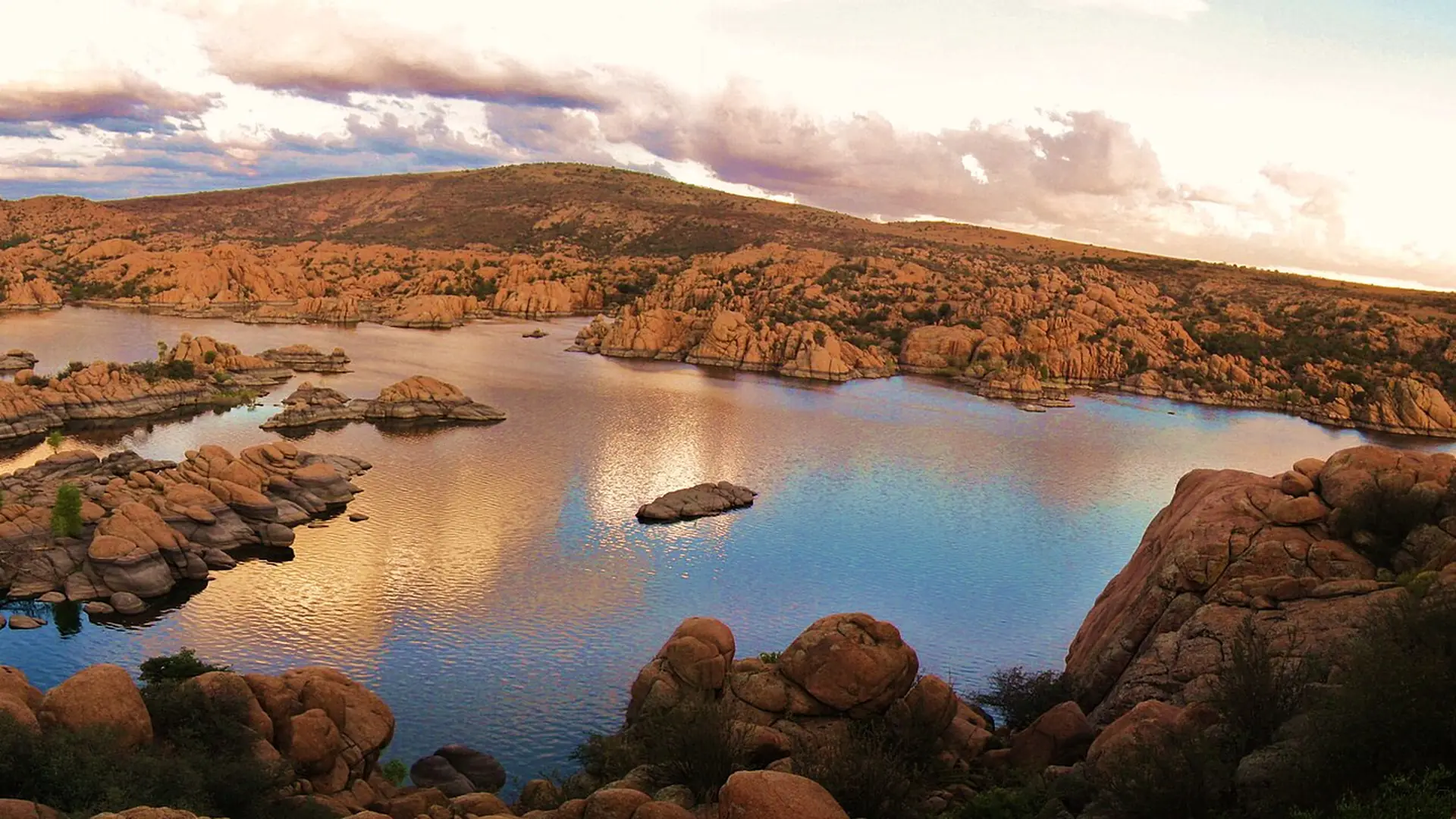
Photo: David Quigley / CC BY 2.0, via Wikimedia Commons
Watson Lake’s rounded granite formations give the water an unusually sculptural setting. You can appreciate how the shoreline fits between the rocks without making the day about a difficult hike. Choose an established viewpoint or a suitable trail, then leave time to notice the shapes and their reflections as the light changes.
Spring and fall are comfortable starting seasons for walking, while summer calls for water and shorter exposed outings. Water levels and weather affect the appearance, so avoid expecting every photograph to match your visit. A paddling outing needs separate equipment and conditions planning. For a simpler day, keep your focus on the public shore and the relationship between stone, water, and sky.
Insider tip: Choose your walking route before arrival, since the appealing granite terrain can include uneven surfaces that do not suit every group.
Where: Prescott, Arizona
2. Chiricahua National Monument, Willcox
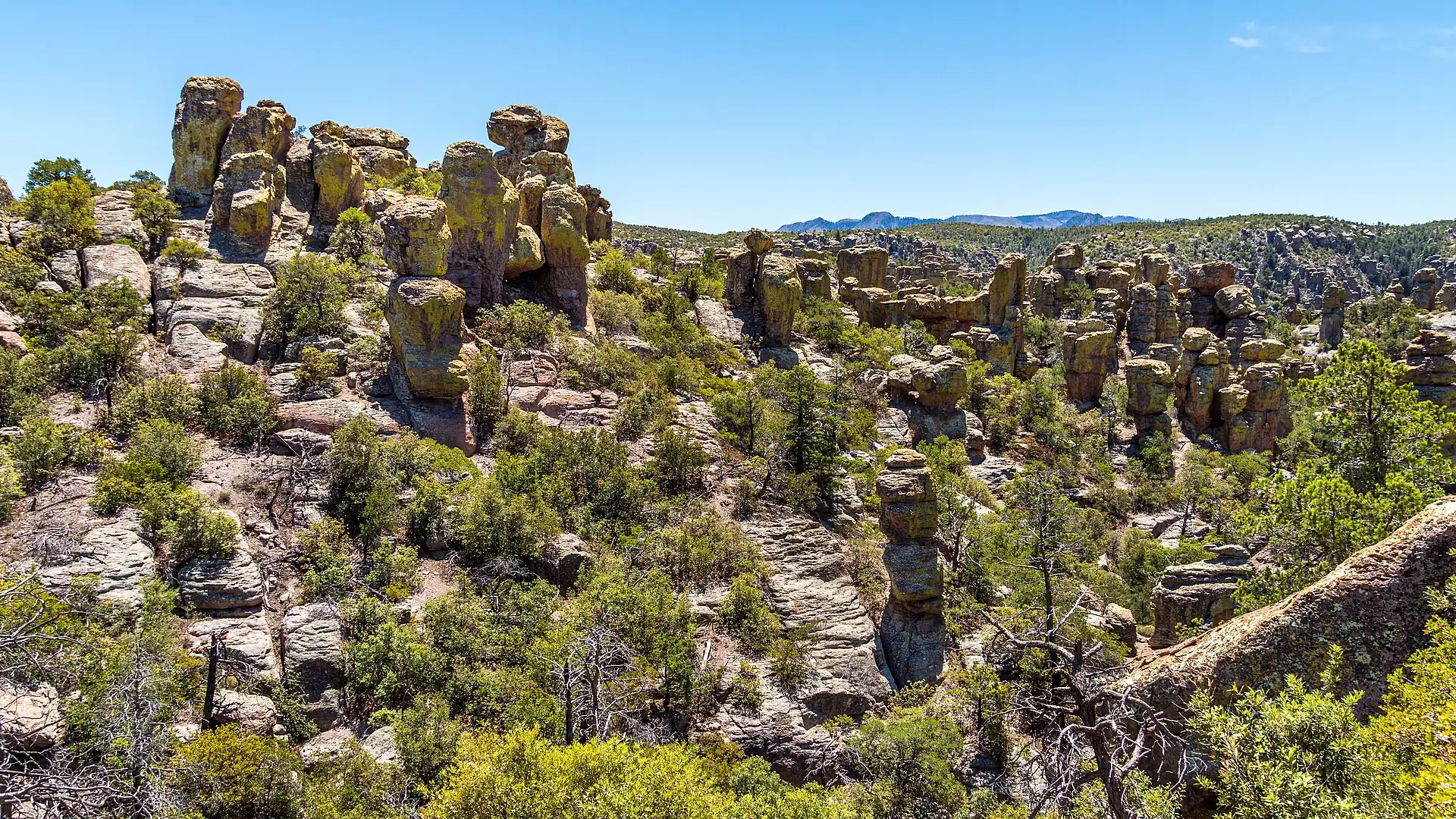
Photo: dconvertini / CC BY-SA 2.0, via Wikimedia Commons
Chiricahua National Monument offers a landscape of rock pinnacles and balanced-looking formations that becomes more interesting the longer you study it. Broad viewpoints reveal the pattern, while a suitable trail lets individual shapes stand out. You can make the visit rewarding at different levels of effort, provided you choose a route that matches your ability.
Use the National Park Service’s visitor information to plan around elevation and weather. Spring and fall are useful general seasons, while winter may bring snow and summer requires attention to heat and storms. Stay on designated paths around the formations. The most satisfying visit combines an overall view with time to understand the rock at closer range.
Insider tip: Pick one main trail and a few viewpoints instead of trying to complete every available walk in a single visit.
Where: Willcox, Arizona
3. Kartchner Caverns State Park, Benson
Photo: Shaunnamm / CC BY-SA 4.0, via Wikimedia Commons
Kartchner Caverns gives you a living cave environment where delicate mineral formations remain the central attraction. A guided tour helps you understand how water creates the features you are seeing. The controlled visit is part of protecting the cave, so approach it as a chance to learn rather than a space to explore independently.
Consult the state park’s information for current tours and visitor requirements. Underground sightseeing works across seasons, but individual tour routes can have different availability. Arrange your preferred experience before committing to a tight itinerary. Follow the guide’s instructions carefully and leave the cave surfaces untouched, preserving the conditions that make the place distinctive.
Insider tip: Read the tour’s clothing, equipment, and personal-item rules before arriving so your visit begins without last-minute rearranging.
Where: Benson, Arizona
4. Fossil Creek, Strawberry
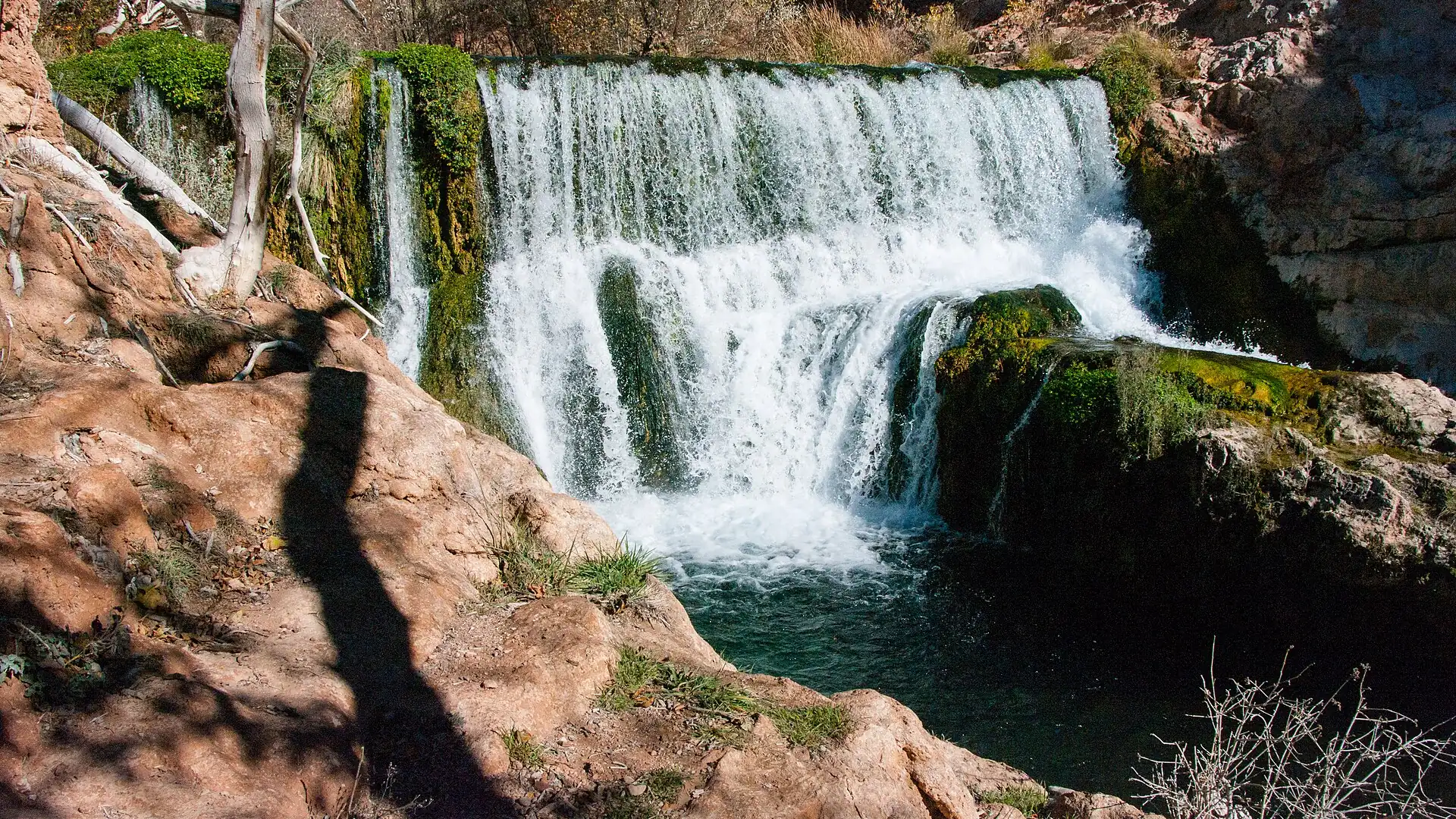
Photo: Coconino National Forest / CC0, via Wikimedia Commons
Fossil Creek offers flowing water and riparian greenery in a region many travelers picture only as dry country. The creek’s mineral-rich water and surrounding terrain create an unusually vivid setting. Choose the access point that matches your intended outing, since the broader area includes very different approaches and levels of effort.
The official reservation information explains the permit system and distinguishes access arrangements. Do not confuse a waterfall walk with a much more demanding route toward the springs. Warm-season visits require careful heat and water planning, while closures and road conditions can affect other seasons too. Confirm your exact trailhead before booking accommodation around the outing.
Insider tip: Match your permit or parking reservation to the route you actually intend to walk, rather than choosing a familiar name alone.
Where: Strawberry, Arizona
5. Tonto Natural Bridge State Park, Payson
Tonto Natural Bridge State Park centers on a vast natural travertine formation that rewards both an overall view and a closer look. The surrounding gorge gives the stone structure its scale. Start with the established viewing areas before deciding whether a more demanding trail belongs in your day.
The state park’s guidance helps you compare overlooks with routes involving steeper or slippery terrain. Spring and fall generally suit an outdoor visit, while weather can change access at other times. Give water-polished rock the attention it deserves underfoot. You can enjoy the geological spectacle without trying to reach every lower viewpoint or treating each path as equally easy.
Insider tip: Choose your route for its footing and return climb, not simply for how close it appears to bring you to the bridge.
Where: Payson, Arizona
6. Montezuma Well, Rimrock
Montezuma Well combines an unusual water-filled limestone feature with a long history of human use. Looking into the well is only the beginning of the visit. Interpretation helps you understand how water shaped life here and why the surrounding landscape deserves more than a quick scenic stop.
The National Park Service’s overview introduces the site and its established walking routes. Cooler months, spring, and fall are comfortable choices for the exposed portions. In summer, keep outdoor time manageable and carry water. Stay on the designated paths around both natural features and cultural remains, treating the place as a connected historical landscape.
Insider tip: Read the water-related interpretation before continuing along the paths so the smaller landscape features become part of the story.
Where: Rimrock, Arizona
7. Wupatki National Monument, Flagstaff
Wupatki National Monument preserves ancestral settlement remains within an open high-desert landscape. The buildings have more meaning when you consider the people, trade, and daily activity once connected to them. Give the interpretation proper attention rather than treating the stonework as a dramatic backdrop without a human story.
Use the National Park Service’s planning pages to choose sites and understand current access. Spring and fall are useful seasons, while both summer exposure and winter cold require preparation. Follow the established routes and leave all materials in place. The view across the surrounding land helps explain the settlement as part of a wider region, not an isolated collection of structures.
Insider tip: Include time for the visitor interpretation before walking among the sites so you recognize features you might otherwise overlook.
Where: Flagstaff, Arizona
8. Lava River Cave, Flagstaff
Lava River Cave takes the day’s sightseeing underground into a volcanic tube rather than a mineral-decorated show cave. Darkness, rough footing, and the scale of the passage define the experience. This is a self-prepared outing, so choose it only if the terrain and enclosed setting suit everyone in your group.
Check Forest Service access information before departure, especially when snow affects the approach roads. Summer and early fall are often the most straightforward general planning windows. Bring reliable independent light sources and clothing for the cool underground environment. A phone light alone is a poor foundation for exploring a dark cave, and reaching the entrance does not oblige you to continue farther.
Insider tip: Test every light before leaving the car and keep backup lighting accessible rather than at the bottom of a bag.
Where: Flagstaff, Arizona
9. Organ Pipe Cactus National Monument, Ajo
Organ Pipe Cactus National Monument reveals a Sonoran Desert landscape where cactus forms and mountain shapes reward slow observation. The namesake cactus is only one part of a much larger ecological setting. Choose a designated scenic route or suitable walk and let the differences in plant shape and surrounding terrain become the focus.
The National Park Service’s visitor resources help you plan for heat, road suitability, and current conditions. Winter and the cooler parts of spring and fall are the most comfortable starting points. Summer demands a much more restrictive outdoor plan. Carry water even for short stops and remain on authorized routes through this protected landscape.
Insider tip: Compare the requirements of each scenic road before driving, since a route on the map may need different preparation from a paved park approach.
Where: Ajo, Arizona
10. Petrified Forest National Park, Holbrook
Petrified Forest National Park combines fossilized wood with colorful badlands and broad open country. Give yourself time to look at the wood’s textures and colors before moving on to a panoramic viewpoint. The contrast between a small geological detail and the immense surrounding landscape is a major part of the experience.
Consult the National Park Service’s visitor information for routes that fit your time and ability. Spring and fall offer comfortable general conditions, with wind possible and winter cold deserving attention. Summer calls for sensible exposure planning. Leave every piece of petrified wood and other material where it lies so the landscape remains intact for future visitors.
Insider tip: Take close-up photographs of the fossilized wood as well as wide views to remember the park’s two very different scales.
Where: Holbrook, Arizona
11. Vermilion Cliffs National Monument, Marble Canyon
Vermilion Cliffs National Monument encompasses a vast landscape of cliffs, plateaus, and intricate sandstone country. It is an area to research carefully rather than a single developed attraction with one obvious entrance. Choose an appropriate public viewpoint or an authorized, well-prepared outing according to your experience and vehicle.
The Bureau of Land Management identifies routes and permit-controlled areas, including Coyote Buttes. A photograph of the Wave is not evidence of unrestricted access to that destination. Cooler spring and fall conditions are sensible starting points for general planning, though specific routes still require detailed preparation. Carry offline information and avoid improvising on remote roads or unmarked terrain.
Insider tip: Resolve your exact destination, permit requirements, and vehicle suitability before booking a stay around a monument visit.
Where: Marble Canyon, Arizona
Map of the places
Tap a place to open it in Google Maps:
- Watson Lake, Prescott
- Chiricahua National Monument, Willcox
- Kartchner Caverns State Park, Benson
- Fossil Creek, Strawberry
- Tonto Natural Bridge State Park, Payson
- Montezuma Well, Rimrock
- Wupatki National Monument, Flagstaff
- Lava River Cave, Flagstaff
- Organ Pipe Cactus National Monument, Ajo
- Petrified Forest National Park, Holbrook
- Vermilion Cliffs National Monument, Marble Canyon
Tips for planning your Arizona trip
- Match the season to elevation and exposure; the lower desert and Flagstaff-area sites can require very different clothing and activity plans.
- Group destinations regionally rather than treating this statewide list as a short, continuous itinerary.
- Pack sun protection, water, grippy shoes, layers, and offline navigation; cave and remote-desert outings require additional preparation.
- Arrange guided cave visits and required permits before building accommodation plans around a particular experience.
- Check official road and trail information directly, and let heat, storms, or snow change the day’s plan when necessary.
FAQ
Will you have these hidden gems in Arizona to yourself?
Quiet conditions are possible but never guaranteed, and several entries are well-known visitor destinations. Choose less rushed travel days and allow yourself time to enjoy the setting without expecting solitude.
Are all the places open throughout the year?
The collection offers possibilities across seasons, but individual roads, trails, and tour routes can close or require permits. Check the managing agency’s current information for your exact activity.
Which outings need the most preparation?
Remote sandstone country, unguided cave exploration, and permit-controlled creek visits deserve particular attention to access and equipment. Developed viewpoints can be simpler alternatives when you want a less involved day.
Final thoughts
Let Arizona surprise you through a few places you have time to understand. Save the landscapes that interest you, confirm their access requirements, and build a trip around curiosity rather than a crowded checklist.

