
Best hikes in Iowa for a view-filled day outside
Iowa can put you beneath sandstone walls, beside a spring-fed waterfall, or high enough above the Mississippi to watch another river join it. The best hikes in Iowa make those landscapes feel close, with plenty to see before you have walked very far. A slow afternoon can be every bit as rewarding as a long trail day.
These ten hiking destinations include gentle approaches and places where you need to choose your route more carefully. Some park trails are steep or rugged, so the notes below favor shorter options where available, with spring greenery, summer shade, and fall color giving you different reasons to return.
1. Ledges State Park, Madrid
Sandstone walls rise above Pea’s Creek at Ledges, making central Iowa feel suddenly much more enclosed. The canyon is the park’s signature landscape, shaped by water and framed by woodland. You can appreciate the stone’s horizontal layers and the creek’s bends without trying to cover the whole trail network. The view changes whenever the canyon opens or narrows.
For a gentler walk, choose the accessible interpretive trail to Lost Lake in the southern part of the park. It offers a different mood from the canyon, with room to notice plants and water at a relaxed pace. Many other park trails climb sharply, so match the route to your walking comfort. Spring and fall are especially appealing, with fresh growth or bright leaves against the pale rock.
Insider tip: Decide between a gentle Lost Lake walk and a canyon-focused visit before setting out, so the day’s route matches its purpose.
Where: Madrid, Iowa
2. Backbone State Park, Strawberry Point
Backbone’s narrow dolomite ridge gives Iowa’s first state park both its name and its dramatic profile. The Maquoketa River shaped the landscape around that backbone, leaving rock, water, and wooded slopes close together. You can see why the park became an early favorite. Its Civilian Conservation Corps structures add a human history to the natural scenery.
The paved trout-stream route offers a gentler alternative within a park known for rocky trails. Spring-fed water and shaded banks make it a satisfying place to slow down and look closely. The ridge trails have rough footing and exposed edges, so they require a different level of comfort. A stream walk followed by time near the lake can make a full, rewarding day without a strenuous circuit.
Insider tip: Use the trout-stream area for a relaxed walk, then appreciate the park’s stone architecture around the developed lake area.
Where: Strawberry Point, Iowa
3. Maquoketa Caves State Park, Maquoketa
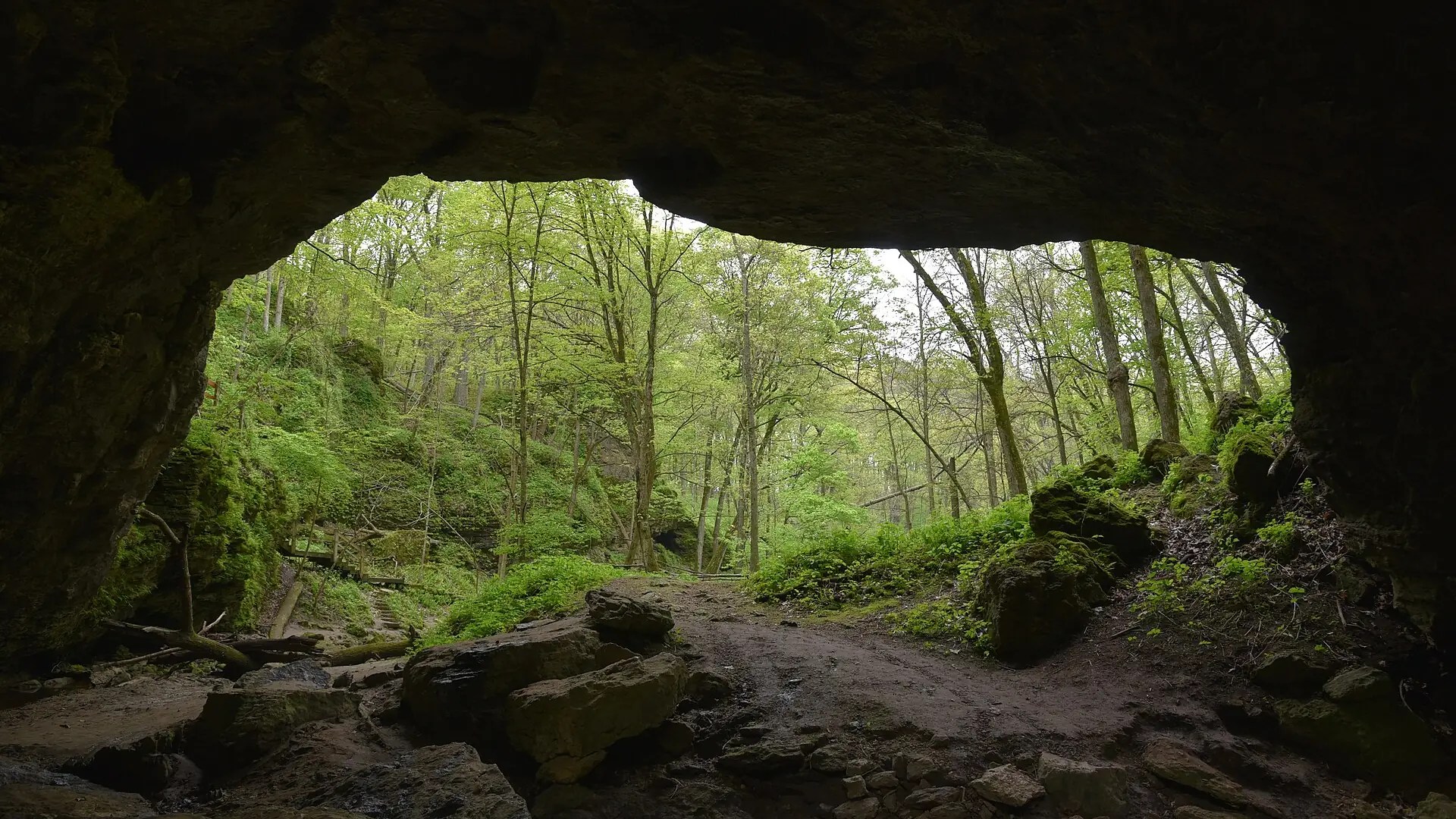
Photo: Gardner.glen / CC BY-SA 4.0, via Wikimedia Commons
Maquoketa Caves turns a woodland walk into a series of limestone discoveries. Cave mouths, rock passages, and a natural bridge give the park a landscape full of openings and shadows. The surface trails are worthwhile even if you have no interest in squeezing underground. Look at the rock from outside and the relationships between the openings become easier to understand.
Choose a short aboveground route that includes the features you most want to see. Stairs and uneven ground occur within the park, and the caves close during the winter bat-hibernation season. In warmer months, the mix of foliage and pale stone makes an especially striking walk. Give each feature time to register before following the path to the next opening.
Insider tip: Make a surface-landmark plan first; entering every cave is unnecessary for a satisfying visit to this unusual landscape.
Where: Maquoketa, Iowa
4. Pikes Peak State Park, McGregor
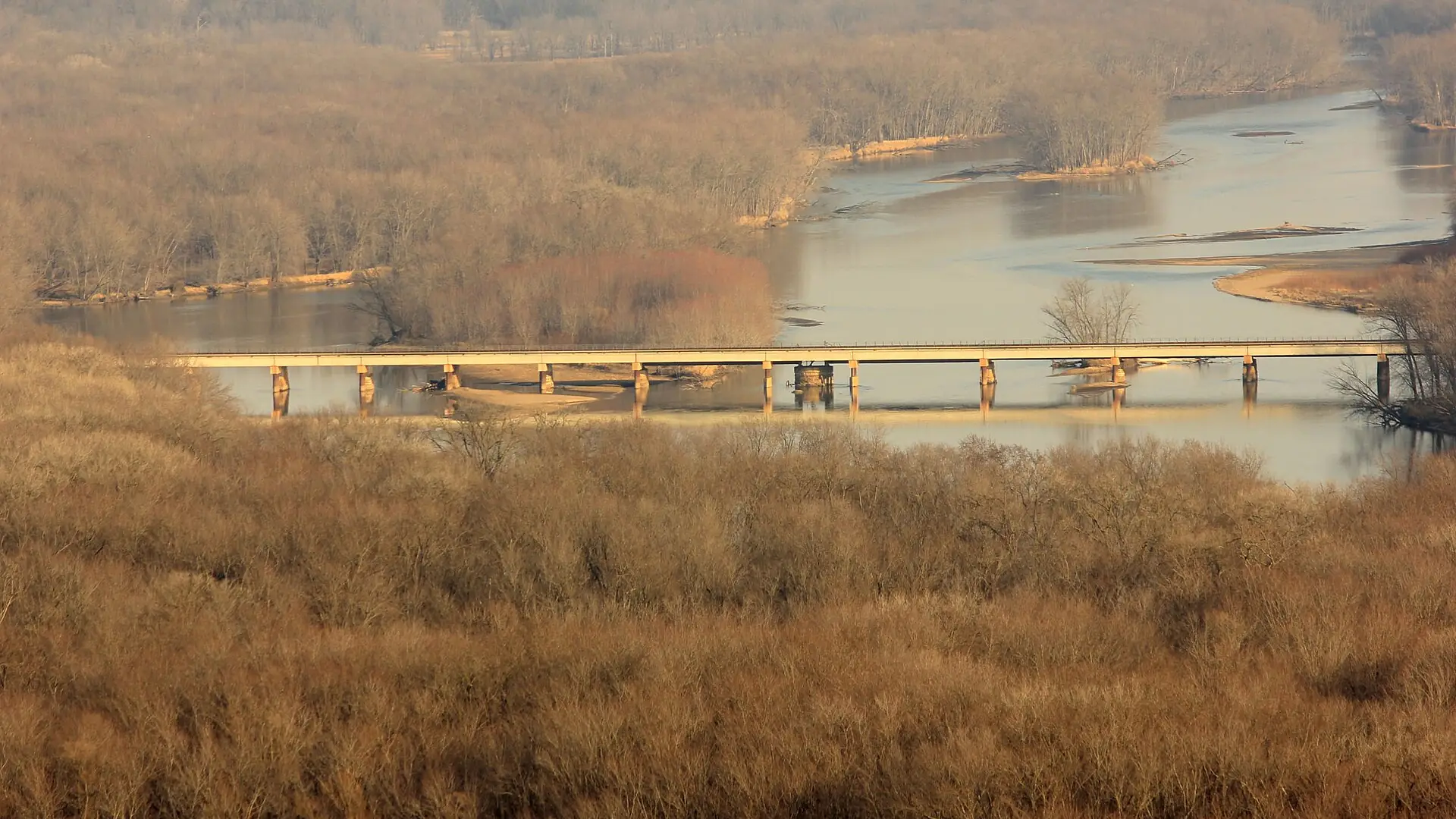
Photo: Yinan Chen / Public Domain, via Wikimedia Commons
The meeting of the Wisconsin and Mississippi rivers gives Pikes Peak one of Iowa’s most expansive views. From the blufftop overlook, channels, islands, and distant slopes spread across the landscape below. The developed overlook area delivers a substantial reward with relatively little walking. You can spend a long time tracing the waterways with your eyes.
For more of a walk, the boardwalk route toward Bridal Veil Falls takes you into a wooded glen. It changes the scale from a broad river panorama to rock and water at close range. Choose the overlook alone for the gentlest visit, since the waterfall route includes changes in elevation. Autumn is especially memorable when the bluff woods frame the river in warm color.
Insider tip: Look at the river confluence before taking another trail, so you can connect the smaller woodland features with the valley around them.
Where: McGregor, Iowa
5. Waubonsie State Park, Hamburg
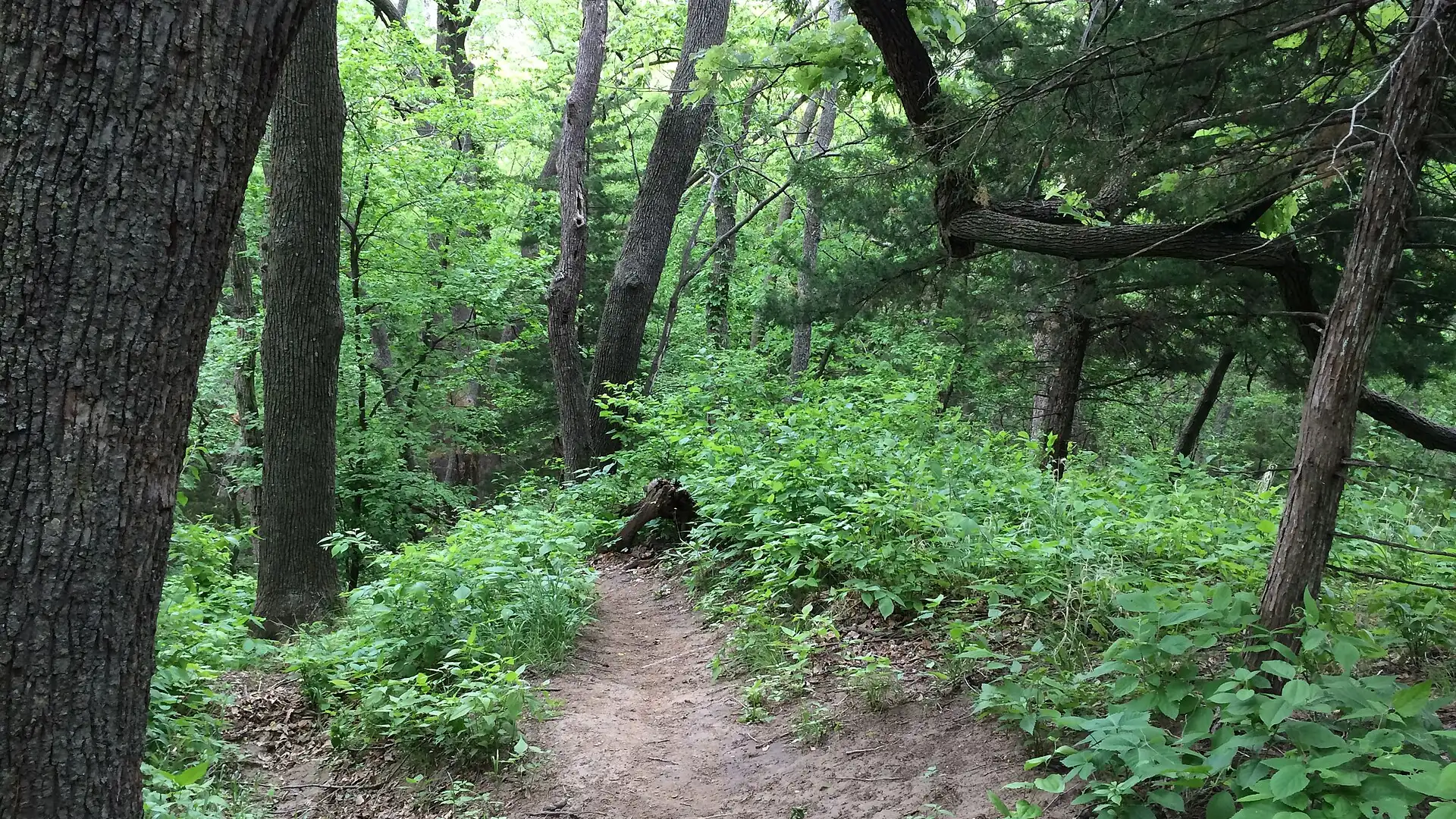
Photo: Christine Warner Hawks / CC BY 2.0, via Wikimedia Commons
Waubonsie’s ridges open toward the Missouri River Valley, with broad views reaching beyond Iowa into the plains. The park occupies the Loess Hills, built from windblown silt that forms steep, distinctive slopes. Prairie on the heights and woodland in the hollows create a pleasing contrast. You can notice that change in vegetation within a relatively compact visit.
The Sunset Ridge Nature Trail is the park’s classic viewpoint-focused choice. Take a shorter walk suited to your energy and allow time to pause wherever the landscape opens. The hills involve real climbing, so a brief route can still feel substantial. Spring through fall works well, with summer grasses and autumn foliage giving the same slopes different textures.
Insider tip: Carry binoculars if you have them; the Missouri Valley panorama rewards a closer look without adding more walking.
Where: Hamburg, Iowa
6. Preparation Canyon State Park, Moorhead
Preparation Canyon shows the Loess Hills from the inside, with wooded hollows tucked between ridges. The park also preserves the site of Preparation, a nineteenth-century settlement that gradually disappeared. That history gives the quiet landscape another layer. A place that now feels remote once held homes, a school, and working businesses.
Build your visit around a short trail segment and a picnic, giving the slopes and vegetation your attention. The backcountry paths have rough ground and loose soil, making this a more demanding choice than a paved park walk. You can still keep the day modest by returning before a longer circuit becomes necessary. Fall is particularly attractive when trees and prairie grasses bring several shades of gold into the view.
Insider tip: Read the settlement history before walking, then look at the landscape as a former community as well as a natural area.
Where: Moorhead, Iowa
7. Yellow River State Forest, Harpers Ferry
Trout streams and steep wooded valleys make Yellow River State Forest a compelling piece of northeastern Iowa. The Paint Creek Unit contains much of the forest’s developed recreation, while other units open toward Mississippi River views. The terrain belongs to the Driftless Area, whose hills and valleys are far from flat. Choose the part of the forest that fits the kind of day you want.
For a modest visit, concentrate on one valley area and a short marked route, leaving a longer ridge circuit for another trip. The forest’s trail network is generally less developed and can be rugged. Spring brings fresh leaves along the streams, while fall color emphasizes the folds of the hills. A patient walk here is as much about water sounds and forest detail as reaching an overlook.
Insider tip: Choose a single forest unit before driving in; the units serve different landscapes and are not interchangeable trail entrances.
Where: Harpers Ferry, Iowa
8. Dunning’s Spring, Decorah
Dunning’s Spring puts a spring-fed waterfall surprisingly close to Decorah’s everyday streets. Water tumbles down a limestone slope, breaking across the uneven rock into smaller streams and ribbons. A short approach from the designated parking area brings the cascade into view. It is an excellent choice when you want a memorable natural sight without a long woodland trek.
Stay for a closer look at the stone bridge and the way water moves through the little ravine. The surrounding trails offer more walking if you want it, but the waterfall can be the whole purpose of the visit. Summer makes the shaded surroundings particularly appealing. Spring’s new leaves and autumn’s color each add another frame around the pale limestone and moving water.
Insider tip: Spend a little time watching one section of the cascade; the smaller drops often reveal more detail than the full view suggests.
Where: Decorah, Iowa
9. Palisades-Kepler State Park, Mount Vernon
The Cedar River runs beside dramatic bluffs at Palisades-Kepler, giving the park its strongest visual theme. Hardwood forest and deep ravines make the shoreline landscape varied enough for repeated visits. Rustic Civilian Conservation Corps buildings add another reason to look around. You have stonework shaped by people and rock shaped by the river in the same park.
Begin with the developed riverside areas and choose a short trail section suited to your energy. The park’s trail system is officially rugged, so a longer bluff walk deserves more preparation than a casual stroll. Spring wildflowers and autumn leaves are particularly rewarding. A picnic beside the river can give a shorter visit a satisfying finish without turning the day into an endurance goal.
Insider tip: Look for CCC-era details in the park buildings as well as the natural bluff formations along the river.
Where: Mount Vernon, Iowa
10. Stone State Park, Sioux City
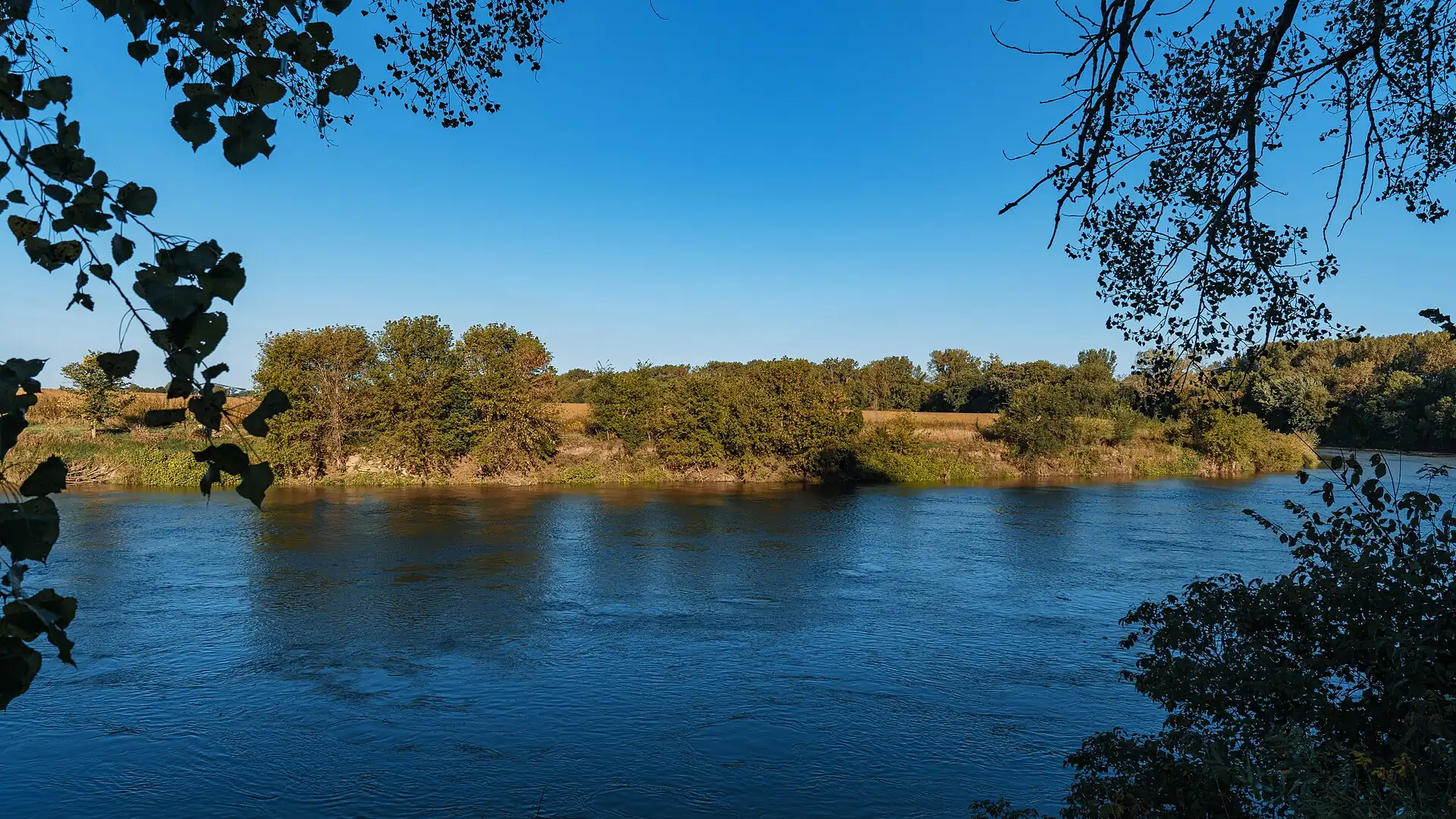
Photo: Tony Webster from Minneapolis, Minnesota, United States / CC BY-SA 2.0, via Wikimedia Commons
Stone State Park gives Sioux City a backyard of wooded ravines and Loess Hills ridges. Windblown soil created the underlying landform, while prairie remnants and woodland create a patchwork of habitats. The Carolyn Benne Nature Trail adds interpretation to a walk through the park. It is a useful choice if you enjoy learning why the scenery looks the way it does.
Keep your route short enough to notice birds, plants, and the park’s historic stone structures. The Civilian Conservation Corps built several of those features during the 1930s. Hills make some walks more energetic than the map first suggests. Spring and fall are especially pleasant for exploring, with changing foliage helping you read the contours around the city.
Insider tip: Use the interpretive trail as the focus of the visit, then add another short walk only if you still feel curious and energetic.
Where: Sioux City, Iowa
Map of the places
Tap a place to open it in Google Maps:
- Ledges State Park, Madrid
- Backbone State Park, Strawberry Point
- Maquoketa Caves State Park, Maquoketa
- Pikes Peak State Park, McGregor
- Waubonsie State Park, Hamburg
- Preparation Canyon State Park, Moorhead
- Yellow River State Forest, Harpers Ferry
- Dunning's Spring, Decorah
- Palisades-Kepler State Park, Mount Vernon
- Stone State Park, Sioux City
Tips for planning your Iowa trip
- Choose a regional pair or cluster, such as Decorah with northeastern Iowa’s river parks, or the western Loess Hills destinations together.
- Spring and fall suit varied walking, while summer favors shaded creek and woodland routes.
- Match the actual trail rating to your abilities; several parks in this list contain steep or rugged routes alongside gentler visitor areas.
- Pack water, shoes with good traction, layers, and a simple picnic so a shorter walk can become a relaxed day.
- Check current conditions, park maps, seasonal cave access, and temporary trail closures before selecting a route.
FAQ
Are all the trails in these parks easy?
No, several parks have steep ridges, stairs, or rugged backcountry paths. Use the gentler approaches highlighted here and select the final route according to your walking comfort.
Where can you get a big view with little walking?
Pikes Peak’s developed overlook area provides a memorable view of the Mississippi and Wisconsin rivers. Dunning’s Spring offers a short approach to a very different kind of water scenery.
What is the best season for these walks?
Spring and fall are especially good for comfortable walking and colorful scenery. Summer works well when you choose shaded routes and leave time for breaks.
Final thoughts
Iowa’s most rewarding walks can begin with a modest plan and a willingness to look closely. Save a few places that match your pace, then give the canyon, stream, or river view enough time to become the best part of your day.

