
Best hikes in Louisiana for a changing view of the state
Louisiana can give you a sandstone ridge, a steep wooded hollow, and a boardwalk over wet ground within the same broad travel map. The best hikes in Louisiana make those differences tangible, letting you see how water, soil, and elevation change the plants around you. A good walk can do more than a whole day of scenery through a windshield.
These ten destinations include substantial forest routes and shorter nature-focused choices. Spring and fall usually offer the most comfortable balance for exploring, with specific trails and public access varying by location, so choose the walk that fits your energy and interests.
1. Backbone Trail, Kisatchie National Forest
Backbone Trail runs through the Kisatchie Hills Wilderness, where Louisiana reveals a more rugged face. Sandstone terrain, pine-covered slopes, and changing ridge views give the walk a distinctive profile. The wilderness designation keeps the landscape less developed than a typical state-park path. You can appreciate the route as a substantial journey through the land.
Choose a shorter out-and-back or a longer planned hike according to your abilities. The full route crosses demanding ground, so leave it a generous place in the day. Spring and fall are especially attractive for walking beneath the pines and looking across the hills. Pause for the plants and rock close to the trail as well as the broader openings in the view.
Insider tip: Set your turnaround plan before beginning, keeping enough time and energy to enjoy the return through the same changing terrain.
Where: Kisatchie National Forest, Louisiana
2. Wild Azalea Trail, Woodworth
Wild Azalea Trail gives central Louisiana a long forest route with plenty of room for a shorter day walk. It connects the Valentine Lake area with a trailhead near Woodworth, passing through pine and hardwood country. Several access points let you choose a manageable section. The route’s length is an opportunity to return, not an obligation to finish everything at once.
Watch how vegetation changes near wetter ground and beneath different kinds of canopy. In spring, flowering plants add close detail to the larger woodland picture. Fall offers another comfortable season for exploring without making a long-distance hike the goal. Choose a clearly identified access point, then give one section enough time to develop its own character.
Insider tip: Start from an access point that matches your intended section, marking it on your map before you leave the car.
Where: Woodworth, Louisiana
3. Tunica Hills, St. Francisville
Tunica Hills puts deeply cut ravines and hardwood slopes into Louisiana’s Feliciana country. The landform comes from loess deposits shaped by water, creating a landscape that feels very different from the state’s broad coastal plain. A woodland walk makes those changes in elevation immediate. Look at how trees and roots follow the sides of the hollows.
The wildlife management area has routes of different ambition, so select a marked option that suits your energy. Adult visitors need a WMA Access Permit or a license that includes it, along with the required check-in and check-out. Spring and fall are especially pleasant for exploring the forest. Give the smaller details a share of your attention, from leaves underfoot to birds moving through the canopy.
Insider tip: Choose one tract and route before arriving, since the wildlife area’s separate sections do not share a single simple trail entrance.
Where: St. Francisville, Louisiana
4. Barataria Preserve, Marrero
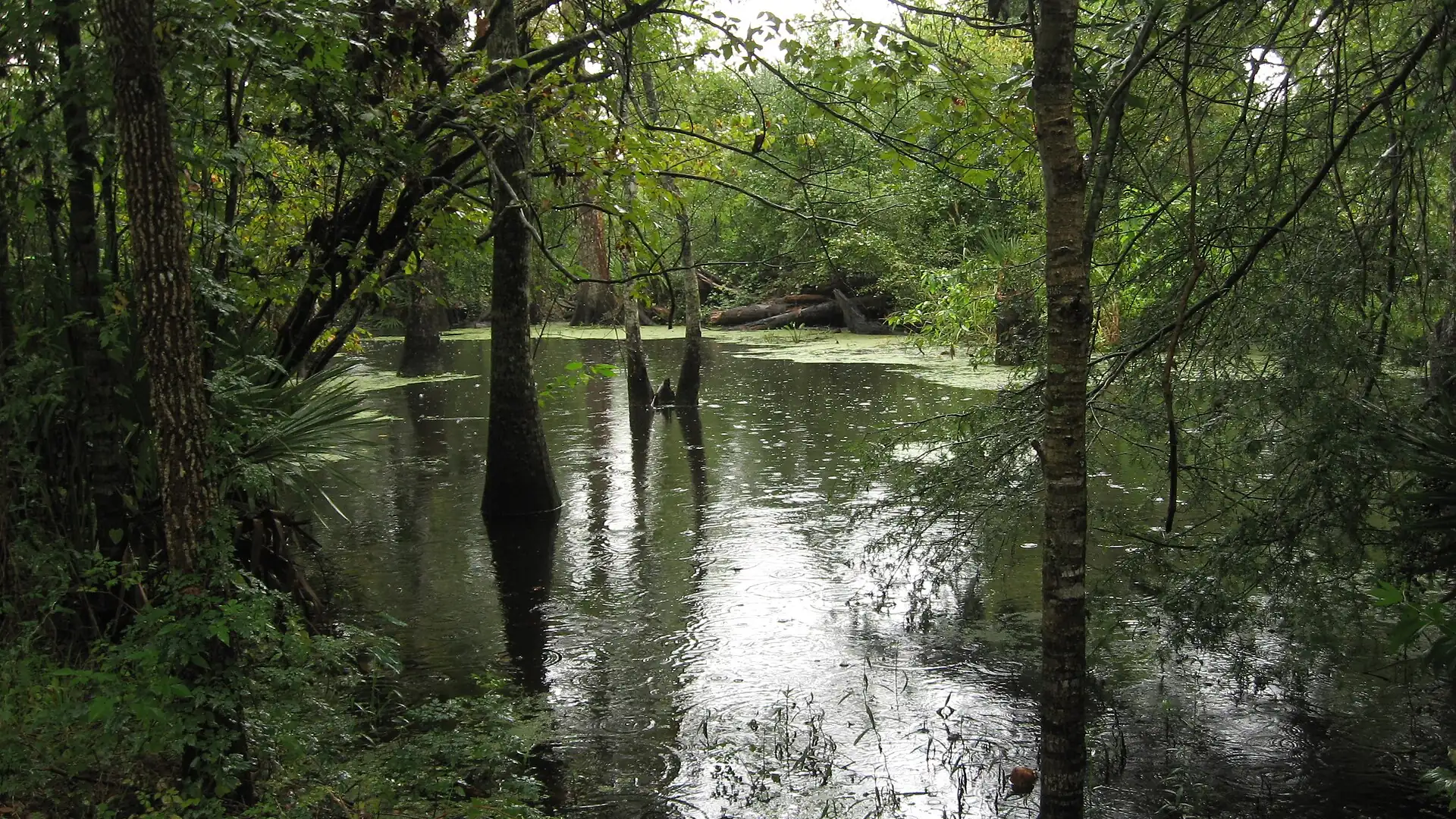
Photo: Ken Lund / CC BY-SA 2.0, via Wikimedia Commons
Barataria Preserve brings freshwater wetland habitat into a walk near the New Orleans area. Forest, marsh, and canals reveal how closely land and water interact in this coastal landscape. For the current visit, Twin Canals Trail is the preserve’s available walking focus. Its canal-side surroundings offer a useful way to look at water, vegetation, and wildlife from land.
Most of the preserve’s usual trails and its visitor center are closed during reconstruction, while Twin Canals remains open. Keep the day centered on that verified route rather than an older boardwalk itinerary. Cooler spring and fall weather makes wetland observation particularly pleasant. Spend time at one promising view, watching for bird movement and small changes in the water’s surface.
Insider tip: Treat Twin Canals as a focused nature walk, leaving enough time for observation instead of trying to recreate an older full-preserve route.
Where: Marrero, Louisiana
5. Fontainebleau State Park, Mandeville
Fontainebleau connects woodland walking with the open horizon of Lake Pontchartrain. The park’s nature trails introduce plants and habitats close to the shore. The contrast between enclosed trees and broad water makes a short visit feel varied. Look at how the vegetation changes as you move toward wetter ground and the lakefront.
The old sugar-mill ruins add another reason to stop and read the interpretation. They recall the plantation history that preceded the modern park, including the labor that supported it. Pair a nature walk with the ruins and a separate lake view. Spring and fall are especially comfortable for that combination, with enough time left for a picnic or an afternoon in nearby Mandeville.
Insider tip: Give the mill ruins and nature trail separate attention, connecting the park’s human history with the landscape around it.
Where: Mandeville, Louisiana
6. Tickfaw State Park, Springfield
Tickfaw’s appeal lies in how quickly the habitat changes around a walker. Cypress-tupelo swamp, bottomland hardwoods, mixed pine-hardwood forest, and the river environment all belong to the park. Boardwalk routes bring some of those wet places into close view. You can compare tree forms and ground conditions without needing to travel between distant trailheads.
Choose a modest route and notice the difference in light and vegetation as the habitat shifts. A nature-center stop can help make sense of what you have just seen. Spring’s new growth and fall’s cooler air both make rewarding visits. A picnic provides a comfortable pause after the walk, keeping the day focused on observing.
Insider tip: Compare the trees in two different habitats, noting what changes when the ground becomes wetter or the canopy more open.
Where: Springfield, Louisiana
7. Sicily Island Hills, Sicily Island
Sicily Island Hills gives northeastern Louisiana steep forested ground and small waterfalls. Big Creek divides the wildlife management area, with marked routes on different sides. Rock Falls Trail is one of the named walking options, while longer routes explore more demanding terrain. The scenery rewards attention to the creek valleys as well as the higher ground.
Choose the route before driving in so the correct access point is clear. Adult visitors need a WMA Access Permit or an included qualifying license and must complete the area’s check-in and check-out. Spring and fall are particularly appealing for walking through the mixed woodland. Give the water and rock details time, since the destination’s character comes from a sequence of smaller discoveries.
Insider tip: Select a named trail that matches your abilities, keeping the much longer Big Creek route as a separate, deliberately planned hike.
Where: Sicily Island, Louisiana
8. Lake Fausse Pointe State Park, St. Martinville
Lake Fausse Pointe places hiking within the Atchafalaya Basin’s world of trees and water. The park has several walking trails as well as canoe routes, giving you different ways to investigate the habitat. From land, you can concentrate on cypress forms, reflections, and the relationship between wet ground and vegetation. A short route can provide plenty to look at.
Choose a hiking path for the amount of time you want outdoors, keeping a paddle for another part of the trip if it interests you. The lake and wooded surroundings make a satisfying companion to cultural visits in the Bayou Teche region. Spring and fall are comfortable for a longer nature-focused afternoon. Leave room for a quiet pause after walking, when wildlife may be easier to notice.
Insider tip: Keep one walk focused on observation, stopping near a promising water view long enough to see movement among the trees.
Where: St. Martinville, Louisiana
9. Bayou Sauvage, New Orleans
Bayou Sauvage gives New Orleans a substantial urban wildlife refuge with marsh and woodland habitat. The Ridge Trail’s interpretive boardwalk offers a close look at the wetland landscape and the historic bayou. Restoration planting is part of the story, with native trees and Louisiana irises helping rebuild hurricane-affected habitat. Read the signs and the view becomes a record of change as well as a natural scene.
A short walk can be rewarding when you give birds and plants time to hold your attention. The open marsh areas offer a different perspective from the boardwalk’s wooded sections. Cooler spring and fall periods are especially pleasant for exploring. Pair the refuge with another part of a New Orleans visit and the city gains a broader environmental context.
Insider tip: Look for the restoration interpretation, connecting young plantings with the mature wetland landscape the refuge is working to support.
Where: New Orleans, Louisiana
10. Northlake Nature Center, Mandeville
Northlake Nature Center follows Bayou Castine through a mix of hardwood forest, pine-hardwood woods, and pond-swamp habitat. Trails, boardwalks, and overlooks bring those environments within a manageable visit. The variety gives you reasons to slow down at more than one place. A tree reflected in water can be as interesting as a distant view when you look closely.
Choose a route from the trail map and leave room for birdwatching. The center’s educational purpose helps connect the natural details with the larger Northshore landscape. Spring migration adds interest, while fall brings comfortable walking conditions. The location near Mandeville makes it easy to pair a nature-focused morning with a lakefront meal or a relaxed afternoon in town.
Insider tip: Compare one pond or swamp viewpoint with a drier woodland section, noticing how the plants reveal changes beneath your feet.
Where: Mandeville, Louisiana
Map of the places
Tap a place to open it in Google Maps:
- Backbone Trail, Kisatchie National Forest
- Wild Azalea Trail, Woodworth
- Tunica Hills, St. Francisville
- Barataria Preserve, Marrero
- Fontainebleau State Park, Mandeville
- Tickfaw State Park, Springfield
- Sicily Island Hills, Sicily Island
- Lake Fausse Pointe State Park, St. Martinville
- Bayou Sauvage, New Orleans
- Northlake Nature Center, Mandeville
Tips for planning your Louisiana trip
- Group central pine-country routes, Feliciana hikes, Northshore destinations, and New Orleans-area wetlands into separate days or weekends.
- Spring and fall are usually the most comfortable seasons for varied walking; choose shorter shaded routes during warmer periods.
- Match the trail to your abilities, since wilderness ridges, steep ravines, and developed boardwalks make very different days.
- Pack water, traction shoes, rain protection, sun protection, insect repellent, and a paper or downloaded route map.
- Check current conditions, flooding, reconstruction notices, hunting-season access, and permit requirements before choosing the final trail.
- Reserve campsites or cabins early if staying near a particular route is part of the trip.
FAQ
Are Louisiana hiking trails mostly flat?
No, places such as Backbone, Tunica Hills, and Sicily Island Hills contain substantial changes in elevation. Other destinations offer gentler boardwalk or nature-trail options.
Which walks work well within a city-based trip?
Bayou Sauvage and Barataria’s open Twin Canals option can fit a New Orleans-area visit. Mandeville’s nearby nature destinations work well with a Northshore base.
Do you need permits for every destination?
No, requirements vary by manager and location. Louisiana wildlife management areas have an access-permit and check-in system, while parks and refuges use their own visitor rules.
Final thoughts
Louisiana’s walking routes become more rewarding when you notice what changes between ridge, forest, and water. Save a few destinations that match your pace, choose the right public route, and give the landscape time to reveal its details.

