
Small towns in Kansas with stories behind the storefronts
A painted Dala horse in Lindsborg and a stone courthouse in Cottonwood Falls do more than decorate a downtown. They tell you what makes a place itself, and they give you a reason to get out of the car. These small towns in Kansas turn a main-street walk into an introduction to art, history, and local identity.
The ten stops range from Missouri River bluffs to the red hills around Medicine Lodge. Choose a few within one region, leave time for museums and a meal, and let the details above the shop windows get as much attention as whatever is inside them.
1. Lindsborg
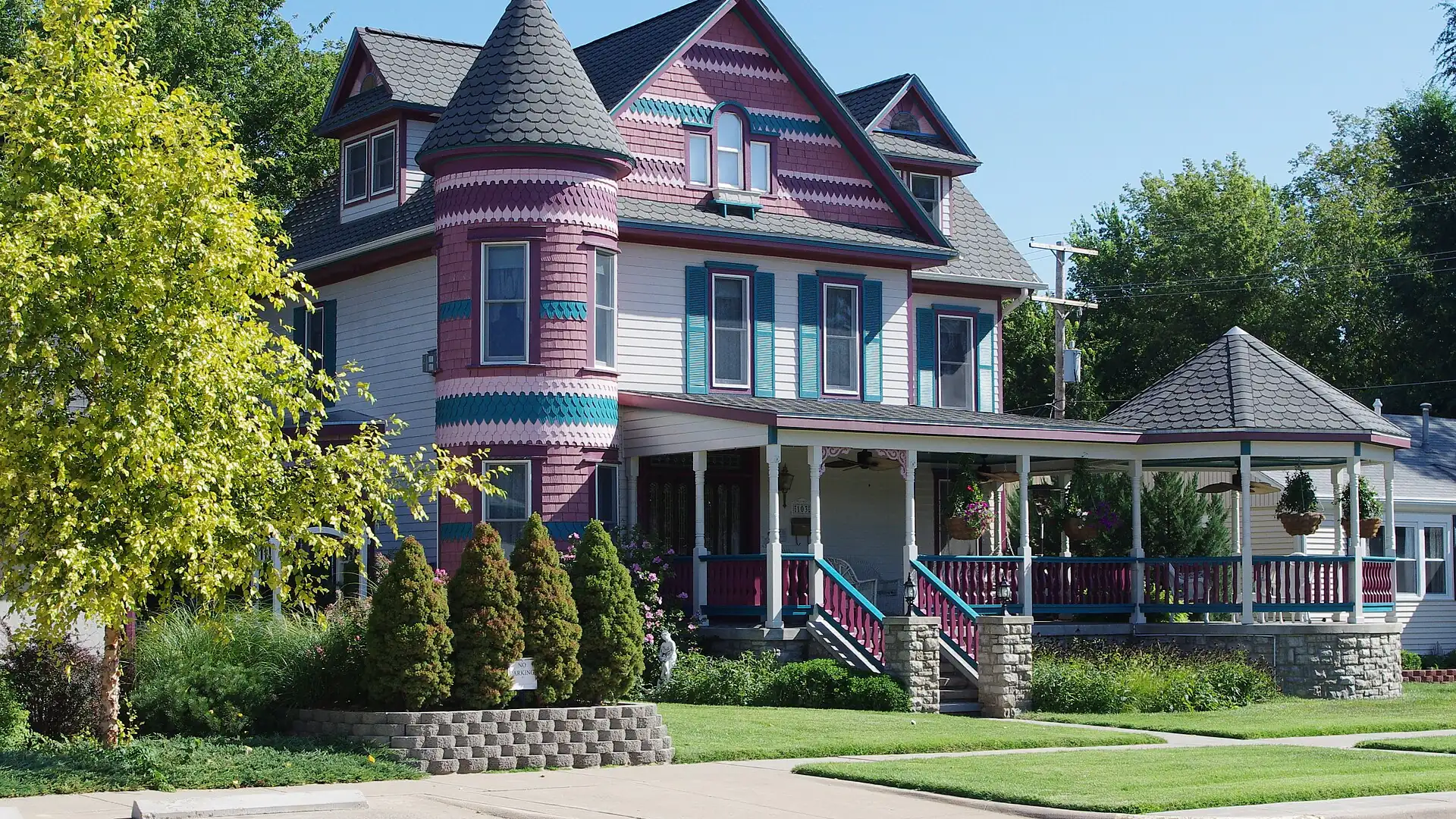
Photo: Anry skyhead / CC BY-SA 4.0, via Wikimedia Commons
Lindsborg’s painted Dala horses make a downtown walk feel like an art hunt. The Swedish horse form appears in inventive public artworks around a town proudly associated with Swedish-American heritage. Shops and galleries give you plenty to investigate between sightings. Look at the colors and decoration closely, because each horse interprets the same familiar outline differently.
The Birger Sandzén Memorial Gallery adds a substantial art stop. Sandzén’s energetic landscapes use bold color and brushwork, giving the surrounding prairie a new visual vocabulary. Combine a gallery visit with downtown browsing and something to eat. Spring and fall are comfortable for walking, though the indoor art and cultural attractions give Lindsborg a reason to visit across the year.
Insider tip: Pick up the public-art information before exploring, then choose a few pieces to find without turning the walk into a race.
Where: Lindsborg, Kansas
2. Council Grove
Council Grove’s Santa Fe Trail history turns its old stone buildings into more than attractive street scenery. The Last Chance Store recalls the commerce that passed through this Flint Hills community. At Kaw Mission, interpretation explains the Kanza people’s history and the forces that changed their lives here. Seeing both helps you understand the town through more than a pioneer-travel story.
Take time for the present-day center as well as its historic sites. The Neosho River and the surrounding Flint Hills give Council Grove a strong landscape connection. A walk, a museum visit, and a meal can fill a day without requiring a crowded schedule. Spring’s green hills and autumn’s warm grasses make particularly good companions to the town’s stone architecture.
Insider tip: Put the Kaw Mission visit early in the day so its historical context stays with you as you explore town.
Where: Council Grove, Kansas
3. Cottonwood Falls
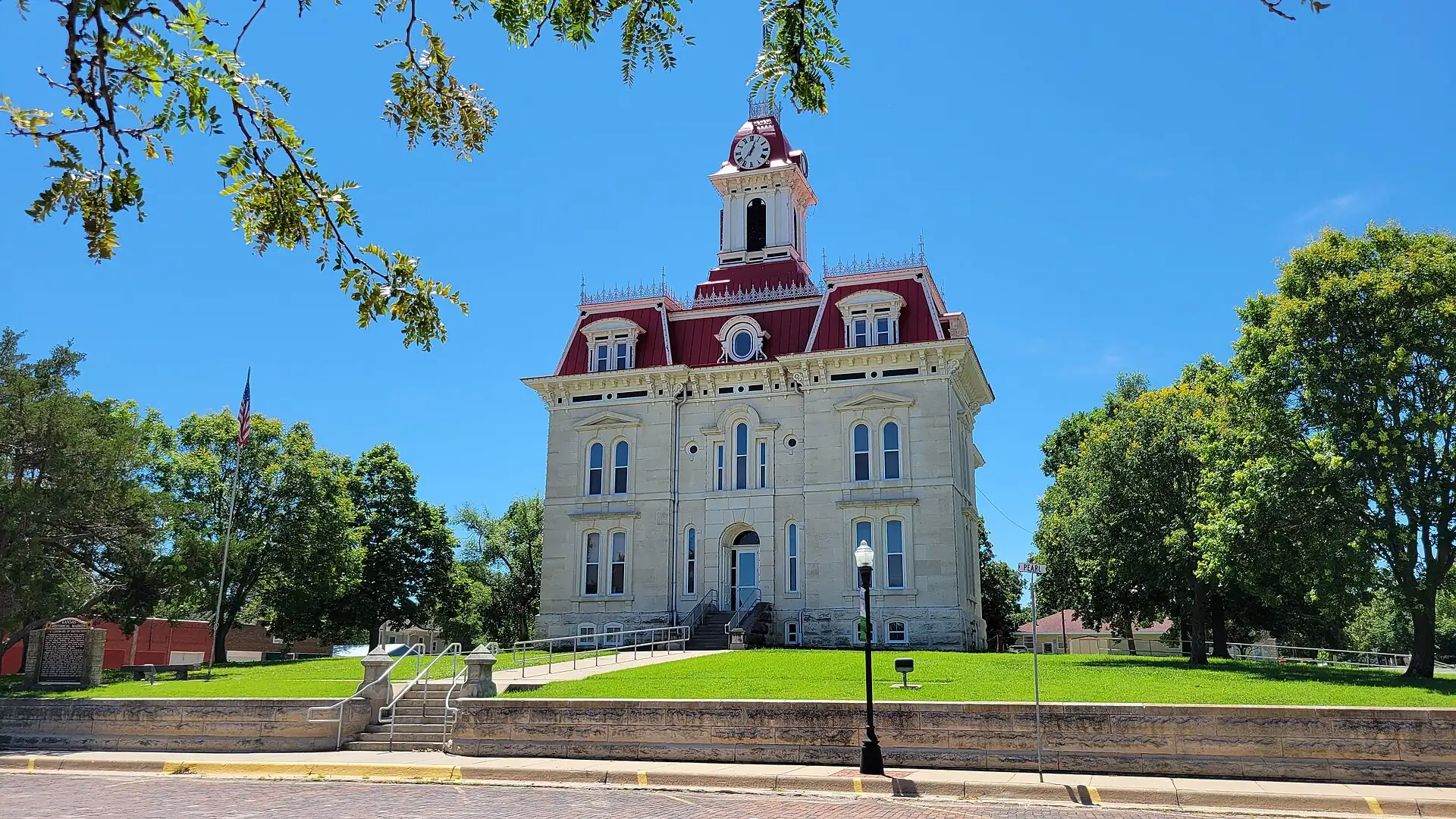
Photo: RuralResurrection / CC BY 4.0, via Wikimedia Commons
The Chase County Courthouse gives Cottonwood Falls a downtown view with real presence. Completed in 1873, the elaborate stone building stands above a compact commercial center. Its tower and decorative roofline reward a look from more than one position. You do not need to be an architecture specialist to enjoy the confidence of the design.
Walk the brick-paved downtown streets and look at the older storefronts around it. The town sits in the Flint Hills, so open prairie and a closely built center become two parts of the same visit. Allow time for a meal and a little browsing before heading back into the landscape. Spring through fall suits the combination, especially when you want a main-street stop within a longer scenic drive.
Insider tip: Approach the courthouse on foot from downtown, letting the building’s changing proportions become part of the walk.
Where: Cottonwood Falls, Kansas
4. Atchison
Atchison’s Missouri River bluffs give a historic town an appropriately expansive outlook. Amelia Earhart was born here, and her birthplace home looks toward the river from high ground. The museum connects the famous aviator with a much smaller domestic world. It is a useful reminder that an extraordinary life began in a particular house and community.
Give downtown time after the aviation history. Historic commercial buildings and the river landscape make walking worthwhile even between named attractions. Look at how the town rises away from the water and how the older streets follow that terrain. Spring and fall are especially pleasant for pairing an indoor museum visit with a longer wander through the center and waterfront areas.
Insider tip: Combine Earhart’s birthplace with a walk that includes river views, connecting the home’s location with the larger town below it.
Where: Atchison, Kansas
5. Abilene
Abilene connects a small Kansas hometown with a president’s global story. The Eisenhower Presidential Library, Museum and Boyhood Home explores Dwight Eisenhower’s life from childhood through military and political leadership. Give the boyhood home and museum distinct attention. The contrast in scale helps make the larger history feel human.
The town also grew as a cattle-shipping center associated with the Chisholm Trail. Downtown and local historical attractions provide another chapter beyond presidential history. You can build a satisfying visit from a major museum, a walk, and a meal without trying to fit in every attraction. The indoor collections make Abilene useful year-round, with mild seasons best for spending longer outside between stops.
Insider tip: Choose a museum theme that interests you before arriving, then leave time for the boyhood-home story alongside it.
Where: Abilene, Kansas
6. Lucas
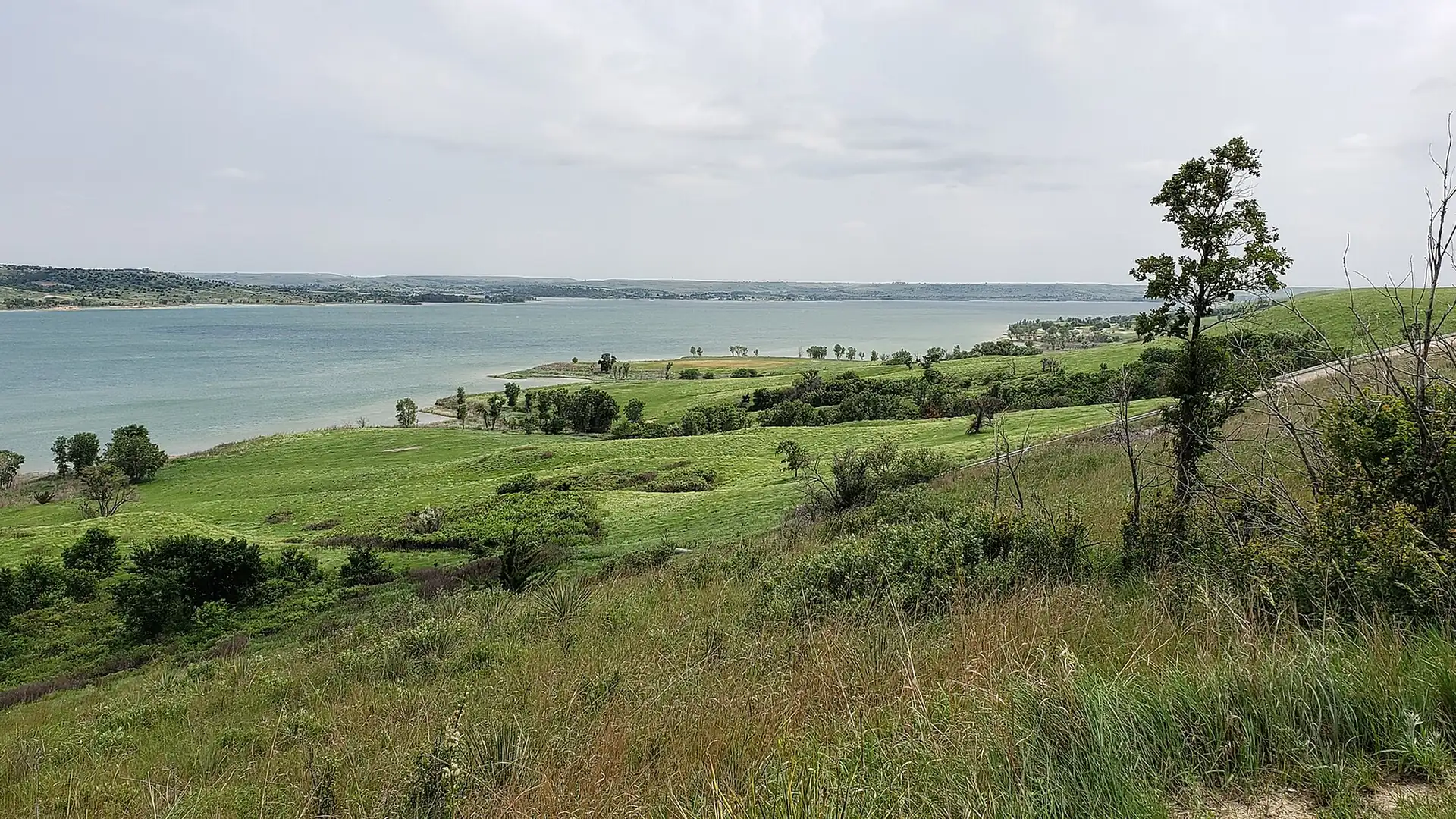
Photo: FUBAR007 / CC0, via Wikimedia Commons
Lucas brings an unusually imaginative streak to a small-town visit. Samuel Dinsmoor’s Garden of Eden surrounds a limestone house with concrete figures that combine biblical subjects and political ideas. The work asks you to look, puzzle, and read the interpretation. Even a quick first glance makes it clear that this is a town comfortable with unconventional art.
The Grassroots Art Center broadens that story through self-taught artists and inventive materials. Together, the two stops give downtown browsing a distinctive theme. Spend time noticing how everyday objects can become expressive work in the hands of a determined maker. Spring through fall is especially good for pairing indoor collections with outdoor sculpture, while colder visits can focus on the galleries.
Insider tip: Read the explanations at the Garden of Eden before deciding what the figures mean; Dinsmoor gave his sculptures specific arguments to make.
Where: Lucas, Kansas
7. Fort Scott
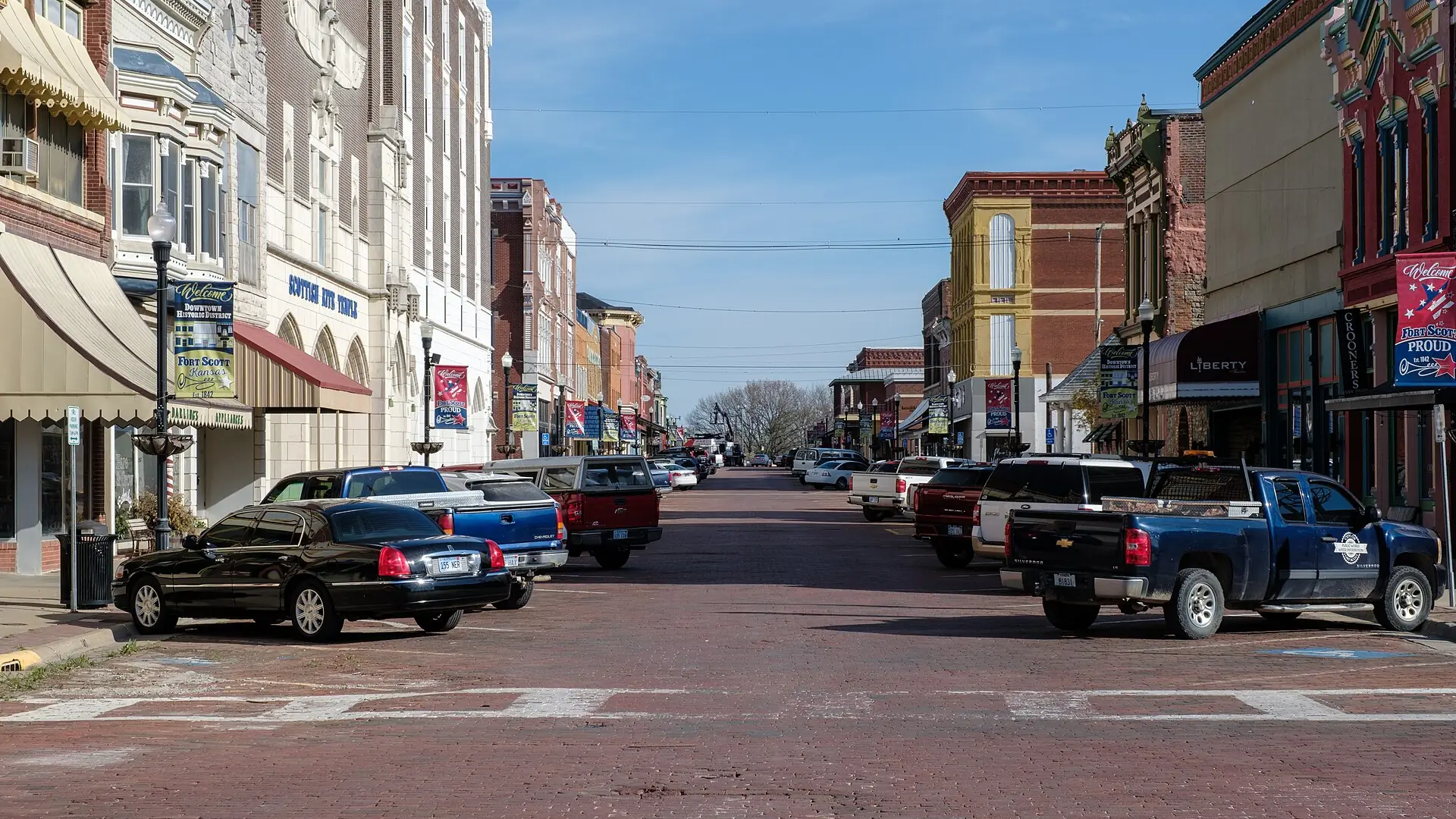
Photo: Paltron / CC BY-SA 4.0, via Wikimedia Commons
Fort Scott’s historic military buildings give you a substantial landmark beside its downtown. Fort Scott National Historic Site explores the frontier, conflict over slavery, and the Civil War era. Walking the grounds helps you understand how the buildings worked together. The history is more complex and more interesting than a simple picture of soldiers on the plains.
Then turn toward the Downtown Historic District for commercial architecture and present-day shops. The town also preserves connections with photographer and filmmaker Gordon Parks, who was born here. Those different stories make Fort Scott a rewarding place to spend more than a passing afternoon. Mild weather favors combining the fort grounds, museum material, and a downtown meal into one unhurried visit.
Insider tip: Start with the fort’s interpretation so the military buildings become a connected historical place as you walk among them.
Where: Fort Scott, Kansas
8. Wamego
Wamego turns a familiar Kansas association into something you can investigate at the OZ Museum. Its collections follow the world of Oz through books, film, and related memorabilia. You can compare the story you remember with objects from its many adaptations. It is a particularly easy stop to share across generations with different favorite versions.
The Schonhoff Dutch Mill adds a very different landmark in City Park. The nineteenth-century stone windmill and nearby historical displays give the town a second theme beyond its famous fictional connection. Pair the museum with a park walk and time along the commercial streets. Spring’s flowers and fall’s comfortable temperatures both suit a day that moves between indoor collections and outdoor wandering.
Insider tip: Choose one Oz object or version to discuss afterward, then use the park walk as a relaxed change of pace.
Where: Wamego, Kansas
9. Medicine Lodge
Medicine Lodge’s red-brick Main Street belongs to a landscape with color of its own. The town is a gateway to the Gypsum Hills, where red earth, grass, and wooded slopes create a distinctive view of southern Kansas. Begin downtown with shops, public art, and a meal. The compact center makes a good introduction before you head toward the hills.
The Stockade Museum and Carry Nation Home add a strong local-history focus. Nation’s temperance activism connects an ordinary-looking Kansas home with a much wider national argument. Give that story time alongside the scenery, since the two sides of the visit are very different. Spring and fall are especially appealing for combining town walking with a drive through the surrounding red-hill country.
Insider tip: Pair a museum visit with a scenic drive, leaving enough daylight to see the Gypsum Hills’ changing colors and contours.
Where: Medicine Lodge, Kansas
10. Marysville
Marysville gives the Pony Express a tangible home in a surviving historic barn. Interpretation connects the building with the riders and horses that carried mail across the country before the telegraph made the service obsolete. Looking at the structure makes that brief, demanding chapter easier to imagine. It is a strong starting point for a town visit built around transportation history.
The community lies near the Big Blue River and has a downtown with additional historic buildings to explore. The Koester House Museum adds another look at nineteenth-century life in a Kansas town. You can combine one indoor visit with a leisurely walk and a meal. Spring through fall is comfortable for the outdoor portions, while the historical collections keep the trip meaningful beyond the warmest months.
Insider tip: Give the Pony Express story context by comparing its methods with the later communication technology that replaced it.
Where: Marysville, Kansas
Map of the places
Tap a place to open it in Google Maps:
- Lindsborg
- Council Grove
- Cottonwood Falls
- Atchison
- Abilene
- Lucas
- Fort Scott
- Wamego
- Medicine Lodge
- Marysville
Tips for planning your Kansas trip
- Choose a regional group for a weekend; these towns are spread across Kansas and work better as several trips than one hurried circuit.
- Spring and fall are comfortable for downtown walks and scenic drives, while museums provide worthwhile winter options.
- Book lodging and any guided tours early when traveling around a festival or major local event.
- Pack walking shoes, layers for wind, and a small bag for gallery purchases or museum visits.
- Check current conditions and attraction calendars during planning, especially for outdoor historical sites and seasonal tours.
FAQ
Which towns are especially good for art?
Lindsborg offers Swedish-American craftsmanship and the Birger Sandzén Memorial Gallery. Lucas focuses on inventive grassroots art, including the Garden of Eden and Grassroots Art Center.
Where can you combine town streets with scenery?
Council Grove and Cottonwood Falls sit in the Flint Hills, while Medicine Lodge opens toward the Gypsum Hills. Atchison adds Missouri River bluffs to its historic center.
Can you enjoy these towns outside summer?
Yes, particularly if museums, galleries, and history are central to your plans. Mild spring and fall weather makes it easier to combine those indoor stops with longer downtown walks.
Final thoughts
A good Kansas main street gives you more than somewhere to stretch your legs. Save the towns whose stories catch your attention, and give yourself time to look behind the storefronts at the people, ideas, and landscapes that shaped them.

