
Hidden gems in Iowa with something worth noticing
A clock carved like a miniature monument, a baseball diamond beside an Iowa farmhouse, and a railway climbing a city bluff can turn an ordinary drive into a story. These hidden gems in Iowa reward curiosity, especially when you give each stop more attention than a photograph requires. Some are celebrated attractions, so the appeal is what you discover once you arrive.
The list ranges across the state, connecting Native American heritage, handmade art, unusual engineering, and distinctive scenery. Choose a regional cluster for a weekend, or keep a few places ready for a future detour, with spring through fall offering the widest choice of seasonal attractions.
1. Effigy Mounds National Monument, Harpers Ferry
Bear-shaped earthworks make the wooded bluffs at Effigy Mounds unlike any ordinary Mississippi River viewpoint. Native peoples built the preserved burial and ceremonial mounds, and the landscape remains sacred to associated tribes. The animal forms belong to a broader collection that also includes conical and linear mounds. Begin with the visitor center’s interpretation so those subtle shapes have meaning when you encounter them outside.
The trails climb through woodland toward mound groups and river views. You can combine a close look at the earthworks with an appreciation of the broad valley below, without treating the site as simply another scenic overlook. Spring foliage and autumn color each give the woodland a different character. Stay on established paths and give the mounds the same respect you would a burial ground.
Insider tip: Read about the mound shapes before walking; the interpretation makes features that blend into the grass much easier to recognize.
Where: Harpers Ferry, Iowa
2. Bily Clocks Museum, Spillville
At the Bily Clocks Museum, the clock case can be more astonishing than the clockwork. Brothers Frank and Joseph Bily hand-carved elaborate wooden timepieces filled with figures and architectural detail. Their subjects reach into history, religion, and culture, giving you plenty to examine beyond a dial. Pick one clock and study how its smaller pieces fit into the larger design.
The building carries a second creative story upstairs. Composer Antonín Dvořák stayed here during the summer of 1893, and an exhibit explores that connection with Spillville. The museum’s regular visiting season runs through the warmer months. It makes an especially satisfying indoor stop on a northeastern Iowa trip when you want to exchange outdoor scenery for concentrated craftsmanship.
Insider tip: Give the Dvořák exhibit its own time after the clocks; the building connects two very different kinds of creative work.
Where: Spillville, Iowa
3. Grotto of the Redemption, West Bend
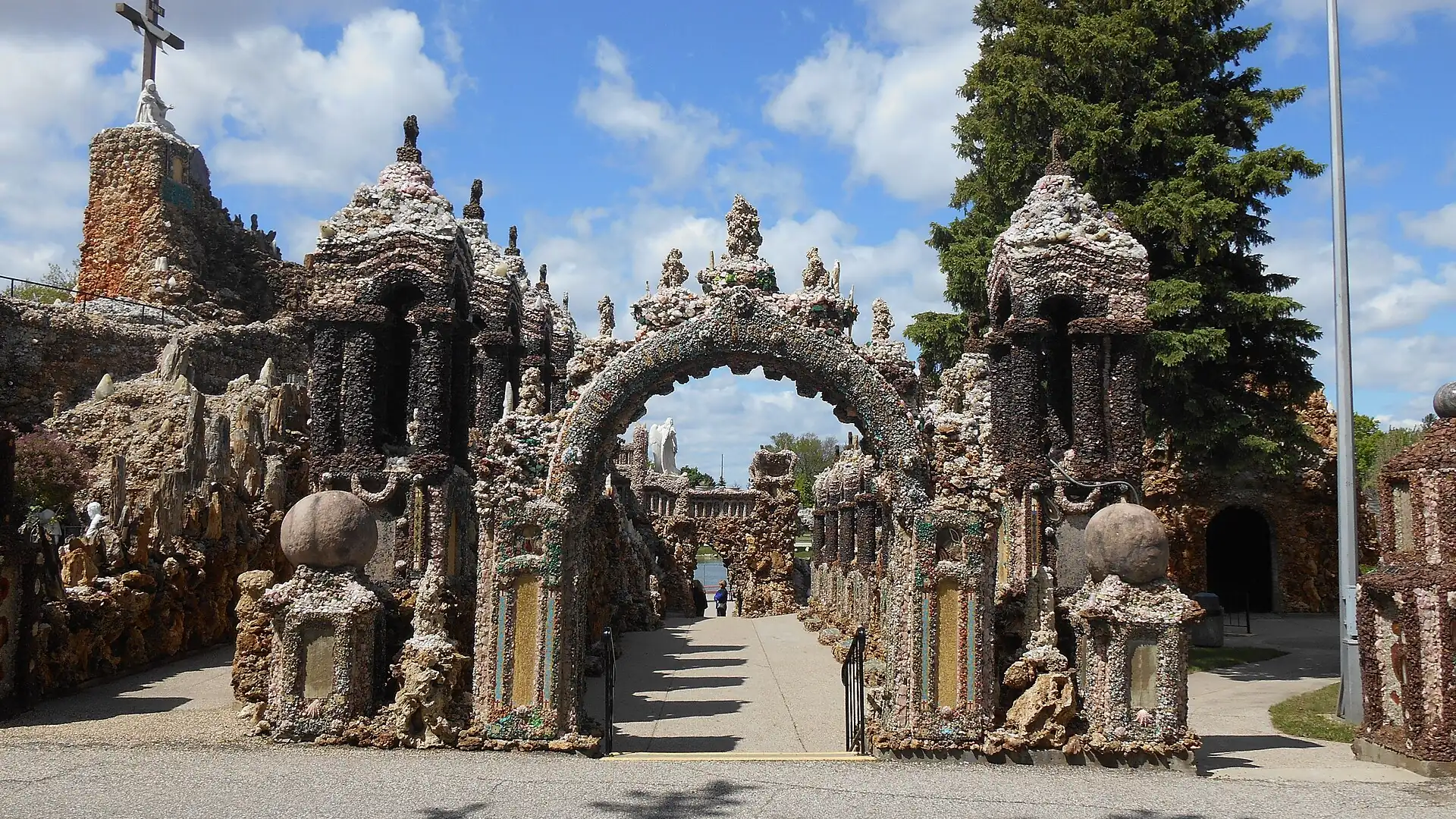
Photo: Alejandro Pulido / CC BY-SA 4.0, via Wikimedia Commons
Crystals, minerals, and richly textured stone turn West Bend’s Grotto of the Redemption into a place where looking closely matters. The shrine comprises nine connected grottos illustrating scenes from the life of Christ. Father Paul Dobberstein began the extraordinary project, bringing a collector’s eye for materials to a religious vision. Even a small section can hold more color and texture than you first notice.
Follow the sequence slowly and compare the stone surfaces around the figures. Broad views reveal the scale, while close views show the patient assembly that makes the structure distinctive. The outdoor shrine can be visited across the year, with guided tours offered seasonally. A mild day is particularly pleasant for lingering over the details without hurrying between scenes.
Insider tip: Take a wide photograph and one close detail of the materials; the pair captures both the design and the labor behind it.
Where: West Bend, Iowa
4. Field of Dreams, Dyersville
The baseball diamond at the Field of Dreams Movie Site is immediately recognizable if you know the film. The farmhouse, field, and surrounding agricultural landscape connect a fictional story with a very real corner of Iowa. You can enjoy the visual simplicity even without remembering every scene. The familiar shape of the diamond does much of the storytelling.
Spend time looking at the field from more than one angle, then consider a farmhouse tour for another part of the movie connection. Access to particular activities depends on tours, events, and private rentals. Summer’s growing corn gives the landscape its most familiar screen-like appearance. Spring and fall offer different farm-country views, making the place interesting beyond a single seasonal photograph.
Insider tip: Revisit a favorite scene before the trip, then compare its framing with what you see from the field’s public visitor areas.
Where: Dyersville, Iowa
5. Loess Hills, Moorhead
The Loess Hills rise in narrow ridges and folded slopes that make western Iowa look unexpectedly sculptural. Their defining material is windblown silt, deposited during the region’s glacial past. Around Moorhead, prairie and wooded hollows reveal different sides of that terrain. The hills become especially legible when you stop looking for a single summit and follow the shapes of several ridges.
Use the scenic byway and public recreation areas to build a day around viewpoints and short walks. Sunlight skimming the slopes brings out folds that flatten at midday. Spring’s new growth and fall’s warm grasses each suit the landscape well. Give yourself time to get out of the car, because the texture of the prairie is as important as the distant view.
Insider tip: Choose one public walking area and explore it properly, using the drive between viewpoints as a way to understand the larger landform.
Where: Moorhead, Iowa
6. Danish Windmill, Elk Horn
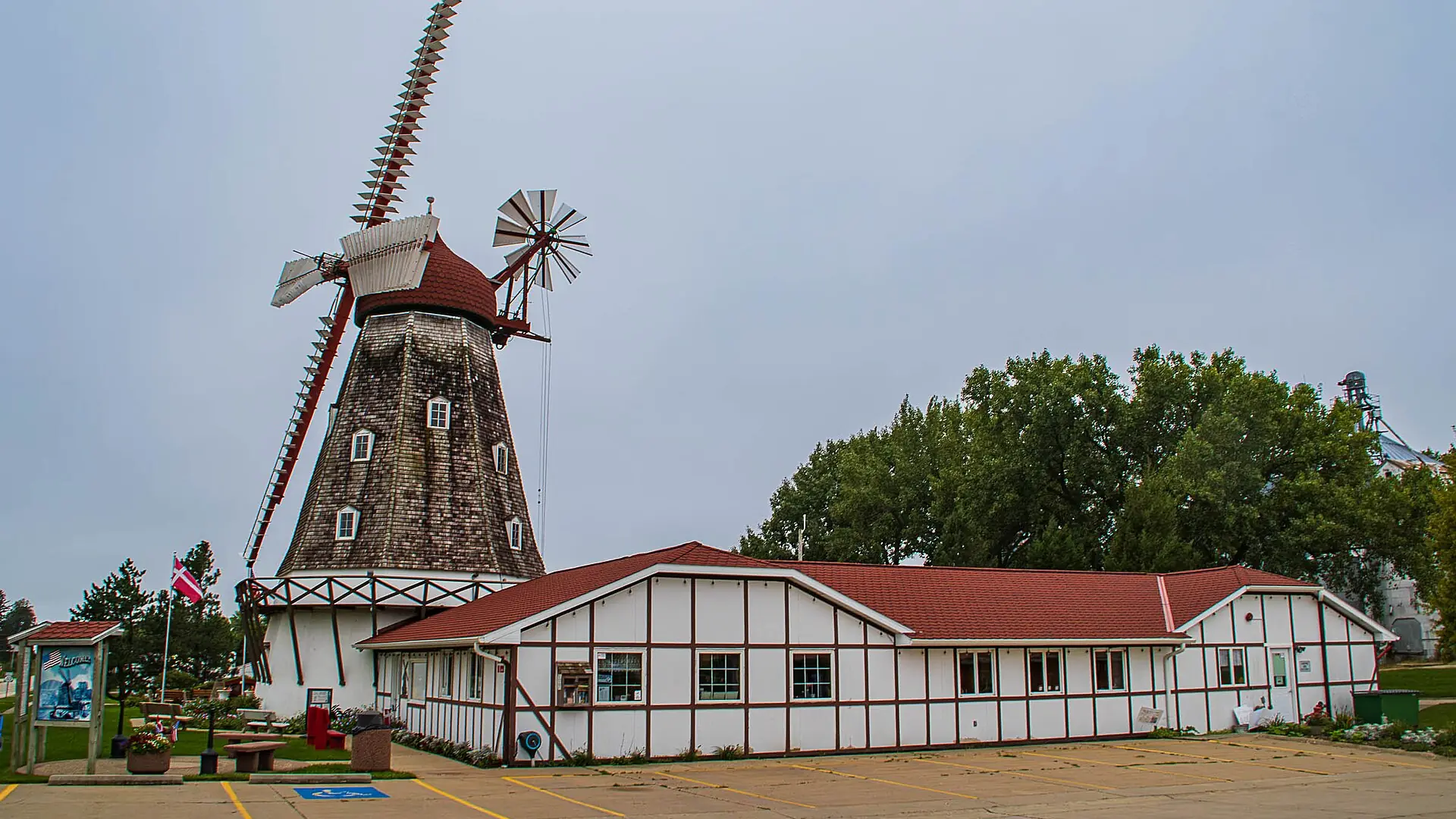
Photo: George Neat / CC BY-SA 4.0, via Wikimedia Commons
A Danish windmill rising above an Iowa town is a fine reason to turn off the highway. Elk Horn’s authentic mill was built in Denmark in 1848, then dismantled, shipped, and reconstructed here in 1976. Its arrival reflects the community’s Danish heritage. The structure gives that history a presence you can see from outside and investigate on a tour.
Look at the relationship between the sails, the mill’s shape, and the machinery within. A working mill depends on connections that are much easier to understand when you can see the parts together. The surrounding visitor complex adds more Danish cultural material to browse. Warmer weather makes it pleasant to linger around the grounds, though the town’s heritage draws visitors beyond summer.
Insider tip: Ask how the mill was moved and rebuilt; its Iowa reconstruction is as remarkable as the original machinery.
Where: Elk Horn, Iowa
7. Covered Bridges of Madison County, Winterset
Madison County’s covered bridges turn useful rural structures into some of Iowa’s most recognizable landmarks. Their roofs protect the wooden timbers beneath, while their red sides make a strong contrast with the surrounding fields and trees. Winterset is the natural base for exploring them. Begin with a county map so the countryside drive has a sensible shape.
At a bridge, look beyond the postcard view and study the timber framing. The supports explain how the crossing works, while the nearby road and creek show why it was needed. Autumn adds color around the structures, but green summer scenery is equally appealing. Give each bridge you choose enough time to reveal its own details, rather than treating the whole collection as a checklist.
Insider tip: Combine a view from beside the bridge with a closer look at its construction, so the visit includes engineering as well as scenery.
Where: Winterset, Iowa
8. Matchstick Marvels, Gladbrook
Matchstick Marvels begins with a wonderfully ordinary material and takes it to an extraordinary scale. Artist Patrick Acton builds detailed models from wooden matchsticks, recreating architecture and complex machines. The museum’s permanent displays include the United States Capitol and Notre Dame. You may need a moment to connect those elaborate forms with the tiny pieces used to make them.
Look closely at curves, repeated patterns, and structural supports before stepping back for the complete model. That change of perspective is the great pleasure of the visit. Regular opening is seasonal, with winter visits available by appointment. It is an excellent stop for children who like building things and adults who appreciate the patience behind a carefully solved design problem.
Insider tip: Choose one model to examine from several angles, paying attention to how straight sticks create apparently curved surfaces.
Where: Gladbrook, Iowa
9. Fenelon Place Elevator, Dubuque
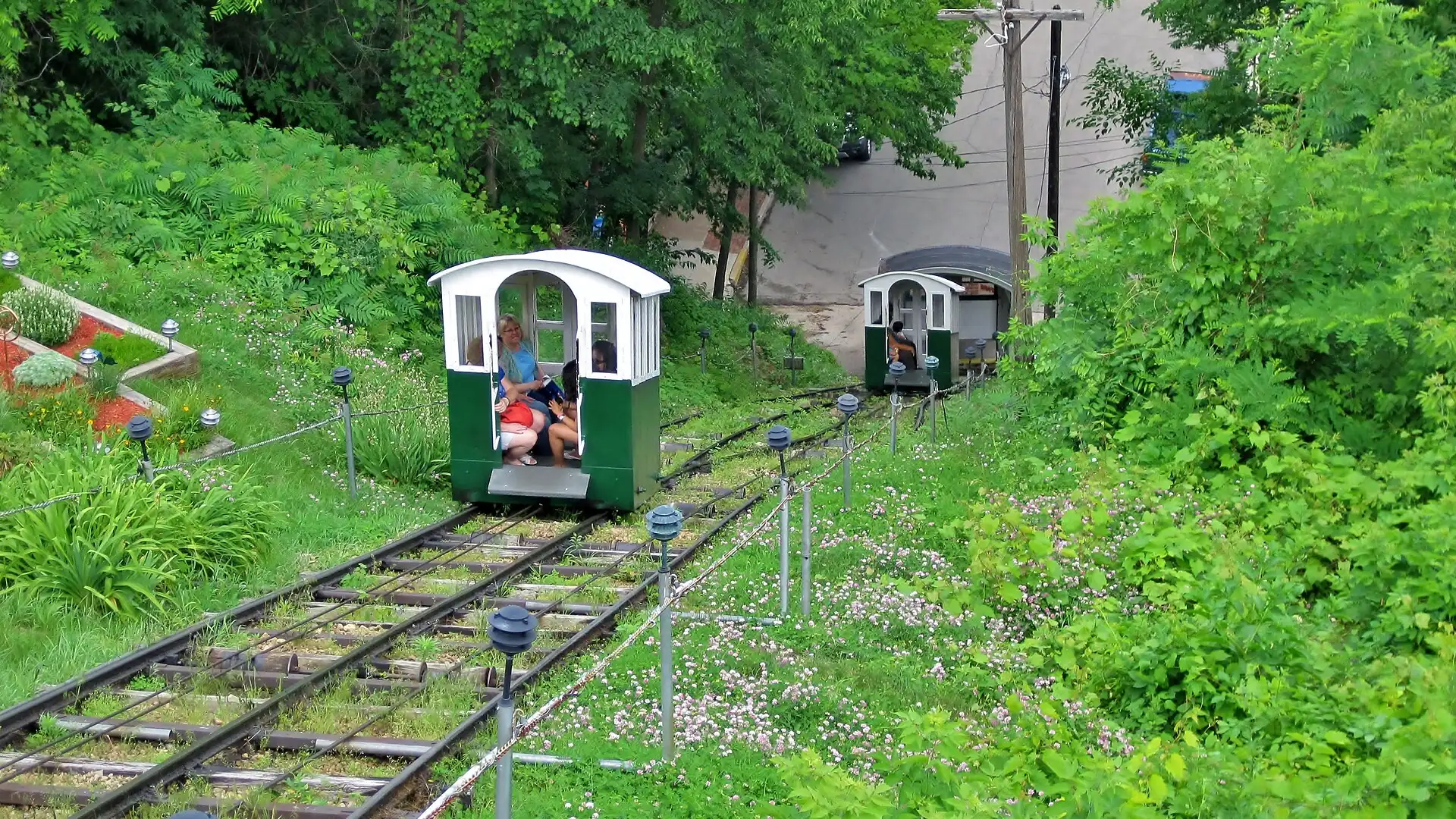
Photo: Teemu008 from Palatine, Illinois / CC BY-SA 2.0, via Wikimedia Commons
Dubuque’s Fenelon Place Elevator turns a steep bluff into a small railway adventure. Also called the Fourth Street Elevator, the historic funicular carries passengers between the lower city and Fenelon Place. From above, the view takes in downtown and the Mississippi River. The compact ride makes the difference in elevation immediately tangible.
Look at the tracks before boarding, then spend time at the top studying the relationship between the city, bluffs, and river. The elevator operates seasonally from spring through late fall. Pairing the ride with a downtown walk makes the engineering feel connected to the everyday city it serves. Clear weather gives you the broadest view, while softer light helps bring out the buildings below.
Insider tip: Leave time for the upper viewpoint after the ride; the city layout is much easier to understand from there.
Where: Dubuque, Iowa
10. Snake Alley, Burlington
Snake Alley makes a town street behave like a tightly folded ribbon. Built in 1894, Burlington’s famously curving lane connects the lower commercial area with the residential bluff above. Its steep grade and repeated bends make the design immediately memorable. You can see a practical nineteenth-century transportation problem expressed in an unusually playful shape.
Take a walking approach and look at the lane from both ends. The surrounding historic neighborhood adds architectural interest, so the visit can extend beyond the curves themselves. Spring through fall is best for an unhurried look at the street and nearby houses. A wider photograph captures the bends, while a closer one reveals the texture of the historic paving.
Insider tip: Include part of the surrounding hillside in a photograph, so the reason for all those curves becomes clear.
Where: Burlington, Iowa
Map of the places
Tap a place to open it in Google Maps:
- Effigy Mounds National Monument, Harpers Ferry
- Bily Clocks Museum, Spillville
- Grotto of the Redemption, West Bend
- Field of Dreams, Dyersville
- Loess Hills, Moorhead
- Danish Windmill, Elk Horn
- Covered Bridges of Madison County, Winterset
- Matchstick Marvels, Gladbrook
- Fenelon Place Elevator, Dubuque
- Snake Alley, Burlington
Tips for planning your Iowa trip
- Group northeastern Iowa’s cultural stops and river towns separately from western Iowa’s Loess Hills and Danish heritage attractions.
- Spring through fall offers the broadest selection of museum tours and scenic walking opportunities; several attractions have limited winter access.
- Reserve special tours or winter appointments before choosing lodging around a particular attraction.
- Pack walking shoes, layers, a camera, and a small bag for museum purchases and outdoor stops.
- Check current conditions and official attraction calendars during planning, especially for seasonal operations and event-related access.
FAQ
Are these places all quiet and uncrowded?
No, several are well-known attractions and can be busy on popular weekends. Their value lies in distinctive stories and details, with quieter visits often easier outside major events.
Which stops work well with children?
Matchstick Marvels and the Bily Clocks Museum reward curiosity about how things are made. The Fenelon Place Elevator adds a short railway ride with a rewarding city view.
Can you see everything in one weekend?
The places are spread across Iowa, so a regional selection makes a better weekend. Use the rest as ideas for later trips or a longer statewide journey.
Final thoughts
Iowa’s detours become memorable when you give small details their due. Save the places that match your curiosity, and leave time to study the carved figure, the mill machinery, or the river beyond the railway tracks.

