
Waterfalls in Connecticut with a walk worth taking
Water turns a woodland walk into something you can follow with your ears. A quiet brook becomes louder around a bend, and the trail suddenly has a destination you can sense before you see it. Waterfalls in Connecticut make that simple experience available in settings ranging from broad river ledges to narrow forest ravines.
These ten places are best approached with realistic expectations about rain, seasonal flow, and your own footing. Spring often brings fuller streams, while summer offers leafy shade and the possibility of much lighter water after dry weather. Choose a regional pair or one longer outing, keep to established viewing places, and leave enough time to enjoy the forest around the falls.
1. Kent Falls, Kent
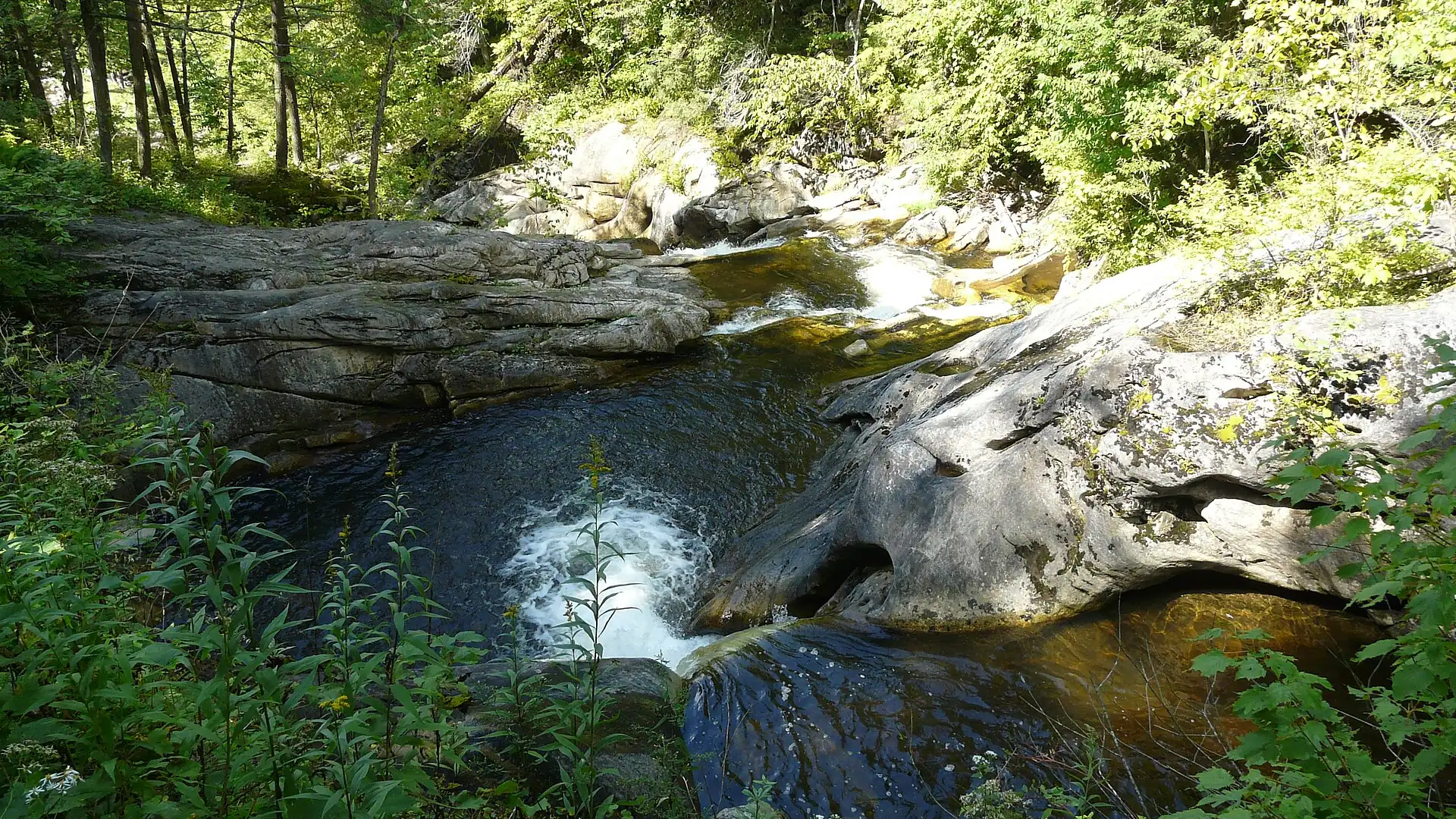
Photo: dwhartwig / CC BY 2.0, via Wikimedia Commons
Kent Falls descends in a series of cascades, with Falls Brook working its way down a wooded hillside toward the Housatonic River. The stepped form gives you several parts of the waterfall to study, not just one plunge. A covered pedestrian bridge adds a recognizable feature near the lower approach and makes the arrival feel like the start of an outing.
Begin with the lower view before deciding how much of the uphill trail suits your group. The climbing sections involve stairs and uneven terrain, so a short visit can still be satisfying if you stay below. Spring snowmelt often emphasizes the water’s movement, while a summer visit brings a greener frame around the ledges and a different balance of shade and light.
Insider tip: Take your main photographs from established viewing areas, with enough distance to include the waterfall’s stepped shape and surrounding trees.
Where: Kent, Connecticut
2. Chapman Falls, East Haddam
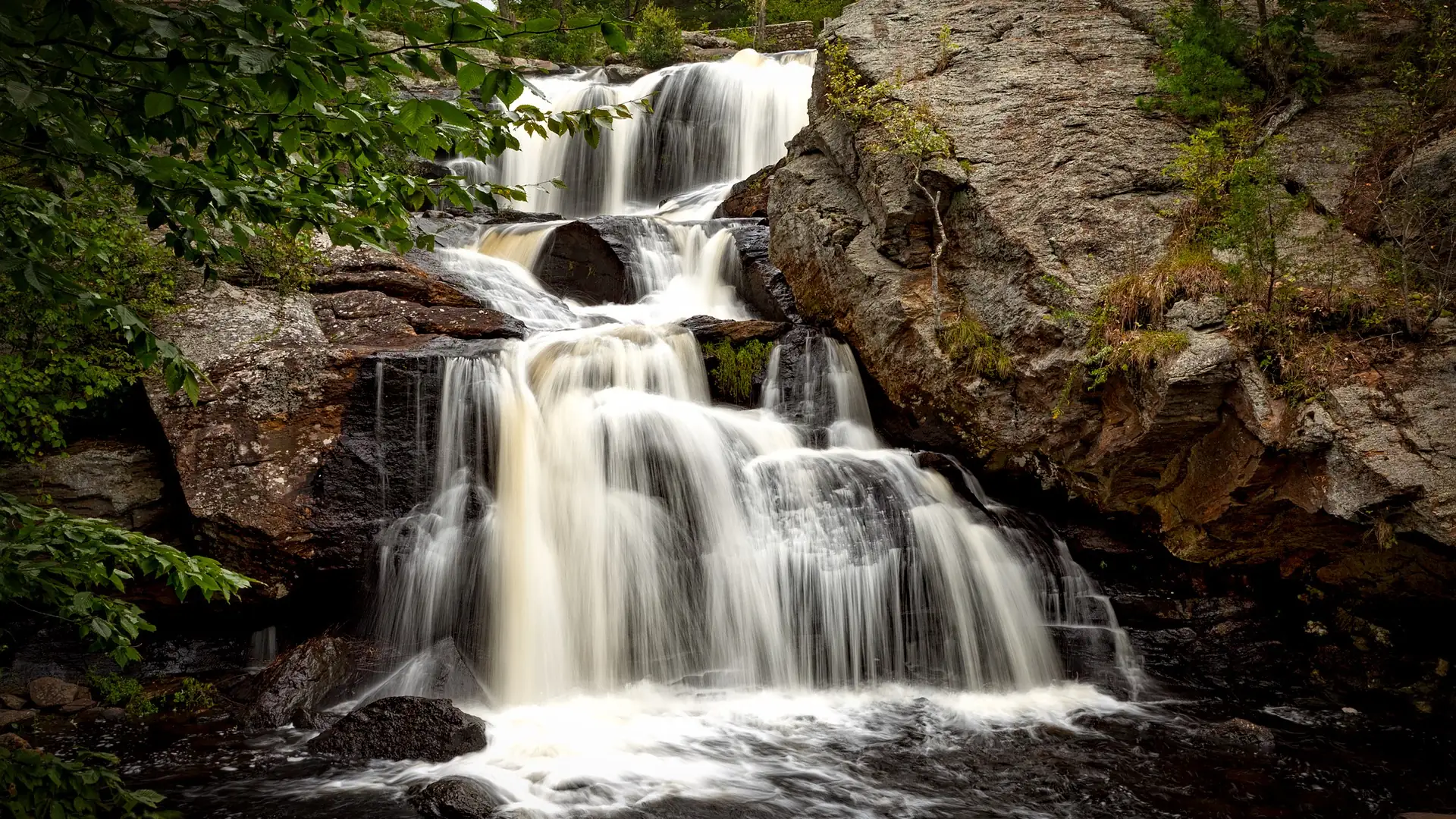
Photo: Aurum Boy / CC BY-SA 4.0, via Wikimedia Commons
Chapman Falls is the best-known feature of Devil’s Hopyard State Park, where the Eightmile River drops over a sequence of rock steps. Rounded potholes in the ledges provide a second detail to look for after you have taken in the main water scene. They help make this a place for close observation as well as a broad waterfall photograph.
Enjoy the falls from secure, permitted areas and keep away from wet ledges near the moving water. A marked woodland walk can extend the outing, letting you appreciate the surrounding forest beyond the most popular viewpoint. Spring often provides the strongest display, while summer suits a slower visit that combines the waterfall with shade, birdwatching, and time beside the landscape without entering the stream.
Insider tip: Notice how water moves across separate ledges; a tighter photograph can reveal details that disappear in a wide view.
Where: East Haddam, Connecticut
3. Wadsworth Falls, Middletown
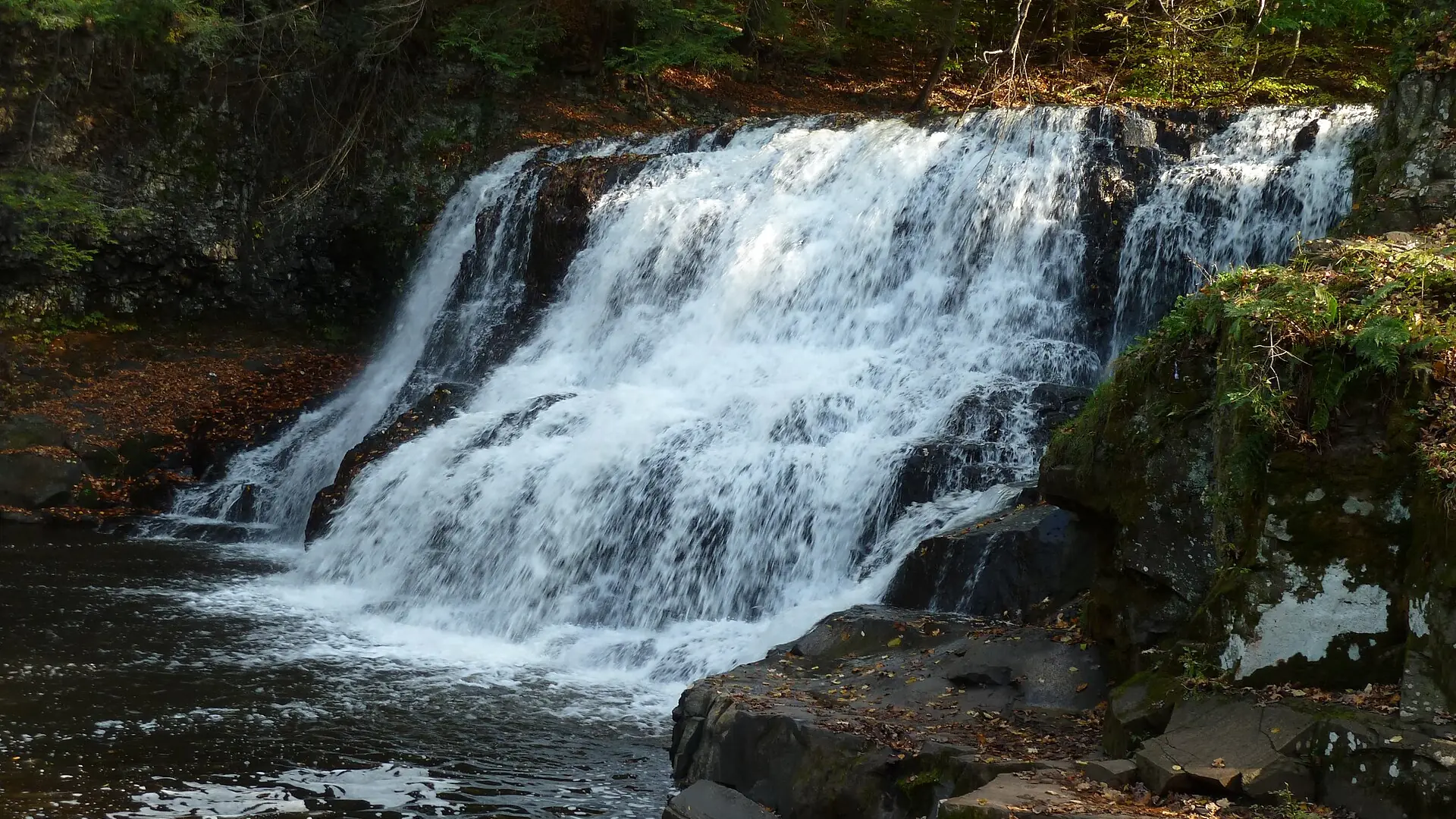
Photo: Jllm06 / CC BY-SA 4.0, via Wikimedia Commons
Wadsworth Falls State Park spans Middletown and Middlefield, with the main waterfall on the Middlefield side of the park. Here the Coginchaug River drops over a broad ledge, giving the scene a stronger horizontal shape than many of Connecticut’s narrower woodland cascades. That width makes changes in flow especially visible across the rock face.
Plan specifically for the Big Falls viewing area if the waterfall is your main goal, since the park’s other facilities and trail approaches are separate parts of the visit. Woodland trails provide a way to spend more time among the mature trees, with the length chosen around your group. Spring and wetter periods generally give the water more presence, while leafy summer paths offer their own appeal.
Insider tip: Use the park map before arriving so you understand the difference between the main park entrance and the waterfall-focused access.
Where: Middletown, Connecticut
4. Campbell Falls, Norfolk
Campbell Falls belongs to a border-crossing landscape: the reserve is approached from Norfolk, while the Whiting River’s main waterfall lies just across the Massachusetts line. The two states share a preservation history here, giving the outing a connection beyond a single town boundary. You are visiting one continuous wooded ravine, even as the map changes state names.
The walking approach leads toward falling water enclosed by rock and forest, with limited development compared with a larger recreation park. Keep the route simple and allow for roots, damp ground, and a cooler feel near the ravine. Spring is a natural choice for stronger flow, while summer brings the attraction of shaded woods and a chance to linger over the scene from stable ground.
Insider tip: Download the reserve map before leaving so you can recognize the cross-border layout without relying on mobile service in the woods.
Where: Norfolk, Connecticut
5. Great Falls, Canaan
Great Falls spreads the Housatonic River across a broad rocky drop in the Falls Village area of Canaan. Its river scale gives it a different character from the smaller brooks on this list, with the exposed ledges forming part of the view even when water is lighter. The surrounding hydroelectric setting also means the visible flow can vary.
Use the permitted recreation-area routes and viewpoints to appreciate the falls without approaching dangerous river edges. The nearby Appalachian Trail connection and interpretive features add interest if you want a longer walking day, though the waterfall itself can remain the focus. Spring often gives a strong river display, while summer visits call for an understanding that a familiar photograph may show very different water conditions.
Insider tip: Frame the rock structure as well as the current so your photographs capture what makes this broad river feature distinctive.
Where: Canaan, Connecticut
6. Southford Falls, Southbury
Southford Falls combines a tiered cascade with a covered bridge and Paper Mill Pond, giving you several related features in a compact park setting. Eightmile Brook supplies the moving water, while the pond offers a calmer contrast nearby. The area’s industrial past, including its connection with the Diamond Match Company, adds another layer to a landscape that now feels recreational.
Spend time around the main falls before choosing whether to continue onto a marked woodland route. The park can support a short waterfall stop or a longer walk, depending on how much climbing and uneven ground you want. Spring generally makes the cascade more assertive, while summer allows a slower outing built around the pond, trees, and the sound of water beneath the bridge.
Insider tip: Use the bridge and pond as separate photographic subjects so the visit includes more than the standard close-up of the cascade.
Where: Southbury, Connecticut
7. Enders Falls, Granby
Enders Falls is a series of waterfalls and cascades within Enders State Forest, where rocky terrain channels streams through the woods. The changing shapes are part of the appeal: one view may emphasize a drop, another a ledge or plunge pool. A marked main route connects the experience, making the forest itself a continuous part of the visit.
Stay on the designated purple-blazed trail and viewing areas, since the surrounding slopes and wet rock can be deceptively dangerous. This is a place to appreciate the water from a stable position, without turning pool access into the purpose of the outing. Spring often brings fuller cascades, while summer canopy can keep the forest floor damp and shaded even when the day outside feels dry.
Insider tip: Keep your hands available on the walking route and stop fully before raising a phone or camera near a viewpoint.
Where: Granby, Connecticut
8. Roaring Brook Falls, Cheshire
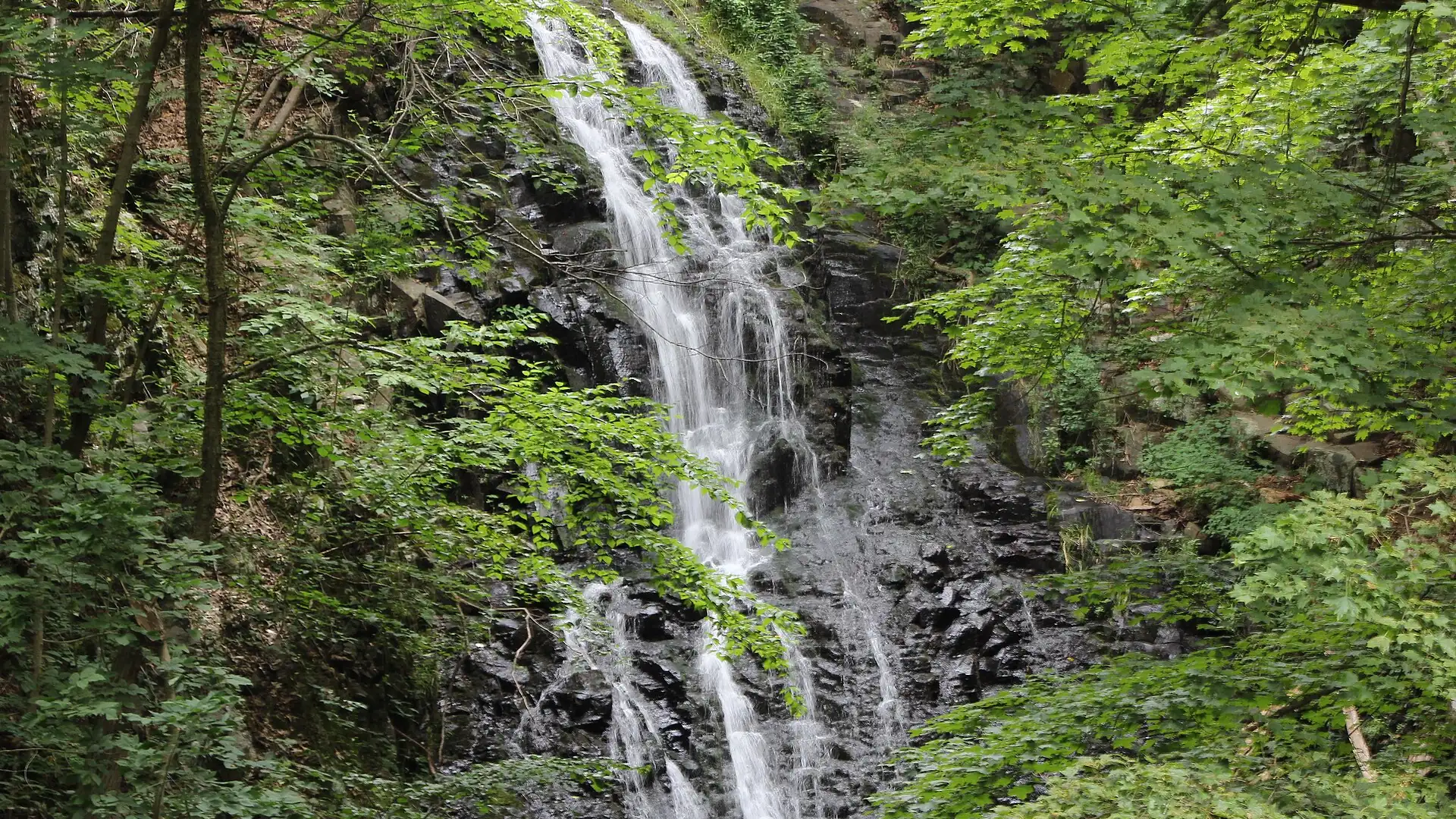
Photo: CamParnoff / CC BY-SA 4.0, via Wikimedia Commons
Roaring Brook Falls drops down a wooded rock face on the slopes above Cheshire. The surrounding trail network connects with the Quinnipiac Trail, giving prepared walkers options beyond a simple waterfall visit. The main approach includes rocky and steep sections, so its relatively compact setting should not be confused with an effortless stroll.
Choose the waterfall viewpoint as a clear destination and keep the return effort in mind while climbing. Flow can become quite thin during dry periods, making spring or a settled spell after rain a better choice for a water-focused outing. Even with lighter water, the forest, exposed rock, and brook corridor give you a landscape worth noticing if you arrive expecting a woodland hike as well as a waterfall.
Insider tip: Use the trailhead map to identify your exact route and turnaround, keeping any longer ridge connection as a separately planned hike.
Where: Cheshire, Connecticut
9. Indian Well Falls, Shelton
Indian Well Falls occupies a rocky gorge within Indian Well State Park, close to the Housatonic River. The contained waterfall setting creates a different mood from the park’s broader riverfront areas, which include a designated beach and picnic space. Keeping those two landscapes distinct helps you plan a visit around the experience you actually want.
Follow the permitted waterfall approach and enjoy the gorge from secure ground, leaving its wet ledges and pool alone. You can add time in the park’s riverfront setting for a fuller day without making the waterfall walk longer than your group prefers. Spring often favors the cascade itself, while summer gives you the option of combining the visit with other designated park activities appropriate to the season.
Insider tip: Treat the falls and the designated swimming beach as separate destinations; a waterfall pool is not an extension of a managed beach area.
Where: Shelton, Connecticut
10. Buttermilk Falls, Plymouth
Buttermilk Falls follows a sequence of wooded cascades along the blue-blazed Mattatuck Trail. The site sits within the Hancock Brook watershed, with hemlocks and rocky ground giving the approach a close, forested character. It is a different experience from a large developed state park, so come for a walking visit with modest expectations about facilities.
A stone dam above the falls connects the location with nineteenth-century sawmill use, adding a practical history to the moving water. View that feature and the cascades from safe public trail areas, without approaching unstable edges or structures. Spring generally offers a stronger flow, while a leafy summer visit can emphasize shade and woodland detail, especially if rainfall has been limited.
Insider tip: Follow the blue trail markings and respect nearby property boundaries, keeping the visit focused on the established walking route.
Where: Plymouth, Connecticut
Map of the places
Tap a place to open it in Google Maps:
- Kent Falls, Kent
- Chapman Falls, East Haddam
- Wadsworth Falls, Middletown
- Campbell Falls, Norfolk
- Great Falls, Canaan
- Southford Falls, Southbury
- Enders Falls, Granby
- Roaring Brook Falls, Cheshire
- Indian Well Falls, Shelton
- Buttermilk Falls, Plymouth
Tips for planning your Connecticut trip
- Favor spring for fuller streams, while understanding that rain and dry spells matter more than a fixed date for waterfall flow.
- Choose one regional outing or a small nearby grouping so you have time to walk carefully and enjoy the setting.
- Pack grippy walking shoes, water, a light rain layer, and a small protective bag for electronics around spray.
- Book overnight accommodation ahead if you are building a weekend around several parks, especially during popular summer periods.
- Check current conditions, trail notices, permitted access, and official park maps before heading out, with extra care after heavy rain.
FAQ
Will every waterfall look powerful in summer?
No, several are fed by streams that become much lighter during dry weather. A summer outing can still offer a rewarding forest walk, but plan spring or wetter periods if strong flow is your main priority.
Are waterfall pools suitable places to swim?
Plan these outings around viewing and walking, since currents, submerged rocks, and slippery edges create hazards. Use only designated swimming areas where swimming is permitted, keeping them separate from the waterfall itself.
Are all the walking approaches easy?
The routes vary, with stairs, steep trail sections, roots, and wet ground at several destinations. Roaring Brook in particular calls for a more deliberate hiking plan, while other sites allow a shorter visit from established lower viewpoints.
Final thoughts
A good waterfall day leaves you remembering the whole approach: the brook beside the path, the forest shade, and the moment the water comes into view. Save the Connecticut falls that fit your group’s pace, then give the outing enough room to become more than a quick photograph.

