
Hidden gems in Colorado for a more curious itinerary
A petrified tree stump can be as absorbing as a mountain summit when you know what you are looking at. Colorado gives you both, along with sandstone spires, dinosaur footprints, and a wooden powerhouse perched above a river. Searching for hidden gems in Colorado is a useful excuse to look beyond your usual kind of trip.
Some places here are nationally famous, and none comes with a promise of solitude. What links them is the chance to notice something specific: the shape of an ancient footprint, the engineering behind an improbable building, or the color of a high alpine lake. Choose by region and season, because these eleven stops spread across a very large state.
1. Great Sand Dunes National Park, Mosca
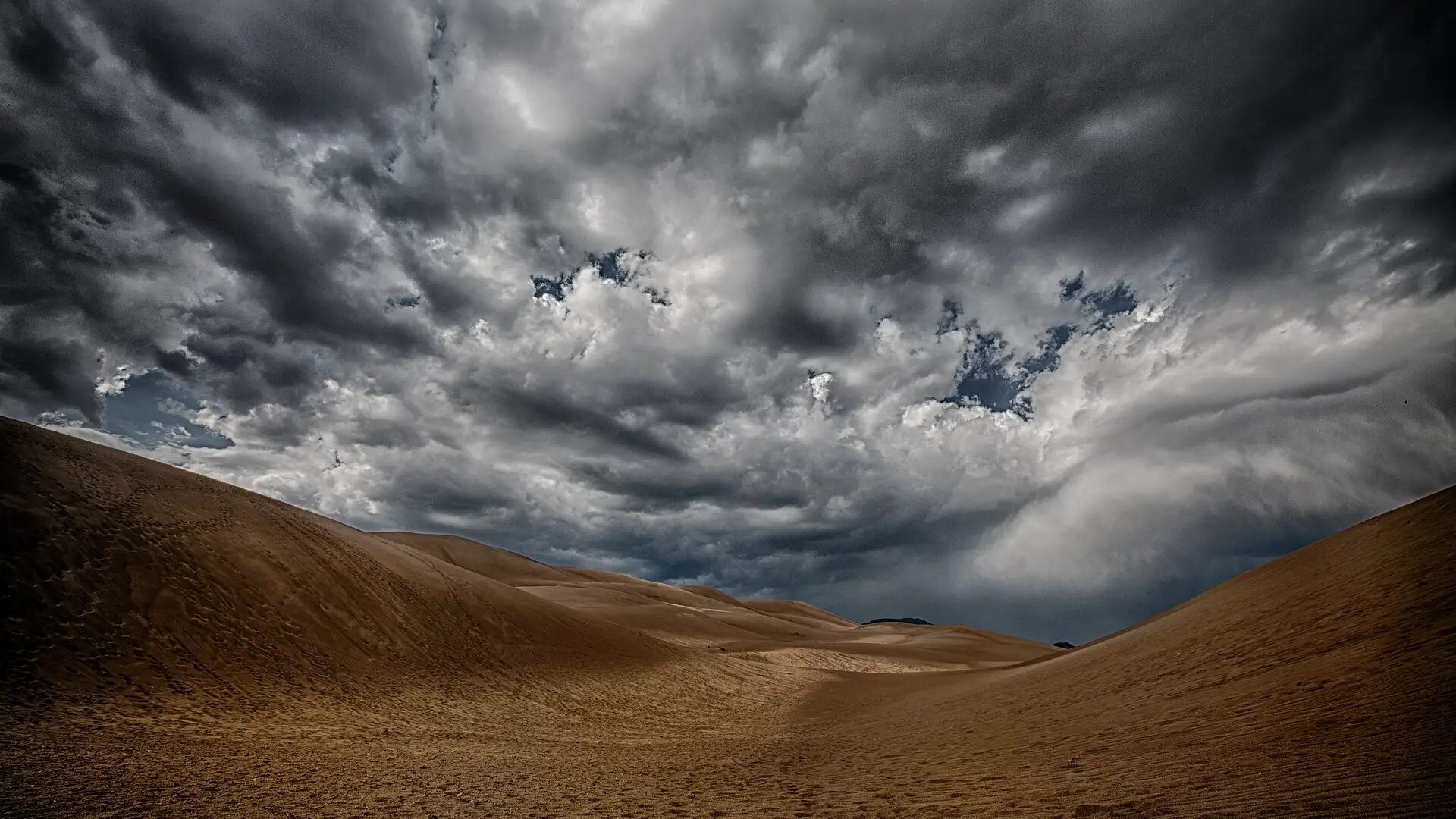
Photo: Will Thomas / CC BY-SA 3.0, via Wikimedia Commons
The first surprise is the backdrop: enormous sand dunes stand directly below the Sangre de Cristo Mountains. Walking into the dunefield gives you a landscape without the usual marked trail, where your route follows shifting slopes and your own energy. The ridge that looks close can demand more effort than you expect on soft sand.
Medano Creek adds another layer when seasonal snowmelt sends water along the dunes’ edge. Spring can pair shallow flowing water with snowy mountain views, while fall often offers a more comfortable season for exploring the sand. Begin with a modest climb and leave time to watch how the dune contours change with the light.
Insider tip: Wear closed shoes and carry them with you during any sand play; exposed sand can become painfully hot.
Where: Mosca, Colorado
2. Paint Mines Interpretive Park, Calhan
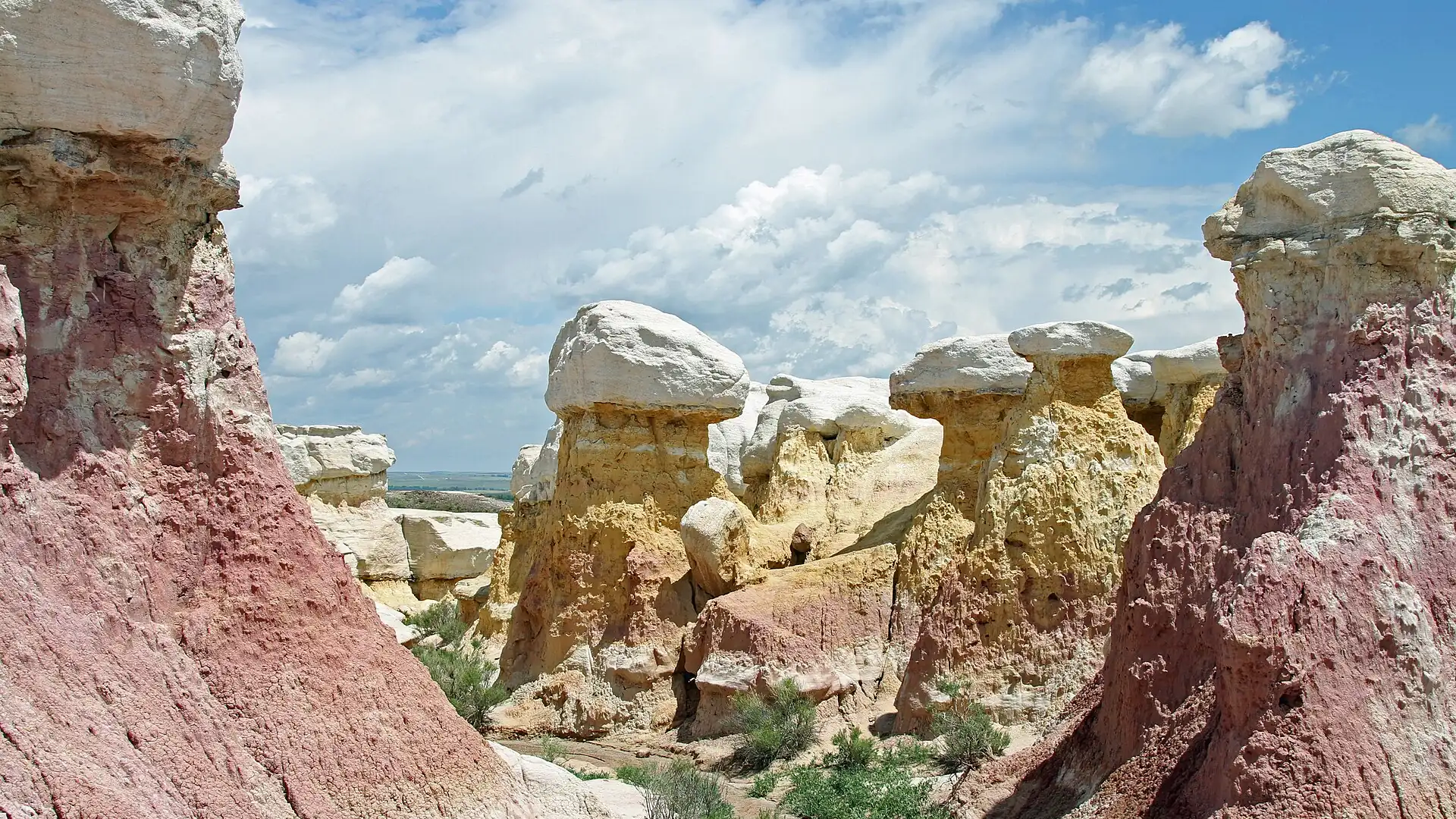
Photo: Robert M. Russell / CC BY-SA 4.0, via Wikimedia Commons
The plains around Calhan give little warning of the colored formations waiting inside Paint Mines Interpretive Park. Erosion has shaped the clay-rich ground into hoodoos and gullies, with mineral staining adding bands of yellow, purple, and red. You can appreciate both the sculpted details and the contrast with the open grassland above.
The site’s history also includes Indigenous use of its colored clays, giving the name a human connection as well as a geological one. Walk the designated paths and let the formations remain the subject of your visit. Spring and fall suit the exposed setting, and lower-angle light often helps separate one rock shape from the next.
Insider tip: Photograph from the trail and resist climbing into the formations, whose surfaces are much more fragile than they appear.
Where: Calhan, Colorado
3. Black Canyon of the Gunnison National Park, Montrose
At Black Canyon, the Gunnison River has cut a remarkably deep, narrow opening through ancient rock. From the rim, your eyes need a moment to follow the walls down toward the water. Pale streaks crossing darker cliff faces add detail to a scene that can initially seem almost too large to read.
South Rim overlooks give you several ways to study the canyon without attempting an inner-canyon descent. The Painted Wall is a particularly recognizable feature, with light-colored rock tracing patterns across its immense face. Late spring through fall generally offers a broader range of rim exploration, while winter concentrates a visit around the accessible South Rim area.
Insider tip: Choose a few overlooks and spend time at each; the canyon becomes more interesting as you notice its rock patterns.
Where: Montrose, Colorado
4. Mesa Verde National Park, Cortez
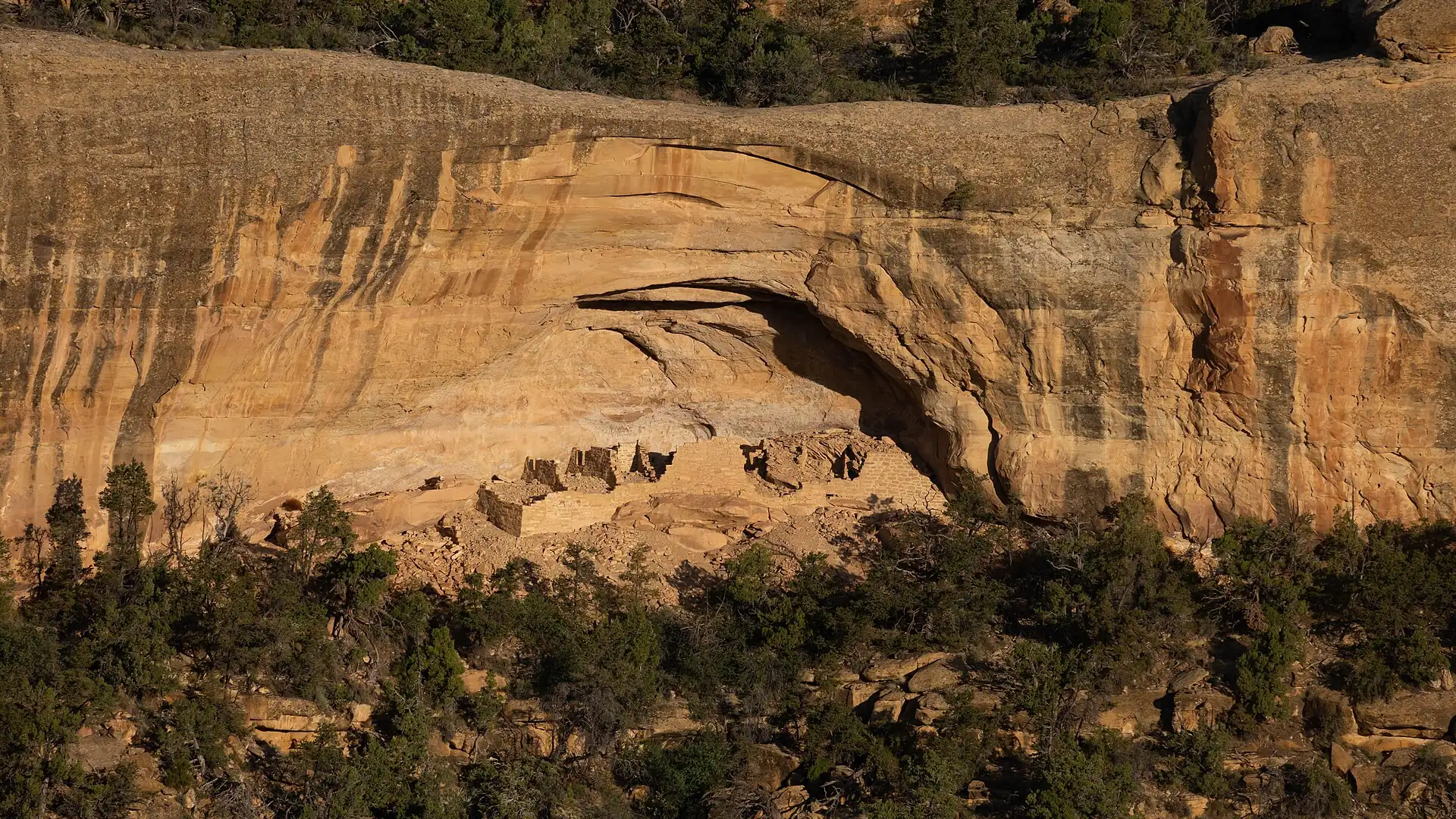
Photo: mark byzewski / CC BY 2.0, via Wikimedia Commons
Mesa Verde preserves the homes and communities of Ancestral Pueblo people across a landscape of mesas and canyons. Cliff Palace is its most recognizable cliff dwelling, but the park’s story extends to earlier mesa-top homes and agricultural life. You gain more from the visit when you connect those different settings.
Use overlooks and interpretive sites to understand how people lived here before focusing on a particular dwelling. Ranger-led cliff-dwelling tours, when offered, involve their own reservations and physical demands, so they deserve a place in your planning. Late spring through early fall suits a fuller visit, while cooler shoulder-season days can make the exposed landscape more comfortable.
Insider tip: Look closely at the mesa-top sites too; they help explain the longer history behind the famous cliff dwellings.
Where: Cortez, Colorado
5. Bishop Castle, Rye
Bishop Castle brings stone towers, elaborate metalwork, and a metal dragon to the wooded Wet Mountains. Jim Bishop built the structure over decades, turning an intensely personal project into one of Colorado’s most recognizable roadside attractions. The combination of heavy stone walls and airy steel walkways gives it an unmistakable silhouette.
You can study the craftsmanship and unusual forms from ground level without treating every staircase as a challenge. Upper areas involve heights and exposed features that will not suit every visitor, particularly young children or anyone uncomfortable with edges. A dry, mild day is the most practical setting for appreciating the building and its surrounding forest.
Insider tip: Decide how comfortable you are with the stairs before ascending; the exterior is a worthwhile experience on its own.
Where: Rye, Colorado
6. Royal Gorge, Cañon City
Royal Gorge places the Arkansas River at the bottom of a narrow canyon whose walls make even familiar structures look improbable. The suspension bridge spanning the gorge gives you the best-known view of that scale. Looking down and then across produces two quite different impressions of the same landscape.
The bridge-and-park experience focuses on the rim, with an aerial gondola providing another perspective across the opening. Keep your plans centered on the attractions that suit your group’s comfort with heights, since the setting itself supplies plenty of drama. Spring and fall often make a good match for time outdoors around the gorge, with layers useful in the exposed wind.
Insider tip: Secure loose hats and keep a firm hold on your phone when taking photographs above the canyon.
Where: Cañon City, Colorado
7. Dinosaur Ridge, Morrison
At Dinosaur Ridge, the main event is preserved in the rock beside your walking route. Dinosaur tracks mark an ancient surface on one side of the ridge, while fossil bones help tell another part of the area’s prehistoric story. Interpretive stops make the outcrops easier to understand even if geology is new to you.
Walking the paved route lets you move between those evidence-rich stops at your own pace. Pause over the track patterns and think about the animal moving across ground that later became stone. Spring and fall are comfortable choices for this exposed setting, and an earlier summer walk helps limit the heat radiating from the pavement.
Insider tip: Bring a downloaded site map so you can connect the numbered interpretive stops with the features in front of you.
Where: Morrison, Colorado
8. Florissant Fossil Beds National Monument, Florissant
Florissant asks you to look at two very different scales: massive petrified redwood stumps outdoors and delicate fossils displayed inside the visitor center. Insects, leaves, and other small remains preserve evidence of a much warmer ancient environment. The contrast makes the monument especially rewarding for families with mixed interests.
Follow the Petrified Forest Loop to see the stumps in the landscape, then use the exhibits to fill in what you cannot see in an outdoor outcrop. Volcanic mudflows and an ancient lake helped create the conditions behind this fossil record. A mild spring or fall day works well for combining the walking route with a careful look at the displays.
Insider tip: Start with the exhibits so the outdoor stumps become part of an understandable story about forests, water, and volcanic activity.
Where: Florissant, Colorado
9. Colorado National Monument, Fruita
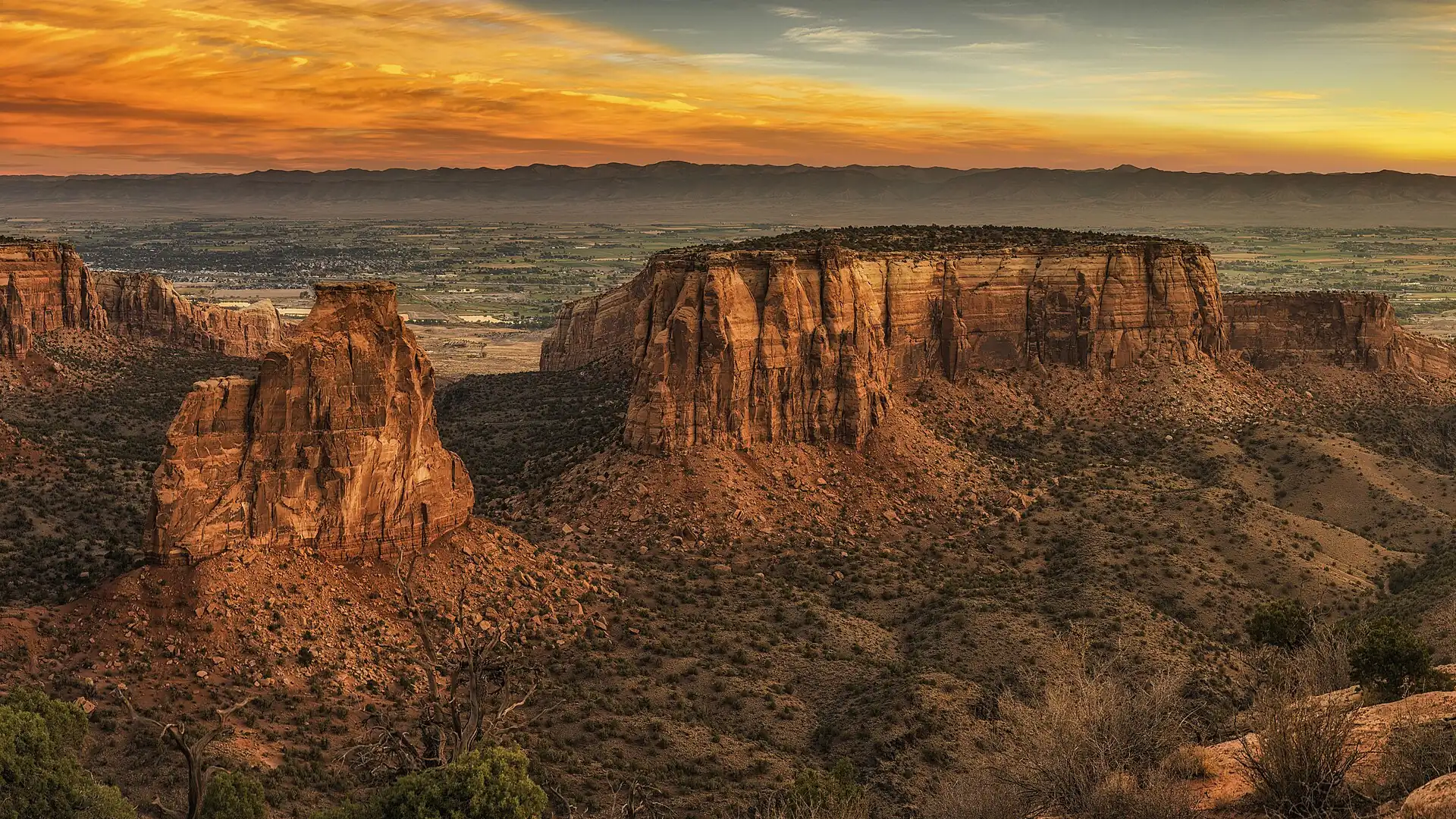
Photo: David Zhang / CC BY-SA 2.0, via Wikimedia Commons
Colorado National Monument introduces a red-rock landscape of sandstone towers, steep-walled canyons, and broad views across the Grand Valley. Independence Monument is one of the best-known formations, standing apart from the canyon walls like a piece left behind by erosion. The scenery gives western Colorado a character quite different from its alpine towns.
Rim Rock Drive links overlooks and trail access, making it possible to build a visit around your preferred level of walking. Stop where you can study the canyon shapes as well as the far-reaching view, since each tells a different part of the geological story. Spring and fall generally offer a more comfortable setting for exposed walks than the hottest part of summer.
Insider tip: Use established overlooks for photographs and give road cyclists plenty of space on the winding rim drive.
Where: Fruita, Colorado
10. Ice Lake Basin, Silverton
Ice Lake Basin earns its reputation through vivid blue water held beneath jagged San Juan peaks. Reaching it requires a strenuous mountain hike, with climbing, rocky ground, and high elevation shaping the entire day. The lower and upper basins have different vegetation and terrain, so the approach is part of the experience.
The trail passes through an area burned in the Ice Fire before climbing toward meadows and alpine tundra. Summer is the practical season for most hikers, once lingering snow no longer complicates the route, and wildflowers can add color below the upper lake. Plan this as a substantial outing for prepared hikers, with enough energy reserved for the descent.
Insider tip: Set a turnaround point before starting, and keep it even if the lake feels temptingly close when weather changes.
Where: Silverton, Colorado
11. Crystal Mill, Marble
Crystal Mill’s wooden structure stands on a rocky perch above the Crystal River, framed by mountain slopes and aspens. Built in the nineteenth century, it served as a powerhouse that used river energy to run a compressor for nearby mining work. That practical origin makes its unusual shape more interesting than a picturesque abandoned building alone.
The rough approach from Marble is a serious part of the outing, suited to a prepared walk or an appropriate guided vehicle trip in the warmer season. The mill and riverbank are private property, so keep your visit to lawful public-road viewing and respect posted boundaries. Summer and early fall offer the most sensible window for planning this mountain-road experience.
Insider tip: Choose the approach from Marble and avoid assuming a map’s mountain-road connection is suitable for your rental car.
Where: Marble, Colorado
Map of the places
Tap a place to open it in Google Maps:
- Great Sand Dunes National Park, Mosca
- Paint Mines Interpretive Park, Calhan
- Black Canyon of the Gunnison National Park, Montrose
- Mesa Verde National Park, Cortez
- Bishop Castle, Rye
- Royal Gorge, Cañon City
- Dinosaur Ridge, Morrison
- Florissant Fossil Beds National Monument, Florissant
- Colorado National Monument, Fruita
- Ice Lake Basin, Silverton
- Crystal Mill, Marble
Tips for planning your Colorado trip
- Group the stops geographically; these places belong to several separate Colorado itineraries, not one hurried weekend.
- Favor summer for Ice Lake Basin and Crystal Mill, and consider spring or fall for exposed plains and canyon walks.
- Pack sun protection, water, sturdy footwear, and layers even when your main plan involves overlooks or a visitor center.
- Arrange lodging and any required tours or permits before building the rest of your day around them.
- Check current conditions, road restrictions, public access, and reservation requirements through official park and land-manager sources.
FAQ
Are all these places quiet or little known?
Several are well-known destinations with busy periods. The value of this list is the range of experiences, from small fossils to huge canyon views, not a guarantee that you will have them to yourself.
Can families visit without difficult hiking?
Many stops offer overlooks, exhibits, or manageable walking options that you can tailor to your group. Ice Lake Basin requires a different level of preparation and should be treated as a demanding mountain outing.
Is one season suitable for every stop?
Summer gives you the broadest high-country options, but lower exposed sites can become very hot. Spring and fall often work better for canyon overlooks and plains walking, while mountain access requires more flexibility.
Final thoughts
Colorado rewards a curious eye as much as a long climb. Save the places that make you want to look closer, then give each enough time for its geology, history, or improbable shape to become more than a quick photograph.

